Why karat-wise accounting is non-negotiable in Indian jewellery retail
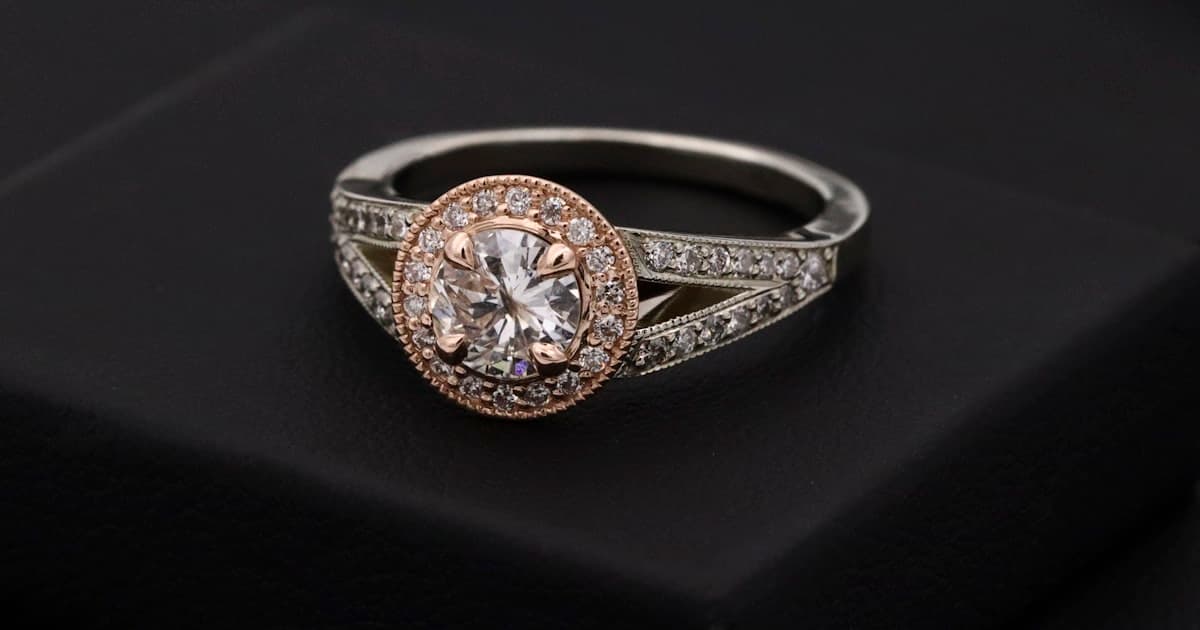
A typical mid-size Indian jewellery showroom carries six to eight purity grades of gold (24K, 22K, 18K, 14K), three or four grades of silver, lab-grown and natural diamonds, polki, kundan, jadau, and a long list of coloured stones. Each piece is a composite — a 22K gold ring with a 0.30-carat solitaire and 0.12 carats of pave-set diamonds is not one SKU. It is at minimum three line items the moment it enters the safe.
When the inventory team treats this as one row in a spreadsheet, two things go wrong:
- 1Metal reconciliation fails. Gold accounting in India is tracked by fine weight — the actual weight of pure gold inside an ornament after deducting alloy and stones. If your stock ledger only shows gross weight, your monthly fine-gold reconciliation against issue-and-receipt slips will be off by 1.5–3% every cycle. On a 12 kg gold stock, that is 180–360 grams of unaccounted metal — roughly ₹15–30 lakh at current prices.
- 1Costing breaks at the till. A retail invoice for a stone-studded ring in India needs to show: gold rate per gram for 22K, fine-weight of 22K gold in the piece, making charges, stone value, wastage percentage, GST at 3% on gold and 0.25% on diamonds, and TCS where applicable. If the inventory record does not separate the components, the billing system either over-charges the customer (and loses the sale) or under-charges (and loses the margin).
The Bureau of Indian Standards (BIS) hallmarking framework effectively forces this discipline — every hallmarked piece must be traceable to its purity, weight, and HUID. A jewellery ERP simply makes that compliance the default behaviour of the system rather than a manual step that a junior cashier might skip on a busy Diwali evening.
What "karat-wise stock accounting" actually means in software
A purpose-built jewellery ERP enforces seven layers of inventory granularity on every piece:
| Layer | What gets recorded | Why it matters |
|---|---|---|
| Purity | 24K / 22K / 18K / 14K / silver grade | Drives metal valuation and rate-card pricing |
| Gross weight | Total weight of the piece | Used for hallmarking certificate |
| Net weight | Gold weight after stone deduction | Basis for fine gold accounting |
| Fine weight | Net × purity factor (e.g. 22K = 0.916) | The number every gold-loan and bullion reconciliation uses |
| Stone schedule | Stone-by-stone weight, shape, clarity | Audit trail for diamond certification |
| Making charges | Flat rate or per-gram | Margin protection |
| HUID | 6-character unique ID issued by BIS | Mandatory for retail sale |
When this metadata sits in seven separate columns of a single inventory record, three reports become instant instead of week-long Excel projects:
- Fine-gold balance by purity, by branch, by date — for monthly metal reconciliation
- Stone register — for the annual stocktake the auditor will demand
- Aged stock — pieces sitting in the showcase for more than 90 days, which need either re-display, design refresh, or melt-back
The hidden costs of running a jewellery business on Tally + Excel
I have walked through the operations of more than 30 Indian jewellery retailers over the last decade. The ones still operating on Tally with side-spreadsheets share five symptoms:
- 1Monthly close takes 7–10 days. The accountant exports tally data, the inventory team exports spreadsheet, they reconcile against goldsmith-issue chits and almost always find gaps of 50–150 grams that get written off as "wastage adjustment".
- 2Goldsmith reconciliation is informal. When you give 500 grams of 22K gold to a karigar to make 35 pieces, you expect roughly 485 grams of finished ornaments back (3% wastage is industry norm). Without a system that issues numbered job tickets and reconciles by fine weight at receipt, this becomes a trust-based exchange. Disputes are common. Disputes become bigger when senior karigars hand work down to sub-karigars.
- 3Hallmarking workflow is manual. Every hallmarked piece needs a request to the BIS-recognised Assaying and Hallmarking Centre (AHC), a six-digit HUID returned, and that HUID printed on the tag. Doing this for 200 new pieces a month from spreadsheets means a junior staff member sits at the AHC portal copying numbers.
- 4Customer history is fragmented. A returning customer who bought a 22K bangle in 2022 wants to exchange it for a new design in 2026. Without an ERP that retains the original invoice, fine weight, and making charge, the exchange becomes a verbal negotiation. Margin leaks here are larger than most owners realise.
- 5Branch transfers are paper-based. A piece moved from the Banjara Hills showroom to the Jubilee Hills showroom on a Saturday morning may not appear in the destination branch's stock register until Monday. If a customer asks for it on Sunday, the sale is lost.
A 2024 study by FICCI's Gem & Jewellery Council estimated that organised Indian jewellery retailers lose between 4% and 7% of annual revenue to these operational inefficiencies. On a ₹100 crore turnover, that is ₹4–7 crore — significantly more than the cost of an ERP for the next decade.
What changes with a jewellery ERP
Issue-and-receipt becomes a closed loop
Every gram of gold leaves the safe against a numbered job ticket linked to a specific karigar. The ticket carries the design code, expected weight range, fine-weight issued, expected finishing date, and approved wastage percentage. When the karigar returns the finished pieces, the receipt screen forces the user to weigh each piece on a tared scale, scan a barcode, and the system auto-reconciles the fine-weight delta. If wastage exceeds the approved threshold, the receipt requires a manager override. Auditors love this.
Branch transfers happen in real time
When a piece is dispatched from Showroom A to Showroom B, both branches see it move on the same screen. The dispatching branch's stock value drops; the receiving branch's stock value rises; both branches' fine-gold balance updates instantly. The piece is "in transit" until physically scanned in at Showroom B. No more weekend reconciliation headaches.
Customer life-cycle becomes a database
Every customer record stores their purchase history with original fine-weight and making charge, exchange entries (old gold deposited against new), buy-back history, repair history, and order requests. When a 12-year customer walks in to upgrade her wedding mangalsutra, the senior salesperson opens her profile, sees the 2014 purchase, calculates exchange value at today's gold rate, and quotes a clean number in 30 seconds.
The end-of-day close takes 15 minutes
Cash, card, UPI, gold-exchange, and gold-loan settlements all flow into a single reconciliation dashboard. The branch manager closes the till, the system auto-generates the day's GST summary, fine-gold movement, and stock value, and the day is closed before the shutter comes down. The monthly close that used to take 7 days takes 2 hours.
Choosing the right jewellery ERP for India
Three non-negotiable capabilities every Indian jewellery retailer should test in a demo:
- 1BIS hallmarking integration — can the system push hallmarking requests to the AHC portal and pull back HUIDs automatically? If the answer is "we have an Excel export you can upload manually", walk away.
- 2Gold rate sync — does the daily gold rate from MCX flow into the rate-card by branch, by purity, by jewellery category? A jewellery business that re-types gold rates every morning is a business waiting for a costly typo.
- 3GST + TCS compliance — Indian jewellery invoicing has three taxes interacting (3% GST on gold, 0.25% on diamonds, TCS on cash payments above ₹2 lakh from 1st April every fiscal). The ERP must apply these automatically based on the basket and payment mode.
FlowSense Jewellery ERP is built around these exact mechanics for Indian jewellers — single store, chain, or wholesale. Karat-wise stock, BIS hallmarking, multi-branch reconciliation, gold-loan integration, and GST e-invoicing are first-class features, not afterthoughts.
The bottom line
If your jewellery business turns over more than ₹10 crore a year and is still running on Tally plus spreadsheets, the question is not whether you can afford a jewellery ERP. The question is how much longer you can afford the gold leakage, the audit pain, and the slow customer experience that come from doing without one.
Karat-wise stock accounting in real time is not a luxury. For an industry where the inventory is the working capital, it is the basic hygiene that lets the business scale beyond a single owner-operator showroom.