
APPIT Software - Solutions Delivered
Demos
LoginGet Started
Aegis BrowserFlowSenseVidhaanaTrackNexusWorkisySlabIQLearnPathAI InterviewAll ProductsDigital TransformationAI/ML IntegrationLegacy ModernizationCloud MigrationCustom DevelopmentData AnalyticsStaffing & RecruitmentAll ServicesHealthcareFinanceManufacturingRetailLogisticsProfessional ServicesEducationHospitalityReal EstateAgricultureConstructionInsuranceHRTelecomEnergyAll IndustriesCase StudiesBlogResource LibraryProduct ComparisonsAbout UsCareersContact
APPIT Software - Solutions Delivered

Transform your business from legacy systems to AI-powered solutions. Enterprise capabilities at SMB-friendly pricing.

Company

  • About Us
  • Leadership
  • Careers
  • Contact

Services

  • Digital Transformation
  • AI/ML Integration
  • Legacy Modernization
  • Cloud Migration
  • Custom Development
  • Data Analytics
  • Staffing & Recruitment

Products

  • Aegis Browser
  • FlowSense
  • Vidhaana
  • TrackNexus
  • Workisy
  • SlabIQ
  • LearnPath
  • AI Interview

Industries

  • Healthcare
  • Finance
  • Manufacturing
  • Retail
  • Logistics
  • Professional Services
  • Hospitality
  • Education

Resources

  • Case Studies
  • Blog
  • Live Demos
  • Resource Library
  • Product Comparisons

Contact

  • info@appitsoftware.com

Global Offices

🇮🇳

India(HQ)

PSR Prime Towers, 704 C, 7th Floor, Gachibowli, Hyderabad, Telangana 500032

🇺🇸

USA

16192 Coastal Highway, Lewes, DE 19958

🇦🇪

UAE

IFZA Business Park, Dubai Silicon Oasis, DDP Building A1, Dubai

🇸🇦

Saudi Arabia

Futuro Tower, King Saud Road, Riyadh

© 2026 APPIT Software Solutions. All rights reserved.

Privacy PolicyTerms of ServiceCookie PolicyRefund PolicyDisclaimer

Need help implementing this?

Get Free Consultation
  1. Home
  2. Blog
  3. Food & Beverage
Food & Beverage

FDA FSMA Compliance with ERP: How Food Companies Meet Preventive Controls and Traceability Requirements

FDA FSMA has shifted food safety from reactive to preventive, requiring comprehensive documentation that manual systems cannot sustain. Learn how ERP automation ensures continuous FSMA compliance across the supply chain.

VR
Vikram Reddy
|July 15, 20255 min readUpdated Jul 2025
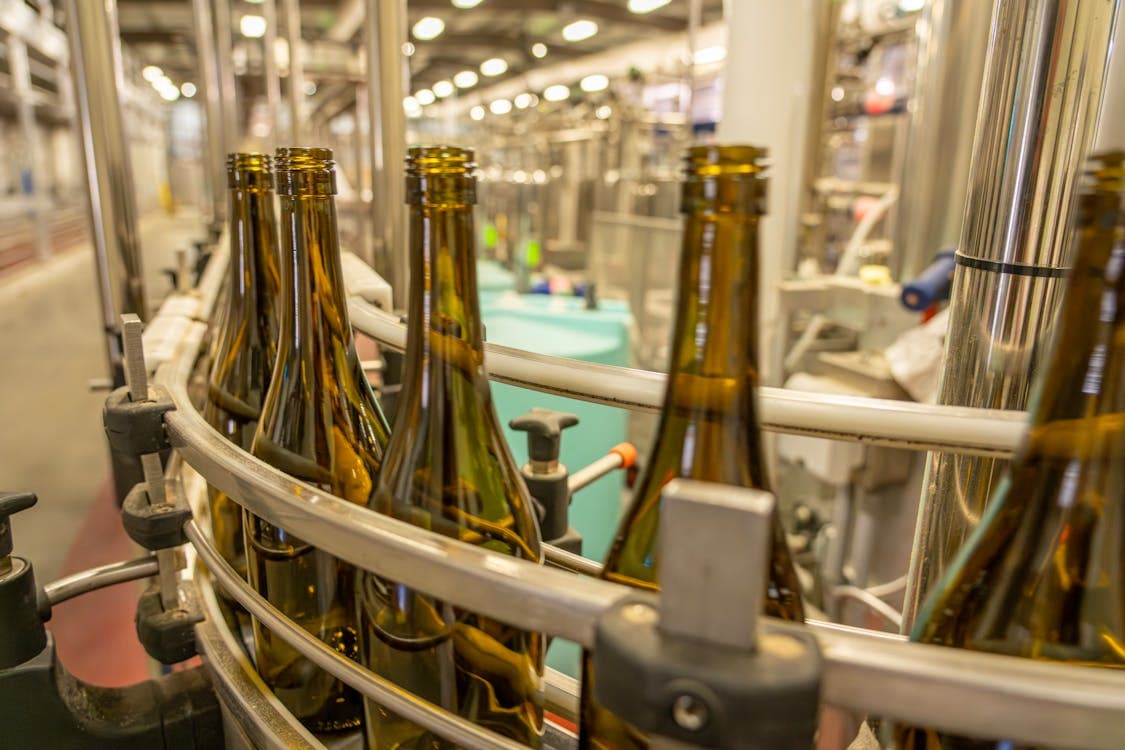
FlowSense ERP showing FDA FSMA compliance automation with preventive controls monitoring and traceability tracking

Get Free Consultation

Talk to our experts today

By submitting, you agree to our Privacy Policy. We never share your information.

Need help implementing this?

Get a free consultation from our expert team. Response within 24 hours.

Get Free Consultation

Key Takeaways

  • 1FSMA: The Most Significant Food Safety Regulation in 70 Years
  • 2The Preventive Controls Challenge
  • 3How FlowSense Automates FSMA Compliance
  • 4Implementation Impact
  • 5Beyond Compliance: The Business Value of FSMA Automation

FSMA: The Most Significant Food Safety Regulation in 70 Years

The FDA Food Safety Modernization Act (FSMA) , signed into law in 2011, fundamentally shifted the US food safety paradigm from reactive response to preventive controls. For food manufacturers, importers, and distributors, FSMA compliance is not optional -- it is the cost of participating in the $1.1 trillion US food market.

FSMA established seven major rules:

  1. 1Preventive Controls for Human Food (PC Rule)
  2. 2Preventive Controls for Animal Food
  3. 3Produce Safety Rule
  4. 4Foreign Supplier Verification Programs (FSVP)
  5. 5Intentional Adulteration Rule
  6. 6Sanitary Transportation Rule
  7. 7Third-Party Certification (Accredited Third-Party Certification)

Each rule imposes documentation, monitoring, verification, and record-keeping requirements that compound across operations. As the Codex Alimentarius Commission notes, internationally harmonized food safety standards help ensure that food is safe and can be traded freely. For a food manufacturer with 100+ ingredients from 30+ suppliers, manual FSMA compliance is a full-time job for multiple quality professionals.

The Preventive Controls Challenge

The Preventive Controls for Human Food rule requires:

Hazard Analysis

A thorough hazard analysis for every product, evaluating: - Biological hazards (pathogens, parasites, environmental contaminants) - Chemical hazards (allergens, pesticides, heavy metals, processing chemicals) - Physical hazards (metal, glass, stone, plastic, wood) - Radiological hazards (where applicable)

Each identified hazard must be assessed for severity and likelihood, with documented justification for inclusion or exclusion from the food safety plan.

Preventive Controls

For each identified hazard, the food safety plan must specify: - Process controls: Critical processing parameters (time, temperature, pH, water activity) with limits and monitoring procedures - Allergen controls: Procedures for preventing allergen cross-contact during production, storage, and labeling - Sanitation controls: Cleaning and sanitization procedures for food contact surfaces and the production environment - Supply chain controls: Verification activities for hazards controlled by suppliers - Recall plan: Procedures for initiating and managing product recalls

Monitoring, Corrective Actions, and Verification

Each preventive control requires: - Monitoring procedures specifying what is measured, how it is measured, how frequently, and by whom - Corrective action procedures for when monitoring indicates a preventive control is not properly implemented - Verification activities confirming that monitoring is being conducted, corrective actions are effective, and the food safety plan is being implemented as written

How FlowSense Automates FSMA Compliance

Digital Food Safety Plans

FlowSense provides structured templates for developing and maintaining FSMA food safety plans:

  • Guided hazard analysis: Step-by-step hazard identification with regulatory reference databases for common hazards by food category
  • Control matrix: Links each identified hazard to specific preventive controls, monitoring procedures, corrective actions, and verification activities
  • Automated updates: When ingredients, processes, or suppliers change, FlowSense identifies food safety plan sections that require reassessment

Real-Time Monitoring and Documentation

  • Process parameter tracking: Integration with production line sensors captures critical parameters (temperature, pH, flow rates) automatically
  • Digital monitoring records: Replaces paper-based monitoring logs with digital records that are time-stamped, operator-identified, and tamper-evident
  • Automated alerts: Real-time notification when monitored parameters approach or exceed critical limits
  • Corrective action workflows: When deviations occur, FlowSense automatically initiates corrective action procedures with guided documentation

Supply Chain Verification

FSMA requires verification that suppliers are controlling hazards in their operations:

Verification ActivityManual ApproachFlowSense Approach
Supplier approvalPaper-based questionnaires, manual reviewDigital supplier portals, automated risk scoring
Incoming material inspectionPaper logs, manual data entryDigital inspection with barcode/RFID verification
COA verificationManual comparison against specificationsAutomated COA parsing and specification matching
Supplier audit managementSpreadsheet tracking, email coordinationAutomated scheduling, findings tracking, CAPA management
Foreign supplier verification (FSVP)Complex manual documentationGuided FSVP workflows with automated documentation

FSMA Section 204: Enhanced Traceability

The FDA's Food Traceability Rule (FSMA Section 204) requires additional traceability records for foods on the Food Traceability List (FTL). FlowSense automates:

  • Key Data Elements (KDEs): Automatic capture of required data at each Critical Tracking Event (CTE)
  • Traceability lot codes: Systematic lot coding that enables 24-hour trace-back and trace-forward
  • Sortable electronic records: All traceability data maintained in sortable, searchable electronic format as required by FDA
  • FDA template compliance: Records structured to match FDA-specified formats for efficient submission during inspections

Implementation Impact

Food companies implementing FlowSense for FSMA compliance report:

MetricBefore FlowSenseAfter FlowSenseImprovement
Food safety plan maintenance time40+ hours per update8-12 hours70-75% reduction
Monitoring record completeness85-90%99.5%+Near-perfect compliance
Corrective action response time4-8 hours30-60 minutes85% faster
FDA inspection preparation4-6 weeks1 week75% reduction
Supply chain verification gaps15-25% of suppliersLess than 2%90%+ improvement

Beyond Compliance: The Business Value of FSMA Automation

FSMA compliance automation delivers business benefits beyond regulatory adherence:

  • Recall readiness: When recalls occur, FlowSense enables identification of affected products within hours rather than days, minimizing scope and cost
  • Customer confidence: Major retailers and food service companies increasingly require digital traceability as a supplier qualification criterion
  • Insurance benefits: Documented, automated food safety systems may reduce food liability insurance premiums by 10-20%
  • Export enablement: FSMA-compliant systems often satisfy international food safety requirements (BRC, SQF, FSSC 22000), facilitating market expansion
Ensure continuous FSMA compliance with FlowSense. Request a demo tailored to your food category and supply chain complexity.

The Regulatory Trajectory

FDA enforcement of FSMA continues to intensify: - Inspection frequency is increasing, particularly for facilities with prior violations - FSMA Section 204 traceability requirements take full effect with compliance deadlines approaching - FDA is investing in data analytics to identify high-risk facilities for targeted inspections

Food companies that invest in compliance automation today are preparing for a future where regulatory expectations will only increase.

Learn how FlowSense helps food manufacturers, importers, and distributors achieve and maintain continuous FSMA compliance.

Free Consultation

Ready to Optimize Your Food & Beverage Operations?

Discover ERP solutions built for food safety, traceability, and production efficiency.

  • Expert guidance tailored to your needs
  • No-obligation discussion
  • Response within 24 hours

By submitting, you agree to our Privacy Policy. We never share your information.

Frequently Asked Questions

What are the key FSMA rules that affect food manufacturers?

The most impactful FSMA rules for food manufacturers are the Preventive Controls for Human Food rule (requiring hazard analysis and preventive controls), the Foreign Supplier Verification Program (requiring verification of imported ingredient safety), and FSMA Section 204 (requiring enhanced traceability for foods on the Food Traceability List). Each rule imposes specific documentation, monitoring, and record-keeping requirements.

How does ERP software help with FSMA preventive controls?

ERP software like FlowSense automates the documentation and monitoring required by preventive controls: real-time capture of critical process parameters through sensor integration, digital monitoring records that are time-stamped and tamper-evident, automated alerts when parameters approach critical limits, guided corrective action workflows, and systematic verification scheduling. This ensures continuous compliance rather than periodic audit preparation.

What is FSMA Section 204 and how does ERP help?

FSMA Section 204 (Food Traceability Rule) requires additional traceability records for foods on the Food Traceability List, including Key Data Elements at each Critical Tracking Event. ERP automates capture of required data through barcode and RFID integration, maintains sortable electronic records in FDA-specified formats, and enables the 24-hour trace-back and trace-forward capability that FDA expects during inspections.

How long does FSMA compliance ERP implementation take?

A typical FSMA compliance ERP implementation takes 12-20 weeks: system configuration and food safety plan digitization (4-6 weeks), production line sensor integration (3-5 weeks), supplier portal setup (2-4 weeks), user training (2-3 weeks), and parallel operation validation (2-4 weeks). Most manufacturers begin seeing compliance improvements within the first 8 weeks of deployment.

About the Author

VR

Vikram Reddy

CTO, APPIT Software Solutions

Vikram Reddy is the CTO at APPIT Software Solutions, bringing extensive experience in enterprise technology solutions and digital transformation strategies across healthcare, finance, and professional services industries.

Sources & Further Reading

FAO - Food and Agriculture OrganizationFood Safety MagazineMcKinsey Consumer & Retail

Related Resources

Food & Beverage Industry SolutionsExplore our industry expertise
Interactive DemoSee it in action
Legacy ModernizationLearn about our services
AI & ML IntegrationLearn about our services

Topics

FDA FSMAFood SafetyPreventive ControlsFlowSenseFood Traceability

Share this article

Table of Contents

  1. FSMA: The Most Significant Food Safety Regulation in 70 Years
  2. The Preventive Controls Challenge
  3. How FlowSense Automates FSMA Compliance
  4. Implementation Impact
  5. Beyond Compliance: The Business Value of FSMA Automation
  6. The Regulatory Trajectory
  7. FAQs

Who This Is For

Quality Assurance Directors
Food Safety Managers
Regulatory Affairs Specialists
Plant Operations Directors
Free Resource

Food Safety & Traceability Checklist

Ensure compliance and streamline operations with this comprehensive food manufacturing checklist.

No spam. Unsubscribe anytime.

Ready to Transform Your Food & Beverage Operations?

Let our experts help you implement the strategies discussed in this article.

See Interactive DemoExplore Solutions

Related Articles in Food & Beverage

View All
FlowSense ERP allergen management dashboard showing allergen matrix, cross-contact controls, and labeling compliance
Food & Beverage

Allergen Management Best Practices: How Food Manufacturers Prevent Cross-Contact and Protect Consumers

Allergen-related recalls account for the largest category of food recalls globally. Learn how systematic allergen management with ERP systems prevents cross-contact, ensures accurate labeling, and protects both consumers and brands.

12 min readRead More
FlowSense ERP recall management dashboard showing batch traceability, customer notification tracking, and recall effectiveness monitoring
Food & Beverage

Food Recall Management: How ERP Systems Reduce Response Time from Days to Hours

The first 24 hours of a food recall determine its financial and reputational impact. Learn how ERP-integrated recall management enables rapid response, precise scope limitation, and effective consumer communication.

12 min readRead More
FlowSense ERP dashboard showing FSSAI compliance tracking, license management, and automated labeling for Indian food manufacturers
Food & Beverage

FSSAI Compliance Automation: How Indian Food Manufacturers Eliminate Manual Compliance Burden

Indian food manufacturers spend 15-20% of operational time on FSSAI compliance documentation. FlowSense ERP automates licensing, labeling, and audit preparation to reduce compliance effort by 70% while ensuring zero violations.

11 min readRead More
FAQ

Frequently Asked Questions

Common questions about this article and how we can help.

You can explore our related articles section below, subscribe to our newsletter for similar content, or contact our experts directly for a deeper discussion on the topic.