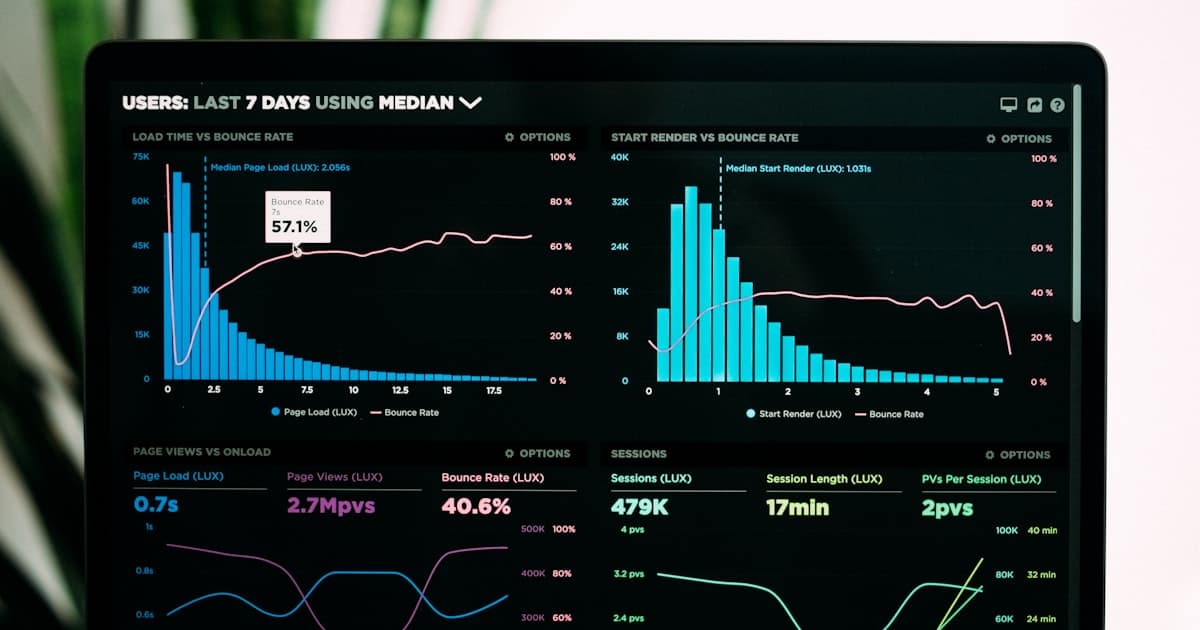
# Enterprise AI Solutions in 2026: A Decision-Maker's Guide to Platforms, Vendors, and Implementation
Enterprise AI solutions have moved from experimental pilots to mission-critical infrastructure. According to McKinsey's 2025 Global AI Survey , 72% of organizations now deploy AI in at least one business function, up from 50% in 2023. Yet the gap between organizations that extract measurable value from enterprise AI and those that struggle with stalled pilots continues to widen. IDC forecasts that worldwide spending on AI solutions will surpass $500 billion by 2027, with enterprise adoption representing over 60% of that investment.
This guide is designed for decision-makers — CIOs, CTOs, VP Engineering, and Enterprise Architects — who need to navigate the enterprise AI landscape with clarity. Whether you are evaluating your first enterprise AI platform or consolidating a fragmented portfolio of point solutions, the frameworks, criteria, and implementation methodology covered here will help you make decisions that deliver ROI rather than shelfware.
Table of Contents
- What Enterprise AI Means in 2026
- Enterprise AI vs Consumer AI: Why the Distinction Matters
- The Enterprise AI Stack: Infrastructure, Platform, and Application Layers
- Enterprise AI Vendor Landscape and Evaluation Criteria
- Deployment Models: Cloud, On-Premise, and Hybrid AI
- Enterprise AI Solutions by Industry: Vertical Applications That Deliver ROI
- Enterprise AI Implementation Methodology
- AI Governance, Ethics, and Responsible Enterprise AI
- Total Cost of Ownership Analysis for Enterprise AI
- Build vs Buy Decision Framework for Enterprise AI Platforms
- 2026 Enterprise AI Trends Shaping the Market
- Conclusion: Building Your Enterprise AI Roadmap
What Enterprise AI Means in 2026
Enterprise AI refers to the systematic deployment of artificial intelligence technologies — machine learning, natural language processing, computer vision, generative AI, and agentic AI systems — within large-scale business operations to drive measurable outcomes across revenue, cost reduction, risk management, and customer experience. Unlike consumer AI products designed for individual users, enterprise AI solutions must operate within the constraints of corporate governance, data security, regulatory compliance, and integration with existing enterprise systems.
The definition has evolved substantially since 2023. Early enterprise AI was predominantly predictive analytics layered on top of existing data warehouses. In 2026, enterprise artificial intelligence encompasses:
- Foundation model integration — Deploying large language models (LLMs) and multimodal models within enterprise workflows, with guardrails for accuracy, bias, and data privacy.
- Agentic AI systems — Autonomous AI agents that can plan, execute, and iterate on multi-step business processes with minimal human intervention.
- AI-augmented decision-making — Systems that synthesize data from multiple sources to provide actionable recommendations for human decision-makers.
- Process automation at scale — Moving beyond simple RPA to intelligent automation that handles exceptions, learns from outcomes, and adapts to changing conditions.
- Domain-specific AI applications — Vertical solutions purpose-built for industries like manufacturing, healthcare, legal, finance, HR, and construction.
According to Gartner's AI Hype Cycle 2025 , enterprise AI has crossed the "trough of disillusionment" for core use cases like demand forecasting, document processing, and quality control — and is climbing the "slope of enlightenment" for generative AI applications, agentic workflows, and multimodal systems.
Enterprise AI vs Consumer AI: Why the Distinction Matters
The distinction between enterprise AI and consumer AI is not merely semantic — it fundamentally shapes architecture decisions, vendor selection, and implementation strategy.
| Dimension | Consumer AI | Enterprise AI |
|---|---|---|
| **Data governance** | User data with basic privacy | Strict data residency, encryption at rest and in transit, audit trails |
| **Accuracy requirements** | Approximate answers acceptable | High precision required; errors have financial and legal consequences |
| **Integration** | Standalone apps | Must integrate with ERP, CRM, HRIS, SCM, and legacy systems |
| **Scale** | Single user interactions | Thousands of concurrent users, millions of transactions |
| **Compliance** | Basic terms of service | GDPR, DPDP Act, SOC 2, HIPAA, industry-specific regulations |
| **Customization** | One-size-fits-all | Domain-specific fine-tuning, custom taxonomies, business rules |
| **Explainability** | Optional | Required for audit, compliance, and stakeholder trust |
| **Cost model** | Per-user subscription | Enterprise licensing, compute costs, training costs, maintenance |
| **Support** | Community and self-service | Dedicated SLAs, professional services, on-site support |
| **Deployment** | Public cloud only | Cloud, on-premise, hybrid, air-gapped environments |
This table illustrates why organizations that attempt to scale consumer AI tools into enterprise contexts consistently encounter friction. A ChatGPT subscription may help individual employees draft emails, but it cannot process confidential contract data through your legal review pipeline while maintaining compliance with data residency requirements in India and the UAE.
Enterprise AI solutions must address five non-negotiable requirements that consumer AI tools simply are not designed for:
- 1Data sovereignty — Enterprise data must remain within specified geographic boundaries and organizational control perimeters. This is especially critical for organizations operating in India (DPDP Act), the EU (GDPR), and the UAE (PDPL).
- 1Auditability — Every AI-generated recommendation, classification, or action must be traceable to its inputs, model version, and decision logic. Regulators and internal compliance teams require this audit trail.
- 1Role-based access — Different users need different levels of access to AI capabilities and the data they operate on. A sales representative should not have the same AI access as a CFO.
- 1Integration depth — Enterprise AI must read from and write to existing enterprise systems — not just provide answers in a chat interface. Real value comes from AI embedded in workflows, not AI as a separate tool.
- 1Reliability at scale — Enterprise AI must deliver consistent performance under production loads with defined SLAs for uptime, latency, and accuracy.
The Enterprise AI Stack: Infrastructure, Platform, and Application Layers
Understanding the enterprise AI stack is essential for making informed vendor and architecture decisions. The stack consists of three layers, each with distinct technology choices and vendor ecosystems.
Infrastructure Layer
The infrastructure layer provides the compute, storage, and networking resources required to train, fine-tune, and serve AI models. Key components include:
- GPU/TPU compute clusters — NVIDIA H100, A100, and the newer B200 GPUs dominate enterprise AI training. Google's TPU v5e and custom ASICs from startups like Cerebras and Groq offer alternatives for specific workloads.
- Data lakes and warehouses — Snowflake, Databricks, Google BigQuery, and Amazon Redshift serve as the data foundation for enterprise AI. The trend in 2026 is toward lakehouse architectures that unify structured and unstructured data.
- MLOps infrastructure — Tools like MLflow, Kubeflow, and Weights & Biases manage the model lifecycle from experimentation through production deployment.
- Vector databases — Pinecone, Weaviate, Milvus, and pgvector (PostgreSQL extension) enable semantic search and retrieval-augmented generation (RAG) for enterprise knowledge bases.
Platform Layer
The platform layer provides the tools and frameworks for building, training, deploying, and monitoring AI models. This is where most enterprise AI vendor differentiation occurs:
- Model development — Frameworks like PyTorch, TensorFlow, and JAX for custom model development. Increasingly, enterprises use pre-trained foundation models and fine-tune them rather than training from scratch.
- Foundation model APIs — OpenAI, Anthropic, Google, and Meta provide foundation model APIs. The enterprise differentiation is in fine-tuning capabilities, data privacy guarantees, and deployment flexibility (API vs self-hosted).
- AI orchestration — Tools like LangChain, LlamaIndex, and Microsoft Semantic Kernel manage complex AI workflows that chain multiple models, data sources, and business logic.
- Monitoring and observability — Platforms like Datadog, Arize, and WhyLabs monitor model performance, data drift, and accuracy degradation in production.
- Feature stores — Feast, Tecton, and Hopsworks manage the feature engineering pipeline that transforms raw data into model-ready inputs.
Application Layer
The application layer is where enterprise AI delivers direct business value. This includes both horizontal applications (applicable across industries) and vertical applications (industry-specific). Key categories include:
- Intelligent document processing — Extracting structured data from invoices, contracts, forms, and reports using OCR, NLP, and layout understanding.
- Conversational AI — Customer-facing chatbots and internal knowledge assistants that understand context, access enterprise data, and handle complex multi-turn conversations.
- Predictive analytics — Demand forecasting, churn prediction, lead scoring, and risk assessment models that operate on enterprise data.
- Computer vision — Quality inspection in manufacturing, safety monitoring in construction, and document verification in financial services.
- Generative AI applications — Content creation, code generation, report writing, and creative design tools fine-tuned for enterprise use cases.
- Agentic AI workflows — Autonomous systems that handle multi-step processes like procurement approval, customer onboarding, and incident resolution.
The enterprise AI platform you choose should provide capabilities across at least two of these layers, with clear APIs and integration points for the third. Choosing a platform that only addresses one layer forces you to build or buy solutions for the others — creating integration complexity and vendor management overhead.
Enterprise AI Vendor Landscape and Evaluation Criteria
The enterprise AI vendor landscape in 2026 is dense and rapidly evolving. Rather than providing a ranked list that will be outdated within months, this section provides an evaluation framework that remains relevant regardless of which vendors are leading at any given moment.
Vendor Categories
Enterprise AI vendors fall into five categories:
- 1Hyperscalers — AWS (SageMaker, Bedrock), Microsoft (Azure AI, Copilot), Google (Vertex AI, Gemini) — These provide the broadest platform capabilities but can create cloud lock-in. Best for organizations already committed to a single cloud provider.
- 1Foundation model providers — OpenAI, Anthropic, Google DeepMind, Meta, Mistral — These provide the core AI models that power enterprise applications. The key evaluation criteria are model accuracy, customization options, data privacy guarantees, and pricing stability.
- 1Enterprise AI platforms — Dataiku, C3.ai, H2O.ai, Palantir — These provide end-to-end platforms for building and deploying AI applications. Best for organizations with data science teams that need a unified environment.
- 1Vertical AI specialists — Companies like APPIT Software that build AI-powered solutions for specific industries and functions. These deliver faster time-to-value because the domain knowledge is built into the product, not bolted on. FlowSense for manufacturing, Workisy for HR, and DealGuard for financial transactions are examples of this approach.
- 1AI infrastructure providers — NVIDIA, Cerebras, Groq, Together AI — These provide the hardware and compute layer. Most relevant for organizations training custom models at scale.
Evaluation Criteria Framework
When evaluating enterprise AI vendors, score each vendor across these ten criteria on a 1-5 scale:
| Criterion | Weight | What to Assess |
|---|---|---|
| **Model accuracy and performance** | 20% | Benchmark results on your specific use cases, not generic benchmarks |
| **Data security and privacy** | 15% | Encryption, data residency, SOC 2/ISO 27001 certification, access controls |
| **Integration capabilities** | 15% | Pre-built connectors for your ERP, CRM, HRIS; API quality; webhook support |
| **Customization and fine-tuning** | 12% | Ability to fine-tune models on your domain data without sending data to third parties |
| **Scalability** | 10% | Performance under production loads, auto-scaling, multi-region deployment |
| **Total cost of ownership** | 10% | Licensing, compute, training, maintenance, and human resource costs over 3 years |
| **Vendor viability** | 8% | Funding, revenue trajectory, customer retention, market position |
| **Support and SLAs** | 5% | Response times, dedicated support, professional services availability |
| **Compliance and governance** | 3% | Regulatory certifications, audit trails, bias monitoring, explainability features |
| **Innovation roadmap** | 2% | Investment in emerging capabilities: agentic AI, multimodal, edge deployment |
This framework ensures you evaluate vendors based on your organization's priorities rather than on marketing claims or industry hype.
Deployment Models: Cloud, On-Premise, and Hybrid AI
The deployment model for your enterprise AI solution has significant implications for cost, performance, data security, and operational complexity.
Cloud Deployment
Cloud deployment is the default choice for most enterprise AI implementations. Benefits include rapid provisioning, elastic scaling, and access to the latest GPU hardware without capital expenditure.
Best for: Organizations without strict data residency requirements, teams that need rapid iteration, and workloads with variable compute demands.
Considerations: Data leaves your premises and enters the cloud provider's infrastructure. While encryption and access controls mitigate risk, some industries (defense, government, healthcare with PHI) may not accept this model. Ongoing compute costs can exceed on-premise costs for sustained high-utilization workloads.
Cost profile: Low upfront investment, variable monthly costs that scale with usage. Typical enterprise AI cloud spend ranges from $10,000 to $500,000+ per month depending on model complexity, inference volume, and training frequency.
On-Premise Deployment
On-premise deployment keeps all data and compute within your physical infrastructure. This is the only acceptable option for air-gapped environments, classified data, and organizations with non-negotiable data sovereignty requirements.
Best for: Defense and government agencies, healthcare organizations processing PHI, financial institutions with strict regulatory requirements, and organizations in jurisdictions with stringent data localization laws (India's DPDP Act Section 16, UAE PDPL).
Considerations: Requires significant capital expenditure for GPU hardware ($200,000+ for a single NVIDIA DGX system), dedicated MLOps engineering talent, and ongoing hardware maintenance. Model updates and upgrades are slower than cloud deployments.
Cost profile: High upfront capital expenditure ($500,000-$5M+ for initial infrastructure), lower ongoing costs for high-utilization workloads. Break-even vs cloud typically occurs at 18-24 months of continuous high utilization.
Hybrid Deployment
Hybrid deployment combines cloud and on-premise resources, keeping sensitive data processing on-premise while leveraging cloud for training, non-sensitive workloads, and burst capacity.
Best for: Most large enterprises that need to balance data security with agility. Hybrid is increasingly the default enterprise deployment model in 2026.
Considerations: Requires sophisticated networking (VPN, private links), consistent security policies across environments, and tooling that works across both cloud and on-premise (Kubernetes, Terraform). Operational complexity is higher than either pure cloud or pure on-premise.
Cost profile: Moderate upfront investment for on-premise infrastructure, variable cloud costs for burst workloads. Typically 20-30% lower TCO than pure cloud for sustained high-utilization enterprise workloads.
Edge AI Deployment
Edge AI deployment runs inference on devices at the point of data generation — factory floors, retail stores, vehicles, and IoT devices. This model is gaining significant traction in manufacturing, construction, and logistics.
Best for: Latency-sensitive applications (real-time quality inspection, autonomous systems), locations with limited connectivity, and use cases where sending data to the cloud is impractical or prohibited.
Considerations: Limited compute capacity constrains model complexity. Requires model optimization (quantization, pruning, distillation) for edge hardware. Device management at scale adds operational complexity.
Enterprise AI Solutions by Industry: Vertical Applications That Deliver ROI
The highest ROI from enterprise AI comes from domain-specific applications that address industry-particular challenges. Generic AI tools provide a foundation, but purpose-built solutions that encode domain knowledge, regulatory requirements, and industry best practices deliver measurably faster time-to-value.
Manufacturing: AI-Powered Production Intelligence
Manufacturing represents one of the most mature enterprise AI application domains. McKinsey estimates that AI-driven manufacturing optimization can deliver $3.7 trillion in value globally by 2028.
Key enterprise AI applications in manufacturing include:
- Predictive maintenance — Analyzing sensor data from production equipment to predict failures 2-4 weeks before they occur, reducing unplanned downtime by 30-50%.
- Quality control automation — Computer vision systems that inspect products at line speed with accuracy exceeding human inspectors by 15-25%.
- Demand forecasting — ML models that integrate sales data, market signals, weather patterns, and supply chain disruptions to forecast demand with 85-95% accuracy.
- Production scheduling optimization — AI that dynamically optimizes production schedules across multiple lines, products, and constraints to maximize throughput and minimize changeover time.
- Supply chain risk prediction — Models that monitor supplier health, geopolitical events, and logistics disruptions to identify risks before they impact production.
FlowSense is APPIT Software's manufacturing intelligence platform that integrates these capabilities into a unified system. FlowSense connects to existing MES, ERP, and SCADA systems to provide real-time production visibility, predictive quality alerts, and AI-driven scheduling optimization — purpose-built for the complexity of discrete and process manufacturing environments.
Human Resources: AI-Driven Workforce Management
Enterprise AI is transforming HR from an administrative function into a strategic driver of organizational performance. Gartner predicts that by 2027, 75% of enterprise HR departments will use AI for at least three core processes.
Key enterprise AI applications in HR include:
- Intelligent recruitment — AI that screens resumes, assesses candidate fit, and reduces time-to-hire by 40-60% while improving quality of hire.
- Employee engagement prediction — Models that identify disengagement signals (declining collaboration, reduced output, calendar patterns) and trigger proactive manager interventions.
- Skills gap analysis — AI that maps current workforce capabilities against future needs and recommends targeted upskilling programs.
- Compensation benchmarking — ML models that analyze market data, internal equity, and performance to recommend optimal compensation packages.
- Attrition prediction — Predicting voluntary turnover 3-6 months in advance with 70-85% accuracy, giving HR time to intervene.
Workisy is APPIT Software's HR management platform that embeds AI across the employee lifecycle — from intelligent job description generation and candidate scoring through performance analytics and retention risk modeling. Unlike generic HRIS platforms that bolt on AI as an afterthought, Workisy is designed with AI at its core.
Finance and Risk: AI for Transaction Intelligence
Financial services and enterprise finance functions were among the earliest adopters of AI, and the applications continue to deepen. IDC estimates that financial services AI spending will reach $97 billion by 2027.
Key enterprise AI applications in finance include:
- Fraud detection — Real-time transaction monitoring that identifies fraudulent patterns with 95%+ accuracy while maintaining false positive rates below 2%.
- Credit risk assessment — ML models that evaluate creditworthiness using alternative data sources (payment patterns, supply chain relationships, digital footprints) in addition to traditional financial statements.
- Automated compliance — AI that monitors transactions and communications for regulatory violations (AML, KYC, sanctions screening) and generates audit-ready reports.
- Revenue forecasting — Models that predict revenue with 90%+ accuracy by integrating pipeline data, market conditions, and historical patterns.
- Contract analysis — NLP systems that extract key terms, identify risks, and flag non-standard clauses across thousands of contracts.
DealGuard is APPIT Software's transaction intelligence platform. DealGuard uses AI to analyze deal structures, identify risk factors, and provide real-time recommendations during negotiation and approval workflows. It integrates with existing ERP and CRM systems to provide a unified view of financial risk across the organization.
Legal: AI for Contract and Compliance Intelligence
Legal AI has matured significantly, moving beyond basic document search to sophisticated contract analysis, compliance monitoring, and legal research automation. According to Thomson Reuters' 2025 Legal AI Report , 65% of large law firms and 45% of corporate legal departments now use AI tools regularly.
Key enterprise AI applications in legal include:
- Contract lifecycle management — AI that drafts, reviews, and manages contracts from creation through renewal, reducing review time by 60-80%.
- Regulatory compliance monitoring — Systems that track regulatory changes across jurisdictions and automatically assess their impact on existing contracts and business practices.
- Legal research automation — AI that researches case law, statutes, and regulations with accuracy approaching senior associates, at a fraction of the time and cost.
- Litigation prediction — Models that assess the probability of litigation outcomes based on judge history, case facts, and precedent analysis.
- Data privacy compliance — AI that identifies personal data across enterprise systems and automates compliance with GDPR, DPDP Act, CCPA, and other privacy regulations.
Vidhaana is APPIT Software's legal and governance platform that brings AI-powered intelligence to contract management, compliance tracking, and regulatory monitoring. Vidhaana is purpose-built for the regulatory complexity of organizations operating across India, UAE, and other markets with evolving legal frameworks.
Construction: AI for Project and Resource Intelligence
Construction is one of the least digitized industries globally, which means the opportunity for enterprise AI impact is enormous. McKinsey's construction productivity research estimates that AI and digitization could boost construction productivity by 50-60%.
Key enterprise AI applications in construction include:
- Project cost estimation — AI that analyzes historical project data, material prices, labor rates, and project complexity to provide accurate cost estimates within 5-10% of final costs.
- Schedule optimization — Models that optimize construction schedules by analyzing task dependencies, resource availability, weather patterns, and historical completion rates.
- Safety risk prediction — Computer vision and sensor data analysis that identifies safety hazards and predicts incident-prone conditions before accidents occur.
- Material waste reduction — AI that optimizes material ordering, cutting patterns, and inventory management to reduce waste by 15-25%.
- Quality inspection — Computer vision systems that inspect concrete, steel, and finishes for defects using drone and camera imagery.
SlabIQ is APPIT Software's construction intelligence platform. SlabIQ uses AI to optimize slab and structural calculations, material estimation, and project scheduling for construction firms. It integrates real-time project data with historical benchmarks to provide actionable insights for project managers and site engineers.
Education and Training: AI for Learning Intelligence
Enterprise AI is transforming corporate training and educational institutions alike. Josh Bersin's research indicates that AI-powered learning platforms deliver 40-60% faster skill acquisition compared to traditional e-learning.
Key enterprise AI applications in education include:
- Adaptive learning paths — AI that personalizes learning content, pace, and assessment difficulty based on individual learner profiles and performance.
- Automated content generation — Generative AI that creates training materials, quizzes, and case studies from existing organizational knowledge bases.
- Skills assessment — AI-powered assessments that evaluate competency levels more accurately than traditional multiple-choice tests.
- Learning ROI measurement — Models that correlate training completion with on-the-job performance improvements to quantify learning investment returns.
- Compliance training automation — AI that tracks regulatory training requirements across jurisdictions and automatically assigns, schedules, and verifies completion.
LearnPath is APPIT Software's AI-powered learning management platform. LearnPath uses AI to generate course content, create adaptive assessments, and provide intelligent scoring — transforming corporate training from a compliance checkbox into a strategic capability development engine.
Enterprise AI Implementation Methodology
Successful enterprise AI implementation follows a structured methodology that balances speed with rigor. Based on patterns observed across hundreds of enterprise deployments, the following seven-phase methodology maximizes success probability.
Phase 1: Strategic Alignment (2-4 weeks)
Before evaluating any AI technology, define the business outcomes you need to achieve. The most common failure mode in enterprise AI is starting with technology and searching for problems to solve.
Key activities: - Identify 3-5 high-impact business problems where AI can deliver measurable improvement - Quantify the current cost of each problem (revenue lost, costs incurred, risks unrealized) - Define success metrics with specific targets (e.g., "Reduce customer churn by 15% within 12 months") - Secure executive sponsorship with a named sponsor who has budget authority and organizational influence - Establish the AI governance framework that will guide all subsequent decisions
Phase 2: Data Readiness Assessment (3-6 weeks)
Data is the foundation of enterprise AI. This phase assesses whether your data infrastructure can support your target use cases.
Key activities: - Inventory relevant data sources (structured, unstructured, internal, external) - Assess data quality across completeness, accuracy, consistency, timeliness, and relevance - Identify data gaps that must be filled before AI models can be trained effectively - Evaluate data infrastructure capacity (storage, processing, access controls) - Document data governance policies, ownership, and access procedures
Red flag: If more than 40% of the data required for your priority use case is missing, low-quality, or inaccessible, invest in data infrastructure before proceeding with AI model development. AI models trained on poor data produce poor results regardless of algorithmic sophistication.
Phase 3: Technology Selection (4-8 weeks)
With clear business objectives and a data readiness assessment, evaluate AI platforms and vendors. Use the evaluation criteria framework described earlier in this guide.
Key activities: - Define technical requirements based on use cases, data characteristics, and deployment constraints - Create a shortlist of 3-5 vendors across the relevant vendor categories - Conduct structured vendor evaluations using your weighted scoring framework - Run proof-of-concept (POC) evaluations with 2-3 finalist vendors using your actual data - Evaluate total cost of ownership across a 3-year horizon
Phase 4: Proof of Concept (4-8 weeks)
The POC phase validates that the selected AI solution can deliver the expected business outcomes with your actual data in your actual environment.
Key activities: - Define POC scope (specific use case, data subset, success criteria) - Deploy the AI solution in a controlled environment - Train or fine-tune models on your domain data - Measure accuracy, performance, and usability against pre-defined benchmarks - Document lessons learned and refine requirements for full deployment
Critical success factor: A POC that takes longer than 8 weeks is a red flag. If the vendor cannot demonstrate meaningful results within 8 weeks, the production deployment will be significantly more complex and risky than projected.
Phase 5: Production Deployment (8-16 weeks)
Production deployment moves the AI solution from controlled POC to full-scale enterprise operation.
Key activities: - Design the production architecture (compute, networking, security, monitoring) - Implement integration with enterprise systems (ERP, CRM, HRIS, data warehouse) - Deploy CI/CD pipelines for model updates and code changes - Implement monitoring for model accuracy, data drift, and system performance - Execute user acceptance testing with representative business users - Create runbooks for common operational scenarios (model degradation, data pipeline failures, scaling events)
Phase 6: Change Management and Adoption (Ongoing)
Technology deployment without change management is the leading cause of enterprise AI failure. Gartner research indicates that 60% of enterprise AI projects fail to move from pilot to production — and the primary reason is organizational resistance, not technical limitations.
Key activities: - Train end users on AI capabilities, limitations, and appropriate use - Designate AI champions within each business unit who drive adoption - Communicate wins early and frequently to build organizational momentum - Create feedback loops so users can report issues and request improvements - Measure adoption metrics (active users, feature utilization, workflow integration)
Phase 7: Continuous Improvement (Ongoing)
Enterprise AI is not a project — it is a capability that must be continuously improved.
Key activities: - Monitor model performance and retrain on a defined schedule (monthly or quarterly for most use cases) - Track business KPIs against the targets defined in Phase 1 - Expand to additional use cases based on demonstrated ROI - Evaluate emerging technologies (new models, new vendors, new capabilities) against your evolving needs - Update governance policies as regulations and organizational requirements change
AI Governance, Ethics, and Responsible Enterprise AI
Enterprise AI governance is no longer optional — it is a regulatory requirement in most major markets and a reputational necessity everywhere.
Regulatory Landscape
The regulatory framework for enterprise AI continues to evolve rapidly:
- EU AI Act — The world's most comprehensive AI regulation, effective August 2025, classifies AI systems by risk level and imposes specific requirements for high-risk applications. Enterprises deploying AI in the EU or processing EU citizen data must comply.
- India's DPDP Act — The Digital Personal Data Protection Act 2023 governs how personal data is collected, processed, and stored. AI systems that process personal data of Indian citizens must comply with consent, purpose limitation, and data localization requirements.
- UAE AI governance — The UAE has established a Minister of State for Artificial Intelligence and published a national AI strategy. Enterprises operating in the UAE must align with the UAE's AI ethics guidelines and data protection regulations (PDPL).
- US state-level regulations — Colorado, Illinois, and several other states have enacted AI-specific legislation covering areas like automated decision-making in employment and insurance.
Building an AI Governance Framework
An effective enterprise AI governance framework addresses seven areas:
- 1Accountability structure — Define who is responsible for AI decisions at each level: model developers, business owners, compliance officers, and executive sponsors.
- 1Risk classification — Categorize AI use cases by risk level (low, medium, high, critical) and apply proportionate governance requirements to each level.
- 1Bias monitoring — Implement automated bias detection across protected characteristics (gender, age, ethnicity, disability) for all AI models that impact people (hiring, lending, insurance, healthcare).
- 1Transparency and explainability — Ensure AI decisions can be explained to affected stakeholders in plain language. Provide mechanisms for individuals to challenge AI decisions.
- 1Data governance — Enforce data quality standards, access controls, retention policies, and deletion procedures for all data used in AI systems.
- 1Security — Protect AI models from adversarial attacks, data poisoning, model theft, and prompt injection. Implement model access controls and audit logging.
- 1Continuous monitoring — Monitor AI systems for accuracy degradation, data drift, bias emergence, and security vulnerabilities on an ongoing basis.
Ethical AI Principles for Enterprise
Beyond regulatory compliance, organizations should adopt ethical AI principles that guide decision-making when regulations are ambiguous:
- Human oversight — Critical decisions should always include human review. AI augments human judgment rather than replacing it in high-stakes contexts.
- Proportionality — The level of AI autonomy should be proportional to the consequences of errors. Higher-stakes decisions require more human oversight.
- Fairness — AI systems should not systematically advantage or disadvantage any group. Regular bias audits should verify this principle in practice.
- Privacy by design — Collect and process the minimum data necessary for the AI's purpose. Implement anonymization and pseudonymization where possible.
- Transparency — Be transparent with employees, customers, and stakeholders about where and how AI is used in your organization.
Total Cost of Ownership Analysis for Enterprise AI
Understanding the true total cost of ownership (TCO) of enterprise AI is critical for making sound investment decisions. Many organizations underestimate costs by focusing only on software licensing while ignoring compute, talent, data preparation, and change management expenses.
TCO Components
| Cost Category | Year 1 | Year 2 | Year 3 | Notes |
|---|---|---|---|---|
| **Software licensing** | $150K-$1M | $150K-$1M | $150K-$1M | Depends on platform, user count, and features |
| **Cloud compute** | $100K-$500K | $150K-$750K | $200K-$1M | Scales with usage; training is burst, inference is sustained |
| **Data preparation** | $200K-$500K | $50K-$150K | $50K-$100K | Highest in Year 1 as data is cleaned and integrated |
| **Talent (AI/ML engineers)** | $300K-$800K | $300K-$800K | $300K-$800K | 2-4 specialized engineers at market rates |
| **Integration development** | $150K-$400K | $50K-$150K | $25K-$75K | Enterprise system connectors, API development |
| **Change management** | $50K-$150K | $25K-$75K | $15K-$50K | Training, adoption programs, communication |
| **Maintenance and operations** | $50K-$150K | $75K-$200K | $100K-$250K | Monitoring, model retraining, infrastructure management |
| **Estimated total** | $1M-$3.5M | $800K-$3.1M | $840K-$3.3M | Varies significantly by scope and scale |
ROI Expectations
Based on McKinsey's enterprise AI research , successful enterprise AI implementations deliver:
- Revenue impact: 5-15% revenue increase through improved sales effectiveness, customer retention, and new product development
- Cost reduction: 15-30% reduction in operational costs through automation, optimization, and waste elimination
- Risk mitigation: 20-40% reduction in compliance penalties, fraud losses, and quality defects
- Speed: 40-60% faster decision-making through automated data analysis and recommendation engines
The breakeven point for most enterprise AI investments is 12-24 months after production deployment. Organizations that follow a structured implementation methodology (as described in Phase 1-7 above) reach breakeven faster than those that pursue ad hoc AI experiments.
Hidden Cost Traps
Be aware of costs that are frequently underestimated:
- Data quality remediation — If your data infrastructure is immature, expect 30-50% of your Year 1 budget to go toward data cleaning, integration, and governance rather than AI development.
- Talent retention — AI/ML engineers are among the most in-demand professionals globally. Budget for competitive compensation, continuous learning, and interesting work to retain your team.
- Compute creep — AI compute costs tend to grow faster than projected as teams train larger models, expand to new use cases, and increase inference volumes. Implement cost monitoring and optimization from day one.
- Integration complexity — Every enterprise system integration takes 2-3x longer than estimated. Budget generous integration timelines and development resources.
Build vs Buy Decision Framework for Enterprise AI Platforms
One of the most consequential decisions in enterprise AI is whether to build custom solutions, buy commercial platforms, or pursue a hybrid approach.
When to Build
Building custom enterprise AI solutions makes sense when:
- Your use case requires highly proprietary data and domain knowledge that no commercial vendor can replicate
- AI is a core competitive differentiator (you are an AI company, not a company using AI)
- You have world-class AI/ML talent that can build and maintain custom systems
- Your security and compliance requirements are so unique that no commercial solution can meet them
- The total cost of building and maintaining a custom solution over 5 years is demonstrably lower than commercial alternatives
When to Buy
Buying commercial enterprise AI platforms makes sense when:
- Your use case is well-served by existing commercial solutions (document processing, conversational AI, predictive analytics)
- Speed to production is more important than customization depth
- You lack the AI/ML engineering talent to build and maintain custom systems
- The vendor's R&D investment ensures your solution continuously improves without your engineering effort
- Regulatory compliance features (audit trails, bias monitoring, explainability) are included out-of-the-box
The Hybrid Approach
Most enterprises in 2026 are adopting a hybrid approach:
- Buy the AI platform layer (foundation models, MLOps, monitoring)
- Build the application layer (domain-specific workflows, custom integrations, proprietary algorithms)
- Partner with vertical AI specialists like APPIT Software for industry-specific capabilities where build times would be excessive
This hybrid approach provides the best balance of speed, customization, and cost-efficiency. You benefit from commercial platform R&D investment while retaining control over the domain-specific logic that differentiates your organization.
2026 Enterprise AI Trends Shaping the Market
Several technology and market trends are reshaping the enterprise AI landscape in 2026:
Agentic AI: From Copilots to Autonomous Agents
The most significant shift in enterprise AI is the move from AI copilots (which augment human workers) to agentic AI systems (which autonomously execute multi-step business processes). Agentic AI systems can plan, use tools, access data, make decisions, and recover from errors — all with minimal human intervention.
In enterprise contexts, agentic AI is being deployed for: - Automated procurement — Agents that identify needs, evaluate suppliers, negotiate terms, and process purchase orders - Customer onboarding — Agents that verify documents, create accounts, configure products, and schedule kickoff calls - IT incident resolution — Agents that diagnose issues, execute remediation steps, and verify resolution without human intervention - Financial close automation — Agents that reconcile accounts, identify discrepancies, generate reports, and route exceptions for human review
Gartner predicts that by 2028, 33% of enterprise software applications will include agentic AI, up from less than 1% in 2024.
Multimodal Enterprise AI
Enterprise AI is moving beyond text to process images, video, audio, and structured data simultaneously. Multimodal enterprise AI enables: - Manufacturing quality inspection that combines visual inspection with sensor data analysis - Customer service that understands screenshots, voice recordings, and text descriptions in a single interaction - Document processing that handles complex layouts with embedded images, tables, and handwriting - Safety monitoring that integrates video feeds, audio alerts, and environmental sensor data
Edge AI for Enterprise
As discussed in the deployment models section, edge AI is moving AI inference from centralized cloud to distributed devices at the point of data generation. In 2026, edge AI is becoming practical for enterprise applications thanks to improved model compression, more powerful edge hardware (NVIDIA Jetson, Qualcomm AI Stack), and mature edge deployment frameworks.
Small Language Models (SLMs) for Enterprise
Not every enterprise AI application requires a 100B+ parameter foundation model. Small language models (1B-13B parameters) are gaining traction for domain-specific enterprise applications where: - Latency requirements are strict (sub-100ms inference) - Data privacy demands on-premise or edge deployment - Cost constraints make large model API calls unsustainable at scale - Domain-specific fine-tuning produces better results than general-purpose large models
AI Regulation Convergence
As AI regulation matures across jurisdictions, a convergence is emerging around core principles: risk-based classification, transparency requirements, bias monitoring obligations, and human oversight mandates. Organizations that implement governance frameworks aligned with these converging principles will be well-positioned regardless of which specific regulations apply in their operating markets.
Conclusion: Building Your Enterprise AI Roadmap
Enterprise AI solutions in 2026 represent a mature, proven capability for organizations that approach adoption with strategic clarity, technical rigor, and organizational commitment. The technology has evolved past the hype cycle — the question is no longer whether enterprise AI works, but how to implement it effectively within your specific organizational context.
The decision-makers who will lead their organizations successfully through this transition share common characteristics: they start with business outcomes rather than technology fascination, they invest in data quality before model sophistication, they choose deployment models that match their security and compliance requirements, and they treat change management as a core workstream rather than an afterthought.
Whether your priority is manufacturing intelligence with FlowSense, HR transformation with Workisy, financial risk management with DealGuard, legal compliance with Vidhaana, construction optimization with SlabIQ, or learning excellence with LearnPath — the frameworks, evaluation criteria, and implementation methodology in this guide provide a vendor-neutral foundation for making sound enterprise AI decisions.
The organizations that move decisively — with governance guardrails and a clear ROI thesis — will build compounding advantages over competitors still debating whether to start. Enterprise AI solutions are no longer a bet on the future. They are a requirement for competing in the present.
Ready to evaluate enterprise AI solutions for your organization? Contact our team for a free consultation on how APPIT Software's AI-powered platforms can address your specific industry challenges.