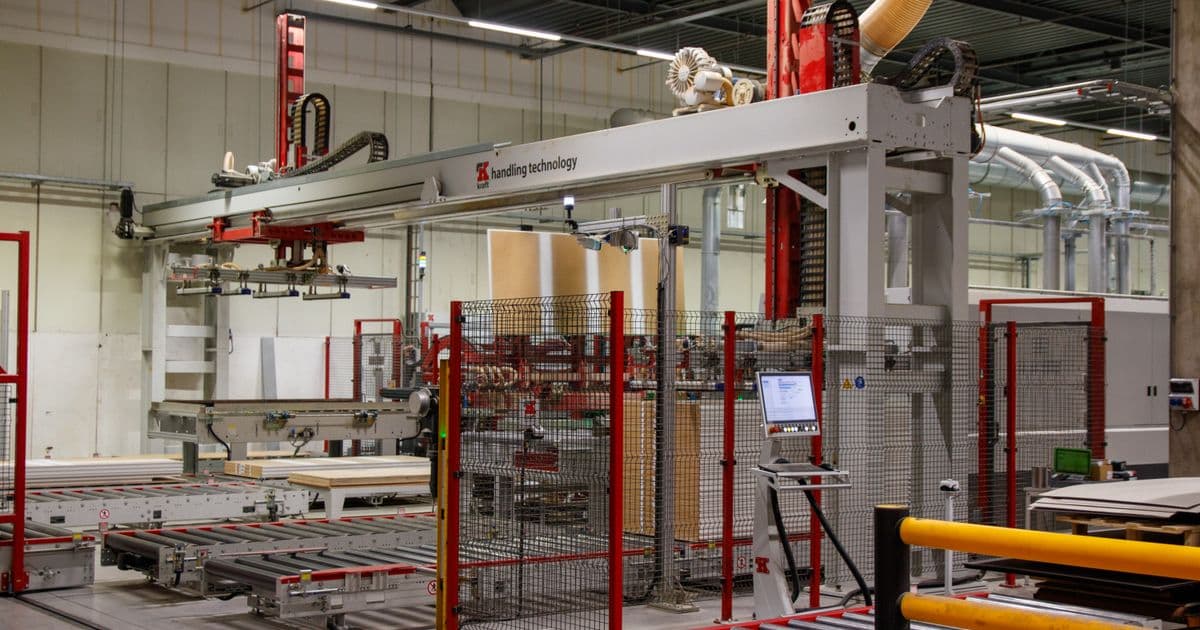
Business process automation is quickly becoming the difference between enterprises that scale efficiently and those buried under manual work. For Indian companies juggling rising labour costs, tightening compliance, and customers who expect instant service, business process automation (BPA) offers a structured way to do more with the same team — without ripping out the systems you already run. This guide explains what BPA actually is, how it differs from RPA and intelligent automation, which processes deliver the fastest returns, and how to roll it out without the common mistakes.
What is business process automation?
The keyword is process. A single automated task — auto-filling a field, sending a reminder — is useful, but BPA orchestrates an end-to-end journey: from the moment a purchase request is raised to the day the vendor is paid, or from a new hire accepting an offer to their laptop, email, and payroll being ready on day one.
Done well, BPA delivers four things Indian enterprises consistently ask for:
- Speed — cycle times drop from days to hours.
- Accuracy — rules don't fat-finger a GST number at 6 p.m.
- Visibility — every step is logged, auditable, and reportable.
- Scalability — volume can double without doubling headcount.
BPA vs RPA vs intelligent automation
These three terms are used interchangeably in sales decks, but they mean different things — and confusing them leads to buying the wrong tool. Here is a clear comparison.
| Dimension | RPA (Robotic Process Automation) | BPA (Business Process Automation) | Intelligent Automation |
|---|---|---|---|
| **Scope** | A single repetitive task | An entire cross-system process | Processes that need judgement or unstructured data |
| **How it works** | Mimics human clicks/keystrokes on the UI | Orchestrates systems, rules, and approvals | Combines BPA/RPA with AI, ML, and NLP |
| **Handles unstructured data?** | Poorly | Only with add-ons | Yes — reads invoices, emails, documents |
| **Best for** | Legacy apps with no API | Standardised, rules-based workflows | Variable, decision-heavy, or document-heavy work |
| **Typical example** | Copying data from a portal into SAP | Full order-to-cash from quote to receipt | Auto-classifying and coding scanned invoices |
| **Risk if misapplied** | Brittle bots that break on UI change | Over-engineering simple tasks | Cost and complexity where rules would do |
RPA is a tactic — a software "robot" that operates existing screens, ideal for legacy systems without APIs. BPA is the strategy — it redesigns and connects the whole process, and may use RPA as one component. Intelligent automation (sometimes called cognitive or AI-driven automation) adds machine learning and natural-language capabilities so automation can handle inputs and decisions that fixed rules cannot.
Industry analysts describe the convergence of these approaches as hyperautomation — the disciplined, business-driven combination of RPA, BPA, AI, and process mining to automate as much as responsibly possible. Gartner has repeatedly named it a top strategic technology trend, and you can read their framing on the Gartner glossary.
The practical takeaway: don't start by choosing a technology. Start by choosing a process. The process tells you whether you need rules, robots, AI, or all three.
High-ROI processes to automate first
Not every process deserves automation. The best candidates are high in volume, rich in rules, and painful when done by hand. For Indian enterprises, five areas consistently deliver strong returns.
1. Finance and accounts payable (AP)
Invoice processing is the classic BPA win. A typical AP cycle involves receiving an invoice, matching it to a purchase order and goods receipt, routing for approval, and posting for payment. Automating this three-way match removes data entry, prevents duplicate payments, and captures early-payment discounts. McKinsey's research on automation potential consistently finds finance and accounting among the most automatable functions — see McKinsey on digital and automation.
Metrics that move: cost per invoice (often ₹150–₹400 down to a fraction), processing time (days to hours), and exception rates. For a mid-sized Indian firm handling tens of thousands of invoices a year, even a modest per-invoice saving compounds into meaningful annual value, while the reduction in duplicate and fraudulent payments protects working capital directly.
2. HR onboarding and employee lifecycle
New-hire onboarding touches HR, IT, finance, and facilities. Automating it means an accepted offer automatically triggers document collection, background verification, asset allocation, payroll setup, and access provisioning — all tracked on one workflow. The same engine handles transfers, confirmations, and exits.
Metrics that move: time-to-productivity, first-day readiness, and compliance-document completeness.
3. Procurement and vendor management
Procurement is approval-heavy and prone to maverick spend. BPA enforces the request-to-approval path, checks budgets, applies delegation-of-authority rules, and creates a clean audit trail. Vendor onboarding — with GST validation, bank verification, and documentation — is another high-friction step that automates cleanly.
4. Order-to-cash (O2C)
Order-to-cash automation connects quoting, order capture, credit checks, fulfilment, invoicing, and collections. Breaks in this chain directly delay revenue. For manufacturers and distributors, integrating O2C with an ERP is where BPA pays for itself fastest — our own FlowSense manufacturing platform was built around exactly this kind of connected shop-floor-to-invoice flow.
5. Compliance and statutory reporting
India's regulatory calendar — GST filings, TDS, PF/ESI, statutory registers — is unforgiving. Automating data collection, validation, and reminder workflows reduces the risk of missed deadlines and penalties, and produces the audit trail regulators expect. This is often the process that gets leadership sign-off, because the cost of not automating is quantifiable.
An implementation roadmap
A disciplined rollout beats a big-bang rewrite every time. Here is a five-phase roadmap we use with clients.
Phase 1 — Discover and prioritise
Map your candidate processes and score each on volume, rule-clarity, error cost, and integration effort. Build a simple ranked backlog. Resist the urge to start with your most complex process; start with the one that is painful, well-understood, and measurable.
Phase 2 — Document the current and future state
Capture the "as-is" process honestly, including the workarounds nobody admits to. Then design the "to-be" flow. Automating a broken process just makes it fail faster — fix the design first. This is also where you decide which steps stay human.
Phase 3 — Choose the right tooling
Match technology to the process, not the other way around:
- Rules and approvals → a workflow/BPA engine.
- Legacy systems without APIs → add RPA.
- Unstructured documents or decisions → add AI/intelligent automation.
Where AI genuinely helps — extracting data from messy invoices, classifying support requests, scoring priorities — a platform like our Vidhaana AI layer can plug into the workflow rather than replacing it.
Phase 4 — Build, integrate, and pilot
Develop iteratively. Integrate with your ERP, CRM, and email. Run a pilot on real volume with a defined rollback plan, and measure against the baseline you captured in Phase 1. Keep humans in the loop for exceptions from day one.
Phase 5 — Deploy, monitor, and scale
Roll out in controlled waves, monitor cycle times and exception rates, and feed learnings back. Only then move to the next process on your backlog. IBM's guidance on scaling automation stresses continuous monitoring and governance as you expand — a useful reference at IBM .
Common pitfalls to avoid
Most BPA disappointments trace back to a handful of avoidable mistakes:
- 1Automating the wrong process first. Chasing a flashy, complex use case before proving value on a simple one starves the programme of early wins.
- 2Paving the cow path. Digitising a flawed process locks in its flaws. Redesign before you automate.
- 3Ignoring change management. Automation changes jobs. Without clear communication and reskilling, you get quiet resistance and shadow processes.
- 4Underestimating integration. The demo works; the real world has three ERPs, a legacy portal, and Excel. Budget for integration properly.
- 5No ownership after go-live. Bots and workflows need maintenance. Assign an owner and a monitoring routine, or the system quietly rots.
- 6Skipping governance. As automations multiply, you need standards, security review, and an inventory — otherwise you build a new kind of technical debt.
Deloitte's work on intelligent automation adoption echoes these themes: the organisations that scale successfully treat automation as an operating capability, not a one-off project. See Deloitte for their perspective.
How AI is expanding what BPA can do
Traditional BPA excelled at structured, rules-based work. The current wave of AI — especially large language models and document-understanding models — is pushing automation into territory that used to require a human:
- Unstructured documents. AI reads scanned invoices, contracts, and emails, extracting fields no rigid template could handle.
- Natural-language interfaces. Employees trigger and query workflows in plain English (or Hindi), lowering the adoption barrier.
- Predictive routing. Models predict which approvals will stall, which orders are high-risk, or which invoices need scrutiny.
- Exception handling. Instead of dumping every edge case on a person, AI can resolve or pre-classify a growing share of them.
The winning pattern is rules first, AI where it removes a real bottleneck. AI is not a reason to automate — a bottleneck is. Layering intelligence onto a well-designed process compounds the value; bolting it onto chaos just adds cost.
Where APPIT fits
At APPIT Software Solutions, we help Indian enterprises move from scattered manual work to connected, automated processes. Our automation services cover the full arc — process discovery, workflow design, system integration, and AI where it earns its place. FlowSense brings connected order-to-cash and shop-floor automation to manufacturers, while Vidhaana adds the AI layer for document-heavy and decision-heavy steps. You can see the wider toolkit on our products page, read more on our blog, or learn about our approach on the about page.
We say this honestly: not every process needs our platforms, and not every process needs AI. The right first step is usually a short discovery conversation to find the one workflow where automation will pay back fastest.
Conclusion
Business process automation is no longer a differentiator reserved for large multinationals — it is table stakes for any Indian enterprise that wants to grow without growing its overheads at the same rate. Start with a painful, high-volume, rules-based process. Redesign it before you automate it. Prove ROI in a quarter, then scale with governance. Add RPA for legacy screens and AI where judgement or unstructured data creates a genuine bottleneck.
If you're ready to identify your highest-ROI automation opportunity and map a practical rollout, contact our team for a no-obligation process discovery session — we'll help you find the one workflow worth automating first.