# The Complete Guide to AI for Automation: How Businesses Are Eliminating Manual Work in 2026
AI for automation is no longer a futuristic concept reserved for trillion-dollar technology companies. In 2026, artificial intelligence automation has become the primary lever that mid-market and enterprise organizations use to eliminate repetitive manual work, reduce operational costs, and unlock competitive advantages that were impossible just three years ago. According to McKinsey's 2025 Global AI Survey , 72% of organizations have now adopted AI in at least one business function -- up from 55% in 2023 -- and the organizations reporting measurable ROI from AI automation have doubled year over year.
But the landscape is complex. The term "AI automation" covers everything from intelligent document processing to fully autonomous production lines. Business leaders navigating this space face a bewildering array of vendor claims, technology categories, and implementation approaches. The difference between organizations that capture transformative value from AI automation and those that end up with expensive shelfware comes down to understanding what AI automation actually is, where it applies, and how to implement it systematically.
This guide provides that understanding. Whether you are a CTO evaluating your first AI automation investment, an operations director looking to scale existing automation, or a digital transformation leader building a multi-year roadmap, this is the complete resource for AI-powered automation in 2026.
What AI Automation Is -- and How It Differs from Traditional RPA
Traditional robotic process automation (RPA) follows rigid, pre-programmed rules. An RPA bot can copy data from one spreadsheet to another, fill out a form with pre-defined values, or move files between folders. These bots are fast and reliable for structured, repetitive tasks -- but they break the moment something unexpected happens. A slightly different invoice format, a new field in a form, or an email written in natural language instead of a template will stop an RPA bot cold.
AI automation is fundamentally different. Instead of following rules, AI automation systems learn patterns, interpret unstructured data, make probabilistic decisions, and improve over time. An AI-powered automation system can read an invoice regardless of format, extract the relevant data, cross-reference it against purchase orders, flag anomalies, and route exceptions to the right human reviewer -- all without being explicitly programmed for each invoice layout.
The distinction matters because it determines the scope of what you can automate. RPA automates approximately 20-30% of business processes -- the structured, rule-based ones. AI automation extends that reach to 60-80% of processes by handling the unstructured, judgment-dependent work that RPA cannot touch.
| Dimension | Traditional RPA | AI Automation |
|---|---|---|
| Input handling | Structured data only | Structured and unstructured data |
| Decision making | Rule-based, deterministic | Pattern-based, probabilistic |
| Adaptability | Breaks on exceptions | Learns from exceptions |
| Scope | 20-30% of processes | 60-80% of processes |
| Maintenance | High (rule updates for every change) | Low (model retraining, self-improving) |
| Setup complexity | Low (record and playback) | Medium-high (training data, integration) |
| ROI timeline | Quick wins (weeks) | Transformative value (months) |
The most effective automation strategies in 2026 combine both approaches: RPA for the simple, structured tasks where it excels, and AI automation for the complex, judgment-intensive processes where human intelligence was previously the only option.
Types of AI Automation: Cognitive, Predictive, and Generative
AI automation is not a single technology -- it encompasses three distinct categories, each suited to different business problems.
Cognitive Automation
Cognitive automation uses natural language processing (NLP), computer vision, and machine learning to understand, interpret, and act on unstructured data. This is the category that most directly replaces manual knowledge work.
Applications include intelligent document processing (reading contracts, invoices, and forms), email classification and routing, customer inquiry resolution, compliance document review, and data extraction from images, PDFs, and handwritten documents. Deloitte's 2025 Intelligent Automation Survey found that cognitive automation delivers the highest ROI per dollar invested across all automation categories, with an average payback period of 9 months.
In practice, cognitive automation is the entry point for most organizations because the use cases are immediately visible -- every department has stacks of unstructured documents that require human interpretation today.
Predictive Automation
Predictive automation uses machine learning models trained on historical data to anticipate future events and trigger automated responses. Rather than reacting to problems after they occur, predictive automation prevents them.
Applications include predictive maintenance (anticipating equipment failures before they happen), demand forecasting (automatically adjusting inventory and production schedules), customer churn prediction (triggering retention campaigns before customers leave), fraud detection (flagging suspicious transactions in real time), and workforce planning (predicting staffing needs based on seasonal patterns and project pipelines).
Predictive automation delivers its highest value in industries with expensive downtime, complex supply chains, or high customer acquisition costs. Manufacturing, logistics, financial services, and telecommunications are the sectors seeing the fastest adoption.
Generative Automation
Generative automation -- powered by large language models and diffusion models -- creates new content, code, designs, and solutions rather than simply processing existing data. This is the newest and fastest-growing category, driven by advances in foundation models through 2024-2026.
Applications include automated report generation (transforming raw data into executive summaries), code generation and testing (accelerating software development), marketing content creation (drafting campaigns, social media, and email sequences), product design iteration (generating design variations based on constraints), and training material development (creating course content from subject matter documentation).
Generative automation is uniquely powerful because it augments creative and analytical work that was previously considered automation-proof. However, it requires human oversight for quality assurance, factual accuracy, and brand consistency -- making it a human-AI collaboration tool rather than a fully autonomous system.
Industry Applications: AI for Automation Across Key Sectors
The power of AI automation becomes concrete when you see how it applies to specific industries. Here is how leading organizations are deploying AI-powered automation in 2026.
Manufacturing: Intelligent Production and Quality Control
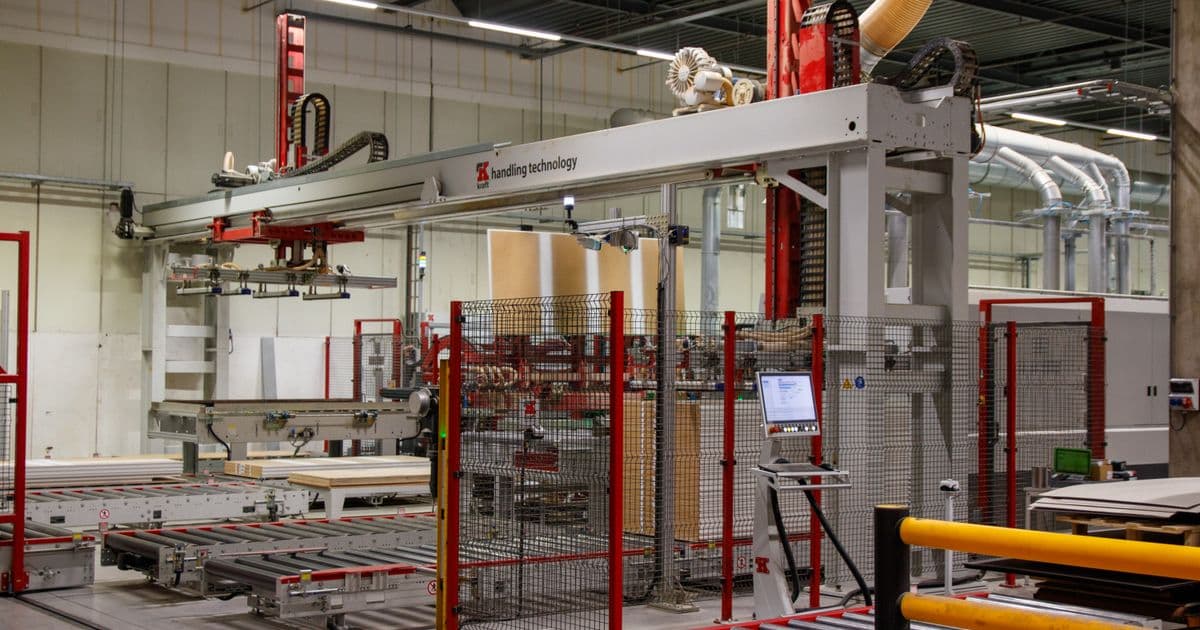
Manufacturing has embraced AI automation more aggressively than any other sector, driven by the convergence of IoT sensors, edge computing, and machine learning. The concept of the "lights-out factory" -- a production facility that operates autonomously with minimal human intervention -- is moving from theoretical to operational.
AI automation in manufacturing encompasses predictive maintenance (reducing unplanned downtime by 35-50%), automated quality inspection (computer vision systems that detect defects invisible to the human eye), production scheduling optimization (AI algorithms that balance machine utilization, order priorities, and energy costs), and supply chain synchronization (demand signals that automatically adjust procurement, production, and distribution).
FlowSense ERP integrates AI-driven automation directly into manufacturing operations, connecting shop floor sensor data with enterprise planning to create closed-loop automation. When a FlowSense-monitored machine shows early signs of bearing degradation, the system automatically schedules maintenance during the next planned downtime window, orders the replacement part, and adjusts the production schedule to accommodate the maintenance -- all without human intervention.
Gartner's manufacturing technology forecast projects that 40% of large manufacturers will operate at least one fully autonomous production line by 2028, up from fewer than 5% in 2024.
Human Resources: From Administrative Burden to Strategic Partner
HR departments are among the most paper-intensive functions in any organization, making them prime candidates for AI automation. The transformation is profound: AI automation is shifting HR from an administrative function that processes forms and enforces compliance to a strategic partner that predicts workforce needs and optimizes employee experience.
AI automation in HR covers recruitment (automated resume screening, candidate matching, interview scheduling, and bias detection), onboarding (personalized onboarding journeys that adapt based on role, department, and learning pace), attendance and leave management (automated tracking, anomaly detection, and compliance enforcement), performance management (continuous feedback analysis, goal tracking, and promotion readiness scoring), and employee engagement (sentiment analysis from surveys, communication patterns, and collaboration data).
Workisy delivers AI-powered HR automation that eliminates the manual work consuming 60-70% of HR team bandwidth. Workisy's intelligent document processing reads offer letters, contracts, and compliance documents automatically. Its attendance automation eliminates manual timesheets entirely. And its AI-powered analytics surface workforce insights -- flight risk scores, skills gaps, overtime patterns -- that enable HR to act proactively rather than reactively.
Legal: Contract Intelligence and Compliance Automation
The legal industry has traditionally been resistant to automation, but AI is changing that equation. Legal work involves massive volumes of unstructured text -- contracts, regulations, case law, correspondence -- that are ideal targets for cognitive automation.
AI automation in legal includes contract lifecycle management (automated drafting, review, clause extraction, and obligation tracking), regulatory compliance monitoring (continuously scanning regulatory updates and flagging impacts on business operations), legal research (AI-powered search across case law databases that surfaces relevant precedents in seconds rather than hours), due diligence automation (extracting and analyzing key terms across thousands of documents during M&A transactions), and litigation support (document review, relevance classification, and privilege detection).
Vidhaana brings AI-powered legal automation to enterprises that manage high volumes of contracts and regulatory obligations. Vidhaana's contract intelligence engine reads contracts in any format, extracts key terms, obligations, and deadlines, flags non-standard clauses, and tracks compliance status across the entire contract portfolio. Organizations using Vidhaana report 70% reductions in contract review time and near-elimination of missed obligation deadlines.
Logistics: Autonomous Planning and Real-Time Optimization
Logistics is a domain where AI automation delivers immediate, measurable value because the problems are quantifiable -- delivery times, fuel costs, warehouse utilization, route efficiency -- and the data volumes are massive.
AI automation in logistics encompasses route optimization (AI algorithms that calculate optimal routes considering traffic, weather, delivery windows, vehicle capacity, and fuel costs), warehouse automation (robotic picking, packing, and sorting guided by AI-optimized sequencing), demand-driven inventory management (predictive models that position inventory based on anticipated demand rather than historical averages), real-time fleet tracking and anomaly detection (monitoring thousands of vehicles simultaneously and flagging deviations from expected patterns), and last-mile delivery optimization (dynamic routing that adapts to real-time conditions).
TrackNexus provides AI-powered fleet and workforce tracking that transforms logistics operations from reactive to predictive. TrackNexus combines real-time GPS tracking with AI-driven route optimization, fuel efficiency analysis, and delivery time prediction. Fleet managers using TrackNexus report 15-25% reductions in fuel costs and 30% improvements in on-time delivery rates through AI-optimized routing and proactive exception management.
Construction: Project Intelligence and Resource Optimization
Construction is an industry where automation adoption has historically lagged, but AI is accelerating the transformation. Construction projects generate enormous volumes of data -- drawings, schedules, material specs, inspection reports, daily logs -- that AI can analyze to prevent delays, reduce waste, and improve safety.
AI automation in construction includes project schedule optimization (AI algorithms that identify critical path risks and suggest schedule adjustments), material quantity estimation (computer vision and machine learning that calculate material requirements from drawings with higher accuracy than manual takeoffs), quality inspection (drone-based and camera-based AI systems that detect structural defects, concrete curing issues, and safety violations), resource allocation (AI-driven scheduling of equipment, labor, and materials across multiple projects), and cost forecasting (predictive models that flag budget overruns before they materialize).
SlabIQ applies AI automation specifically to concrete construction -- one of the most material-intensive and error-prone segments of the industry. SlabIQ's AI-powered slab estimation and quality monitoring eliminates the manual calculations that lead to material over-ordering (typically 10-15% waste) and the visual inspections that miss subsurface defects. Construction firms using SlabIQ report 8-12% reductions in concrete material costs and 40% faster estimation cycles.
The AI Automation Implementation Roadmap
Implementing AI automation successfully requires a structured approach. Organizations that achieve transformative results follow a phased roadmap rather than attempting enterprise-wide transformation simultaneously.
Phase 1: Assessment and Opportunity Mapping (4-6 Weeks)
Begin by cataloging your business processes and scoring them across four dimensions:
- 1Volume -- How frequently is this process executed? High-volume processes offer the largest automation payoff.
- 2Complexity -- How much judgment and interpretation does the process require? Processes requiring significant human judgment are candidates for AI automation rather than simple RPA.
- 3Data availability -- Is historical process data available for model training? AI automation requires training data.
- 4Business impact -- What is the cost of the current manual process? Include labor costs, error costs, delay costs, and opportunity costs.
Map your processes on a 2x2 matrix of automation feasibility (volume plus data availability) versus business impact. Start with the high-feasibility, high-impact quadrant.
Phase 2: Proof of Concept (6-8 Weeks)
Select 2-3 processes from the high-priority quadrant and build proof-of-concept automations. The goal is not production-ready automation -- it is validated learning about what works, what does not, and what the realistic ROI will be.
Key success criteria for proof of concept: - Automation accuracy exceeds 85% (for cognitive automation tasks) - Processing time reduction exceeds 50% versus manual baseline - Exception rate is below 15% (percentage of cases requiring human intervention) - Stakeholders confirm the automation output meets quality standards
Phase 3: Production Deployment (8-12 Weeks)
Harden the proof-of-concept automations for production use. This phase includes integration with existing enterprise systems (ERP, CRM, HRMS), exception handling workflows (what happens when the AI is uncertain), monitoring and alerting (dashboards that track automation performance, accuracy, and throughput), security and compliance review (data handling, access controls, audit trails), and change management (training, communication, and process documentation).
Phase 4: Scale and Optimize (Ongoing)
Expand automation to additional processes based on Phase 1 mapping. Continuously monitor and retrain AI models as business conditions change. Measure and report ROI quarterly to maintain organizational commitment. Build internal AI automation competency through training and hiring.
ROI Metrics: Measuring the Value of AI Automation
Quantifying AI automation ROI requires tracking metrics across four categories.
Direct cost savings. Labor hours eliminated, error costs avoided, overtime reduced, and temporary staffing needs eliminated. Most organizations see 30-60% labor cost reductions in automated processes. A Deloitte study on automation economics found that organizations achieving scaled AI automation reduce operational costs by 25-40% across automated functions.
Speed improvements. Process cycle time reductions, faster customer response times, reduced time-to-market for products and services, and accelerated decision-making. AI automation typically delivers 50-90% reductions in process cycle times.
Quality improvements. Error rate reductions, compliance violation reductions, customer satisfaction improvements, and defect rate reductions. AI-powered quality inspection in manufacturing achieves 99.5%+ detection rates compared to 85-95% for manual inspection.
Revenue enablement. New capabilities enabled by automation (e.g., real-time personalization at scale), faster market entry, improved customer experience driving retention and expansion, and competitive differentiation through operational excellence.
The total ROI calculation is:
ROI = (Total annual benefits - Total annual costs) / Total annual costs x 100
Where total annual benefits include all four categories above, and total annual costs include technology licensing, implementation, training, maintenance, and ongoing model management.
Common Challenges and How to Overcome Them
AI automation implementation faces predictable challenges. Knowing them in advance allows you to plan mitigations.
Data Quality and Availability
AI models are only as good as their training data. Organizations frequently discover that their historical process data is incomplete, inconsistent, or siloed across multiple systems. The mitigation is to invest in data preparation as a first-class project phase -- not an afterthought. Budget 20-30% of your total automation investment for data cleansing, integration, and enrichment.
Change Management and Workforce Resistance
Automation triggers legitimate concerns about job displacement. The most successful implementations address this directly with transparent communication about which tasks (not jobs) are being automated, reskilling programs that prepare employees for higher-value work, early involvement of frontline workers in automation design (they know the processes best), and clear metrics showing how automation improves working conditions by eliminating tedious manual tasks.
Integration Complexity
Enterprise environments are complex, with dozens of systems that must work together. AI automation adds another layer of integration. Organizations that underestimate integration complexity account for the majority of automation project failures. The mitigation is to choose platforms with pre-built integrations (like FlowSense ERP, which provides native AI automation within the ERP ecosystem), invest in API-first architecture, and sequence integrations to start simple and layer complexity.
Unrealistic Expectations
The biggest enemy of AI automation success is the expectation of perfect performance from day one. AI systems improve over time through retraining and feedback loops. Set expectations for 85% automation accuracy at launch, improving to 95%+ within 6 months. Build human-in-the-loop workflows that handle exceptions gracefully. Celebrate progressive improvement rather than demanding perfection.
Governance and Ethics
As AI automation makes more decisions, governance becomes critical. Establish clear policies for which decisions AI can make autonomously, which require human approval, and how AI decisions are audited. Address bias in training data, ensure transparency in AI decision-making, and maintain human accountability for automated outcomes.
Future Trends: Where AI Automation Is Heading
Several converging trends will shape AI automation through 2027 and beyond.
Agentic AI. AI systems that autonomously plan, execute, and iterate on multi-step workflows without human prompting for each step. Agentic AI moves automation from task-level to process-level autonomy, enabling end-to-end automation of complex workflows that currently require human orchestration.
Industry-specific foundation models. General-purpose AI models are being fine-tuned for specific industries, creating models that understand manufacturing terminology, legal language, healthcare protocols, and financial regulations natively. These specialized models dramatically reduce implementation time and improve accuracy for industry-specific automation.
Edge AI. AI processing is moving from cloud data centers to edge devices -- sensors, cameras, and controllers on factory floors, construction sites, and logistics hubs. Edge AI enables real-time automation decisions without network latency, making autonomous operations feasible in environments where milliseconds matter.
Human-AI collaboration interfaces. The interface between human workers and AI systems is evolving from dashboards and reports to conversational, collaborative interactions. Workers will increasingly "work with" AI assistants that handle routine aspects of their work while escalating complex decisions for human judgment.
Autonomous operations. The convergence of all these trends points toward autonomous operations -- business functions that run with minimal human intervention, with humans focusing on exception handling, strategy, and innovation. Manufacturing, logistics, and IT operations will lead this transition.
Building Your AI Automation Strategy
AI for automation represents the most significant operational opportunity since the cloud computing revolution. The organizations that will thrive in the next decade are those building systematic AI automation capabilities today.
Start with a clear-eyed assessment of your highest-value automation opportunities. Build proof of concepts that validate real ROI. Deploy production systems with robust monitoring and human-in-the-loop workflows. Scale systematically based on proven results.
The technology is mature. The implementation playbooks are proven. The ROI is documented. The remaining variable is organizational commitment to executing the transformation.
Whether your automation needs span manufacturing operations with FlowSense ERP, HR transformation with Workisy, legal intelligence with Vidhaana, logistics optimization with TrackNexus, or construction automation with SlabIQ, the path forward starts with understanding your processes, quantifying your opportunities, and committing to systematic implementation.
Ready to explore how AI automation can transform your operations? Contact APPIT Software for a personalized assessment of your highest-value automation opportunities, or explore our full product portfolio to see AI-powered automation in action.