APPIT Software - Solutions Delivered
Demos
LoginGet Started
Aegis BrowserFlowSenseVidhaanaTrackNexusWorkisySlabIQLearnPathAI InterviewAll ProductsDigital TransformationAI/ML IntegrationLegacy ModernizationCloud MigrationCustom DevelopmentData AnalyticsStaffing & RecruitmentAll ServicesHealthcareFinanceManufacturingRetailLogisticsProfessional ServicesEducationHospitalityReal EstateAgricultureConstructionInsuranceHRTelecomEnergyAll IndustriesCase StudiesBlogResource LibraryProduct ComparisonsAbout UsCareersContact
APPIT Software - Solutions Delivered

Transform your business from legacy systems to AI-powered solutions. Enterprise capabilities at SMB-friendly pricing.

Company

  • About Us
  • Leadership
  • Careers
  • Contact

Services

  • Digital Transformation
  • AI/ML Integration
  • Legacy Modernization
  • Cloud Migration
  • Custom Development
  • Data Analytics
  • Staffing & Recruitment

Products

  • Aegis Browser
  • FlowSense
  • Vidhaana
  • TrackNexus
  • Workisy
  • SlabIQ
  • LearnPath
  • AI Interview

Industries

  • Healthcare
  • Finance
  • Manufacturing
  • Retail
  • Logistics
  • Professional Services
  • Hospitality
  • Education

Resources

  • Case Studies
  • Blog
  • Live Demos
  • Resource Library
  • Product Comparisons

Contact

  • info@appitsoftware.com

Global Offices

🇮🇳

India(HQ)

PSR Prime Towers, 704 C, 7th Floor, Gachibowli, Hyderabad, Telangana 500032

🇺🇸

USA

16192 Coastal Highway, Lewes, DE 19958

🇦🇪

UAE

IFZA Business Park, Dubai Silicon Oasis, DDP Building A1, Dubai

🇸🇦

Saudi Arabia

Futuro Tower, King Saud Road, Riyadh

© 2026 APPIT Software Solutions. All rights reserved.

Privacy PolicyTerms of ServiceCookie PolicyRefund PolicyDisclaimer

Need help implementing this?

Get Free Consultation
  1. Home
  2. Blog
  3. Semiconductor & Electronics
Semiconductor & Electronics

AI Defect Detection in Semiconductor Fabs

How machine learning and computer vision are transforming semiconductor defect detection, reducing false positives by 60%, and recovering millions in yield losses.

AS
APPIT Software
|February 21, 20264 min readUpdated Feb 2026
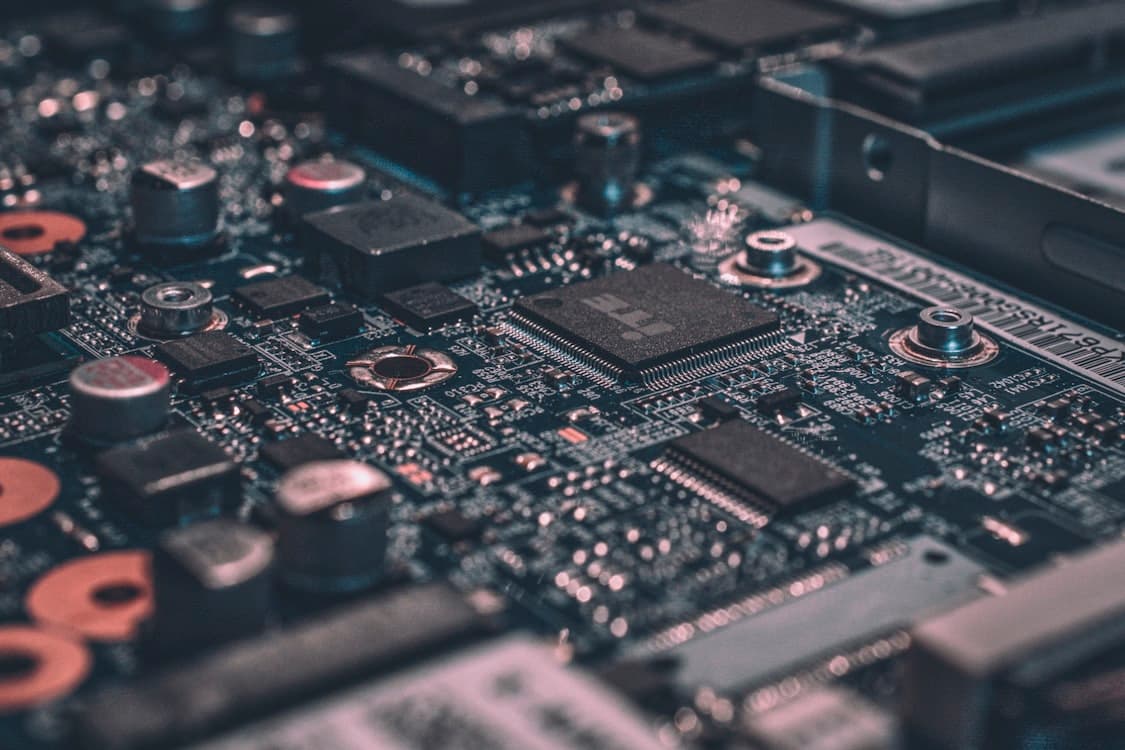
AI-powered defect detection analyzing semiconductor wafer inspection images

Get Free Consultation

Talk to our experts today

By submitting, you agree to our Privacy Policy. We never share your information.

Need help implementing this?

Get a free consultation from our expert team. Response within 24 hours.

Get Free Consultation

Key Takeaways

  • 1The Defect Detection Challenge in Modern Fabs
  • 2How AI Defect Detection Works
  • 3Integration with Semiconductor ERP
  • 4ROI of AI Defect Detection
  • 5Implementation Considerations

The Defect Detection Challenge in Modern Fabs

As semiconductor nodes shrink below 5nm, defect detection becomes exponentially harder, a challenge highlighted in SEMI's technology roadmaps . A particle that was harmless at 28nm becomes a killer defect at 3nm. Traditional rule-based defect classification systems struggle with increasing noise, generating false positive rates above 40% that waste engineering time and mask real issues.

AI-powered defect detection changes the equation. Machine learning models trained on millions of defect images classify defects with accuracy exceeding 95%, reduce false positives by 60%, and identify novel defect types that rule-based systems miss entirely.

How AI Defect Detection Works

Image Acquisition and Preprocessing

Semiconductor defect inspection generates massive datasets:

  • Brightfield inspection — optical microscopy images of wafer surfaces
  • Darkfield inspection — scattered light detection for particles and surface anomalies
  • E-beam inspection — electron beam imaging for sub-optical defects
  • Review SEM — high-resolution images of flagged defect sites

Each inspection tool generates thousands of images per wafer. A high-volume fab produces terabytes of inspection data daily. AI systems must process this data in near real-time to provide actionable feedback within the process cycle.

Deep Learning Classification

Convolutional neural networks (CNNs) trained on labeled defect datasets classify each detected anomaly into categories:

  • Killer defects — particles, pattern defects, and shorts that will cause die failure
  • Nuisance defects — cosmetic issues that do not affect functionality
  • Process-induced defects — systematic issues indicating equipment or recipe problems
  • Previous-layer defects — carried forward from earlier process steps

The model learns to distinguish between these categories with far greater consistency than human reviewers, who show classification agreement rates of only 60-70% on ambiguous defects.

Spatial Analysis and Pattern Recognition

AI goes beyond individual defect classification to analyze spatial patterns across the wafer:

  • Cluster detection — groups of defects indicating localized contamination
  • Scratch detection — linear defect patterns from handling damage
  • Repeater analysis — defects appearing at the same die location across multiple wafers, indicating reticle or equipment issues
  • Zone analysis — edge, center, or notch-correlated yield loss patterns

These spatial signatures provide direct diagnostic value. A ring-shaped pattern of defects at a specific radius strongly implicates the edge bead removal process. A repeater defect at fixed coordinates points to the photomask.

Integration with Semiconductor ERP

Standalone defect detection provides limited value without integration into the broader manufacturing system. When AI defect detection is integrated with semiconductor ERP like FlowSense Semiconductor, the system can:

  • Automatically hold suspect lots before they progress to expensive downstream steps
  • Trigger equipment qualification checks when defect rates exceed thresholds
  • Correlate defects with process parameters stored in the ERP's lot history
  • Update yield predictions in real-time based on inspection results
  • Generate disposition recommendations combining defect data with customer requirements

This integration approach is detailed in our guide to semiconductor yield management with AI.

This closed-loop integration transforms defect detection from a passive monitoring function into an active yield management tool.

ROI of AI Defect Detection

Direct Yield Recovery

As the NIST Advanced Manufacturing program research confirms, identifying killer defects earlier in the process prevents wasted processing time on wafers that will ultimately fail. For a fab running 10,000 wafer starts per month at $5,000 per wafer:

  • 1% yield improvement = $6M annual savings
  • Reduced scrap from early detection = $2-4M annually
  • Faster excursion response = $1-3M in prevented losses

Engineering Productivity

AI classification reduces the manual review burden by 70-80%. Defect engineers spend their time on novel failure modes and process improvement rather than repetitive image classification. This productivity gain alone justifies the investment for many fabs.

Equipment Utilization

Faster, more accurate defect classification enables tighter equipment monitoring. Detecting tool degradation through defect signature analysis prevents unplanned downtime and extends maintenance intervals. For tools costing $20-50M each, even small utilization improvements generate significant returns.

Implementation Considerations

  1. 1Data quality is everything — AI models are only as good as training data. Invest in consistent, accurate defect labeling before deploying ML.
  2. 2Start with high-volume layers — focus initial deployment on process steps with the most inspection data and highest yield impact.
  3. 3Maintain human oversight — AI should augment, not replace, defect engineering judgment. New failure modes require human analysis before AI can learn them.
  4. 4Plan for model updates — semiconductor processes evolve. Retrain models quarterly or when process changes occur.
Integrate AI defect detection with your ERP. Learn how FlowSense Semiconductor works.

Free Consultation

Ready to Optimize Your Semiconductor Operations?

Discover AI-powered solutions for fab management, yield optimization, and process control.

  • Expert guidance tailored to your needs
  • No-obligation discussion
  • Response within 24 hours

By submitting, you agree to our Privacy Policy. We never share your information.

Frequently Asked Questions

How accurate is AI defect detection in semiconductor manufacturing?

Modern AI defect classification systems achieve accuracy exceeding 95% with false positive rates reduced by 60% compared to rule-based systems. Deep learning models trained on millions of defect images consistently outperform human reviewers who show only 60-70% agreement on ambiguous defects.

What is the ROI of AI defect detection in a semiconductor fab?

A typical fab running 10,000 wafer starts per month can expect $6M+ annually from 1% yield improvement, $2-4M from reduced scrap via early detection, and significant engineering productivity gains from 70-80% reduction in manual review workload.

How does AI defect detection integrate with semiconductor ERP?

AI defect detection integrates with semiconductor ERP to automatically hold suspect lots, trigger equipment qualification checks, correlate defects with process parameters, update yield predictions in real-time, and generate disposition recommendations.

About the Author

AS

APPIT Software

Semiconductor Technology Writer, APPIT Software Solutions

APPIT Software is the Semiconductor Technology Writer at APPIT Software Solutions, bringing extensive experience in enterprise technology solutions and digital transformation strategies across healthcare, finance, and professional services industries.

Sources & Further Reading

SEMI - Semiconductor Equipment and Materials InternationalMcKinsey SemiconductorsIEEE Spectrum

Related Resources

Semiconductor & Electronics Industry SolutionsExplore our industry expertise
Interactive DemoSee it in action
AI & ML IntegrationLearn about our services
Data AnalyticsLearn about our services

Topics

AI defect detectionsemiconductor yieldmachine learningwafer inspectionsemiconductor manufacturing

Share this article

Table of Contents

  1. The Defect Detection Challenge in Modern Fabs
  2. How AI Defect Detection Works
  3. Integration with Semiconductor ERP
  4. ROI of AI Defect Detection
  5. Implementation Considerations
  6. FAQs

Who This Is For

semiconductor yield engineers
fab process engineers
semiconductor quality managers
defect engineering teams
Free Resource

Semiconductor Fab Optimization Guide

Improve yield, reduce cycle times, and optimize fab operations with AI-powered manufacturing intelligence.

No spam. Unsubscribe anytime.

Ready to Transform Your Semiconductor & Electronics Operations?

Let our experts help you implement the strategies discussed in this article.

See Interactive DemoExplore Solutions

Related Articles in Semiconductor & Electronics

View All
Semiconductor production planning dashboard showing fab, sort, assembly, and test phases
Semiconductor & Electronics

Semiconductor Production Planning: A Guide

Master semiconductor production planning across fab, sort, assembly, and test with integrated ERP-driven scheduling, capacity management, and WIP control.

13 min readRead More
Semiconductor fab equipment OEE monitoring dashboard showing tool utilization and status
Semiconductor & Electronics

Equipment OEE Optimization in Semiconductor Fabs

Learn how semiconductor fabs use ERP-integrated OEE tracking to boost equipment utilization from industry-average 65% to world-class 90%+, recovering millions in lost capacity.

14 min readRead More
Semiconductor cycle time reduction strategies with real-time WIP tracking and scheduling
Semiconductor & Electronics

Semiconductor Cycle Time Reduction: 7 Strategies

Semiconductor cycle time directly impacts revenue, inventory costs, and customer satisfaction. Learn 7 ERP-driven strategies that reduce cycle time by 25-35% without sacrificing yield.

16 min readRead More
FAQ

Frequently Asked Questions

Common questions about this article and how we can help.

You can explore our related articles section below, subscribe to our newsletter for similar content, or contact our experts directly for a deeper discussion on the topic.