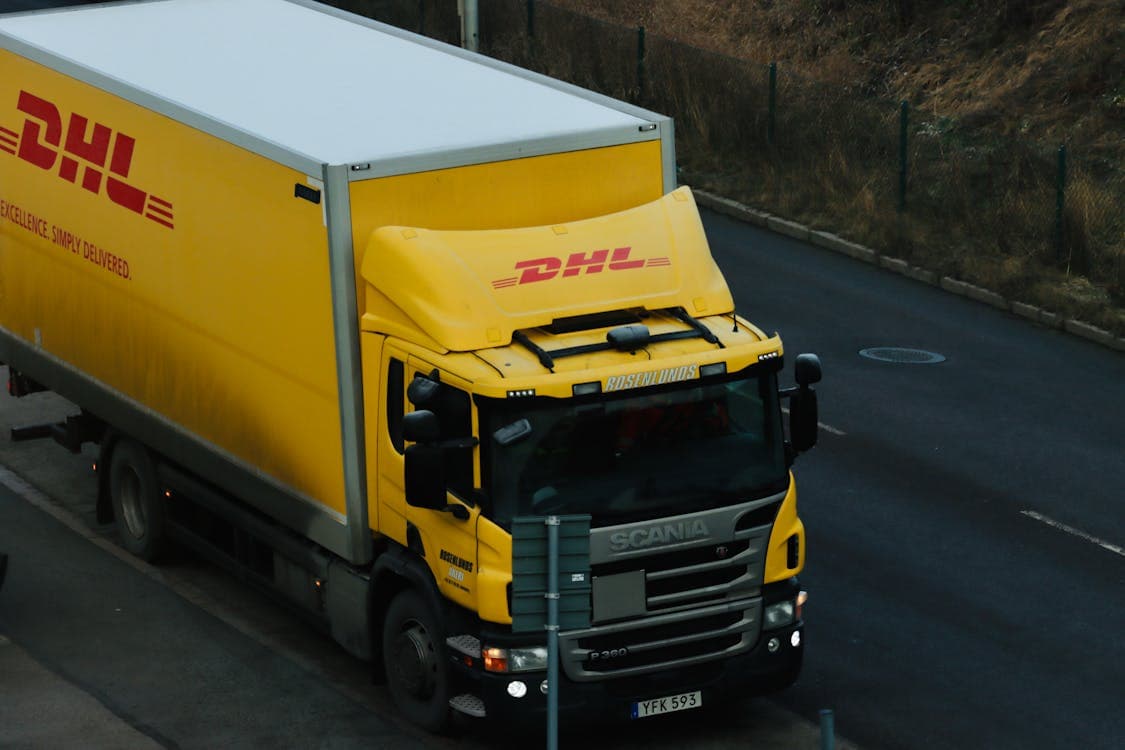
The four flavours of vehicle rental in India
Vehicle rental in India is not a single market. It is four distinct markets that share the word "rental" but have different customers, different unit economics, and different software requirements:
1. Self-drive rental
Customer rents a car for a few days, drives themselves, returns it. Operators: Zoomcar, Revv, Avis-India, MyChoize. Bookings are typically online with mobile-app pickup, digital documentation, and self-service.
Key operational specifics: customer driving licence verification, security deposit blocking on credit card, GPS tracking, post-trip damage assessment, fuel reconciliation, traffic-violation pass-through, and end-to-end digital experience.
2. Chauffeur-driven rental
Customer hires the car with a driver. Operators: Savaari, Carzonrent, local taxi operators, and thousands of small fleets. Bookings are typically through booking offices, agents, or apps.
Key operational specifics: driver assignment and scheduling, driver duty hours and overtime, customer service requirements (water bottles, magazines, phone chargers), tip handling, billing including driver allowance, and driver attrition management.
3. Taxi aggregator and ride-hailing fleet
Operators who own fleets of cars deployed on Uber, Ola, or similar platforms with hired drivers. Different commercial model — revenue share with the platform, daily target system for drivers, and per-vehicle profitability that depends on driver productivity.
Key operational specifics: driver onboarding and KYC, daily collections from drivers, EMI management for vehicles bought on finance, maintenance and downtime, and very tight margin discipline.
4. Corporate long-term rental
Operators who rent vehicles to corporate clients on 12-60 month contracts, sometimes with employee benefits programmes (chauffeur-driven for executives). The largest single contract may involve 200-500 vehicles for a single corporate client.
Key operational specifics: long-term contract management, monthly invoicing with extras (overtime, outstation, etc.), driver allocation, fleet replacement cycles, and corporate-specific reporting.
Why one platform rarely covers all four
Each flavour has different mechanics. A platform built for self-drive (mobile-first, digital documentation, hourly billing) struggles with chauffeur-driven (driver assignment, duty hours, monthly billing). A platform built for corporate long-term struggles with self-drive (no contract per booking, no driver, hourly returns).
Most multi-business operators in India end up running 2-3 platforms — one for each vertical they operate. The trick is having a single accounting and vehicle-master backbone with vertical-specific operational layers on top.
What vehicle rental ERP has to handle
Vehicle master
Make, model, registration number, year, purchase price, fuel type, transmission, current odometer, insurance policy and expiry, fitness certificate and expiry, permit and expiry (commercial vehicles), PUC certificate and expiry, current location, current status (available, on rent, in maintenance), and rental history.
The master must be the single source of truth across all four business verticals if the operator runs more than one.
Driver management
For chauffeur-driven and corporate long-term, drivers are core. Driver master includes: identity proofs (Aadhaar, driving licence with category and validity), commercial DL (badge for commercial vehicles), police verification status, training certifications, performance ratings, attendance, and disciplinary history.
Driver attendance, duty hours, overtime calculation, and salary processing are typically the most operationally intensive part of a chauffeur-driven business.
Booking and contract
Self-drive: online booking, deposit blocking, driving licence verification, pre-pickup photographs.
Chauffeur-driven: booking via call centre or app, driver assignment based on availability and location, customer briefing, vehicle assignment, dispatch.
Corporate long-term: contract management with rate cards, vehicle allocation, monthly billing, monthly extras (overtime, outstation, weekend running).
Compliance
Vehicle rental has heavy compliance overhead: - Vehicle permits (national, state, all-India tourist, contract carriage) by category - Insurance — comprehensive coverage, third-party, passenger cover - Fitness certificates with annual renewal - PUC certificates with quarterly renewal - Vehicle taxes (life-time or annual depending on state) - RTO renewals coordinated centrally - Driver badge renewals - E-way bill where applicable (rare for passenger vehicles)
Missing any of these creates legal exposure and operational disruption. A rental ERP tracks every certificate with renewal alerts.
Maintenance
Cars at 8,000 km service intervals, 24,000 km major service, brake/tyre/battery replacements at various lifecycles. For a 200-vehicle fleet, this is 30-50 maintenance events per month. The system schedules them, allocates a workshop, coordinates with operations to ensure the vehicle is off-rent during the service window, and tracks cost.
Telematics
GPS tracking is non-negotiable for self-drive and increasingly for chauffeur-driven. Telematics provides: real-time location, route history, harsh braking and acceleration events, speeding alerts, idle time, and geofencing for self-drive rentals where the customer must not take the vehicle outside the agreed area.
Financial reporting
Per-vehicle profitability over a 12-month rolling window shows which vehicles are profitable and which to sell or re-deploy. Driver-wise productivity (for chauffeur-driven and aggregator) shows top performers and underperformers. Per-corporate-client profitability for long-term shows which contracts are worth retaining and which need re-negotiation.
The challenges specific to Indian operations
Three structural challenges that distinguish Indian vehicle rental from global markets:
1. RTO and regulatory variation by state
Tourist permits differ from contract-carriage permits. National permits differ from all-India tourist permits. Each state has its own rules on cross-border movement, additional taxes, and documentation. A rental ERP must handle this complexity rather than abstract it away.
2. Driver economy and unionisation
Chauffeur-driven operations rely on drivers earning a predictable salary plus tips plus possibly an incentive on customer ratings. Driver attrition runs 25-40% annually at most operators. A platform that does not include driver lifecycle management (hiring, training, performance, exit) will struggle.
3. Aggregator commission compression
Operators with vehicles on Uber or Ola face commission compression that has eroded vehicle-level economics. Many operators have moved to a mixed model — some vehicles on aggregators, some on direct corporate contracts, some on self-drive. This requires platform support for multiple business models on the same fleet.
What to look for when evaluating vehicle rental software
Five non-negotiables:
- 1Multi-vertical support — if you operate self-drive and chauffeur-driven, the platform should handle both without compromise. Separate platforms for separate verticals are operationally painful at scale.
- 1Telematics integration — out-of-the-box support for the major Indian GPS hardware vendors (Telematics Wire, FleetX, RoadCast, MapMyIndia).
- 1Compliance dashboard — every vehicle's certificates and renewals on one screen with traffic-light status and renewal alerts.
- 1Driver management depth — driver master, attendance, duty hours, overtime, salary processing for the chauffeur-driven part of the business.
- 1Mobile-first workflows — drivers, dispatch executives, and operations supervisors all do most of their work on phones. Desktop-heavy platforms fail in field operations.
A platform that ticks all five is enterprise-ready. Three or fewer ticks means significant operational pain ahead.
The bottom line
Vehicle rental in India is an operationally intense business with low margins and heavy compliance overhead. The operators who have built proper software stacks run with significantly better unit economics than peers running on spreadsheets and phone calls.
For an operator with 50+ vehicles in any vertical, the question is not whether to invest in proper rental software. The question is which platform best matches your vertical mix and your scale ambitions.