APPIT Software - Solutions Delivered
Demos
LoginGet Started
Aegis BrowserFlowSenseVidhaanaTrackNexusWorkisySlabIQLearnPathAI InterviewAll ProductsDigital TransformationAI/ML IntegrationLegacy ModernizationCloud MigrationCustom DevelopmentData AnalyticsStaffing & RecruitmentAll ServicesHealthcareFinanceManufacturingRetailLogisticsProfessional ServicesEducationHospitalityReal EstateAgricultureConstructionInsuranceHRTelecomEnergyAll IndustriesCase StudiesBlogResource LibraryProduct ComparisonsAbout UsCareersContact
APPIT Software - Solutions Delivered

Transform your business from legacy systems to AI-powered solutions. Enterprise capabilities at SMB-friendly pricing.

Company

  • About Us
  • Leadership
  • Careers
  • Contact

Services

  • Digital Transformation
  • AI/ML Integration
  • Legacy Modernization
  • Cloud Migration
  • Custom Development
  • Data Analytics
  • Staffing & Recruitment

Products

  • Aegis Browser
  • FlowSense
  • Vidhaana
  • TrackNexus
  • Workisy
  • SlabIQ
  • LearnPath
  • AI Interview

Industries

  • Healthcare
  • Finance
  • Manufacturing
  • Retail
  • Logistics
  • Professional Services
  • Hospitality
  • Education

Resources

  • Case Studies
  • Blog
  • Live Demos
  • Resource Library
  • Product Comparisons

Contact

  • info@appitsoftware.com

Global Offices

šŸ‡®šŸ‡³

India(HQ)

PSR Prime Towers, 704 C, 7th Floor, Gachibowli, Hyderabad, Telangana 500032

šŸ‡ŗšŸ‡ø

USA

16192 Coastal Highway, Lewes, DE 19958

šŸ‡¦šŸ‡Ŗ

UAE

IFZA Business Park, Dubai Silicon Oasis, DDP Building A1, Dubai

šŸ‡øšŸ‡¦

Saudi Arabia

Futuro Tower, King Saud Road, Riyadh

Ā© 2026 APPIT Software Solutions. All rights reserved.

Privacy PolicyTerms of ServiceCookie PolicyRefund PolicyDisclaimer

Need help implementing this?

Get Free Consultation
  1. Home
  2. Blog
  3. Infrastructure & Energy
Infrastructure & Energy

Solving Peak Demand: AI-Powered Load Balancing Strategies

How AI enables more effective peak demand management and load balancing for utilities. Learn about forecasting, optimization, demand response, and real-time balancing strategies.

RM
Rajan Menon
|January 26, 20264 min readUpdated Jan 2026
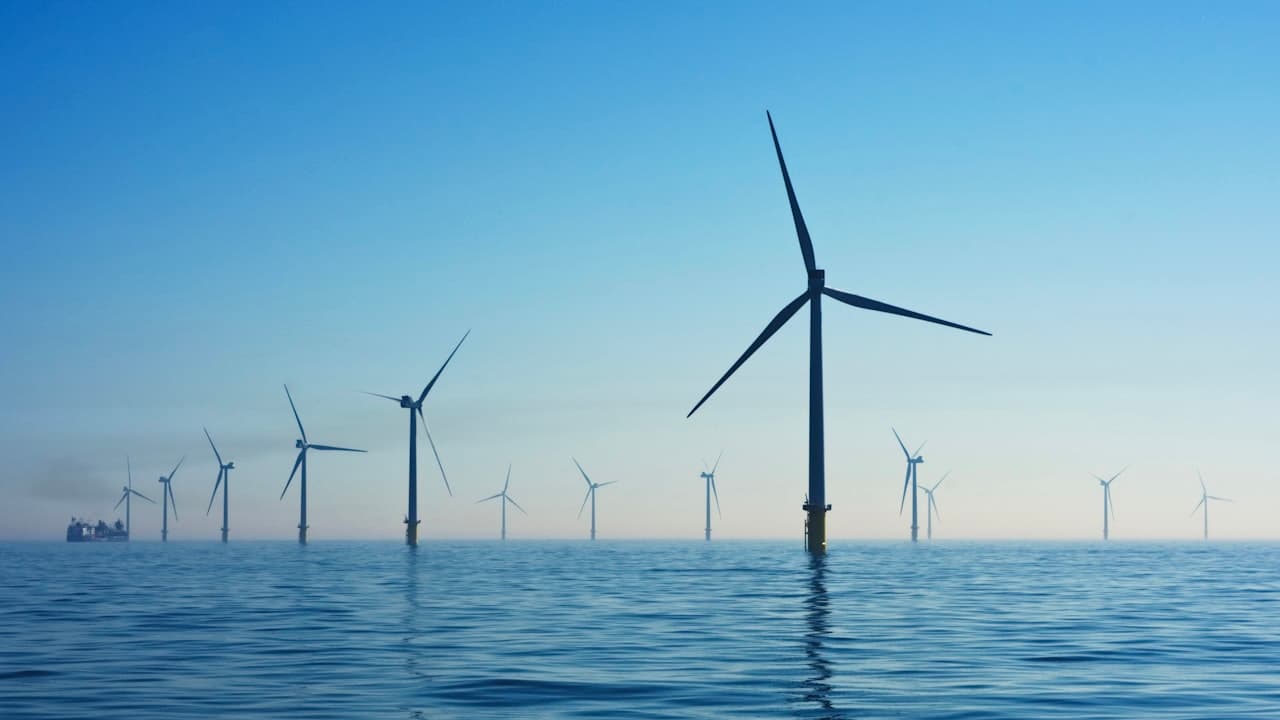
AI-powered load balancing dashboard showing peak demand forecast and optimization strategies

Get Free Consultation

Talk to our experts today

By submitting, you agree to our Privacy Policy. We never share your information.

Need help implementing this?

Get a free consultation from our expert team. Response within 24 hours.

Get Free Consultation

Key Takeaways

  • 1The Peak Demand Challenge
  • 2AI Load Balancing Framework
  • 3Implementation Architecture
  • 4Use Case: Peak Day Optimization
  • 5DR Optimization with AI

# Solving Peak Demand: AI-Powered Load Balancing Strategies

Peak demand challenges utilities with infrastructure strain, high costs, and grid reliability risks, as IRENA's power system flexibility research details. AI transforms peak management from reactive response to predictive optimization. This guide explores AI-powered load balancing strategies.

The Peak Demand Challenge

Why Peaks Matter

Cost Implications - Peak generation: 5-10x off-peak cost - Capacity charges: Based on peak contribution - Infrastructure: Built for peak, idle otherwise - Market purchases: Expensive during peaks

Reliability Implications - Grid stress and failure risk - Voltage and frequency issues - Equipment degradation - Outage probability increase

Traditional Peak Management

Limitations - Reactive rather than predictive - Blunt demand response programs - Limited visibility into distributed load - Manual dispatch decisions - Day-ahead planning insufficient

> Download our free Infrastructure AI Implementation Guide — a practical resource built from real implementation experience. Get it here.

## AI Load Balancing Framework

1. Predictive Load Forecasting

Short-Term Forecasting (Minutes to Hours) - Input: Real-time AMI data, weather, events - Output: 15-minute to 24-hour load forecast - Accuracy target: <3% MAPE

Day-Ahead Forecasting - Input: Weather forecast, historical patterns, events - Output: Hourly load by zone - Accuracy target: <5% MAPE

Peak Day Prediction - Input: Long-range weather, historical peaks - Output: Peak probability by day - Use: Resource planning and DR preparation

2. Supply-Side Optimization

Generation Dispatch AI - Optimize across generation portfolio - Consider ramp rates and constraints - Balance cost and reliability - Incorporate renewable forecasts

Battery Storage Optimization - Charge during off-peak - Discharge during peak - Price arbitrage - Ancillary services

Renewable Integration - Solar/wind forecasting - Curtailment optimization - Virtual power plant coordination

3. Demand-Side Management

Targeted Demand Response - Identify flexible loads - Predict DR response by customer - Optimize dispatch for impact - Verify and measure results

Time-of-Use Optimization - Dynamic rate design - Customer behavior prediction - Personalized recommendations - Automated load shifting

Direct Load Control - AC cycling optimization - Water heater scheduling - EV charging management - Industrial load shifting

4. Real-Time Balancing

Automatic Generation Control (AGC) AI - Faster frequency response - Predictive regulation - Reduced control error - Lower regulation costs

Voltage Optimization - CVR during peaks - Dynamic voltage control - Reactive power optimization - Loss reduction

Implementation Architecture

``` Data Sources ā”œā”€ā”€ AMI (Real-time load) ā”œā”€ā”€ SCADA (Grid state) ā”œā”€ā”€ Weather (Forecasts) ā”œā”€ā”€ Market (Prices) └── DER (Distributed resources) ↓ AI Platform ā”œā”€ā”€ Load Forecasting ā”œā”€ā”€ Supply Optimization ā”œā”€ā”€ Demand Optimization └── Real-time Control ↓ Operations ā”œā”€ā”€ Control Room Dashboards ā”œā”€ā”€ Automated Dispatch ā”œā”€ā”€ DR Management └── Customer Engagement ```

Recommended Reading

  • Solving Irrigation Efficiency: AI-Powered Water Management for Agriculture
  • Autonomous Farming Equipment: Adoption Trends and Implementation for 2025
  • The Agricultural CEO

## Use Case: Peak Day Optimization

Day-Ahead Preparation

Morning Before Peak Day 1. AI confirms peak day prediction (high probability) 2. System calculates expected shortfall vs. capacity 3. DR resources pre-positioned 4. Generation schedule optimized 5. Storage charging prioritized overnight

Optimization Calculation ``` Available Capacity = Generation + Storage + DR - Reserves Expected Peak = AI Forecast + Safety Margin Gap = Expected Peak - Available Capacity

If Gap > 0: Activate additional DR Request market purchases Prepare emergency protocols ```

Real-Time Execution

During Peak Hours 1. AI monitors load vs. forecast in real-time 2. Adjustments triggered when deviation exceeds threshold 3. DR dispatch optimized for customer impact and cost 4. Storage dispatch timing refined 5. Voltage optimization activated

Post-Peak Analysis

After Peak Day 1. Forecast accuracy assessment 2. DR response measurement and verification 3. Cost and reliability outcome analysis 4. Model improvement feedback

DR Optimization with AI

Customer Selection Algorithm

Factors Considered - Historical response rate - Estimated load reduction - Customer segment (residential, commercial, industrial) - Recent DR participation - Customer preferences - Equipment health

Optimization Objective Minimize: Total incentive cost + customer impact Subject to: Peak reduction target achieved

Dynamic DR Pricing

AI-determined pricing based on: - Forecasted peak severity - Available DR capacity - Historical price-response - Real-time participation

Battery Storage Optimization

Charge/Discharge Scheduling

Objective Function Maximize: Revenue from arbitrage + DR payments + ancillary services Subject to: Battery degradation constraints, capacity limits

AI Optimization Approach - Model predictive control - Rolling horizon optimization - Uncertainty handling (load, prices, renewable) - Multi-objective balancing

State of Charge Management

AI-Enhanced SoC - Predict peak timing precisely - Pre-position for maximum availability - Account for forecast uncertainty - Balance degradation vs. utilization

Success Metrics

Operational Metrics

MetricTarget
Peak forecast accuracy<5% error
DR activation success rate>95%
Storage utilization efficiency>80%
Frequency response improvement20% faster

Financial Metrics

MetricTarget
Peak capacity cost reduction15-25%
DR program cost per kW-20%
Market purchase reduction30% during peaks
Infrastructure deferralQuantify avoided cost

Customer Metrics

MetricTarget
DR participation rate+25%
Customer satisfactionMaintain or improve
Opt-out rate<5%

Implementation Roadmap

Phase 1: Foundation (Months 1-6) - Deploy enhanced load forecasting - Integrate data sources - Establish baseline metrics

Phase 2: Optimization (Months 7-12) - Implement DR optimization - Deploy storage optimization - Enable real-time control

Phase 3: Advanced AI (Year 2) - Machine learning refinement - Automated decision-making - Cross-system optimization

Contact APPIT's energy analytics team for peak demand management solutions.

Free Consultation

Let's Discuss Your Project

Get a free consultation from our expert team. We'll help you find the right solution.

  • Expert guidance tailored to your needs
  • No-obligation discussion
  • Response within 24 hours

By submitting, you agree to our Privacy Policy. We never share your information.

Frequently Asked Questions

How much can AI improve peak load forecasting accuracy?

AI typically improves load forecasting accuracy by 20-40% compared to traditional statistical methods. Advanced models achieve 2-5% MAPE for day-ahead forecasts and under 3% for short-term (hourly) forecasts. Improvement depends on data quality and model sophistication.

Can AI completely automate peak demand response?

AI can automate most of the DR dispatch process, but human oversight remains important for unusual situations, customer relations issues, and system reliability decisions. The goal is human-in-the-loop automation with AI handling routine optimization and humans handling exceptions.

What ROI can utilities expect from AI load balancing?

Typical ROI includes 15-25% reduction in peak capacity costs, 20-30% improvement in DR program efficiency, and significant infrastructure deferral. Payback periods range from 12-24 months depending on utility size and current capabilities.

About the Author

RM

Rajan Menon

Head of AI & Data Science, APPIT Software Solutions

Rajan Menon leads AI and Data Science at APPIT Software Solutions. His team builds the machine learning models powering APPIT's predictive analytics, lead scoring, and commercial intelligence platforms. Rajan holds a Masters in Computer Science from IIT Hyderabad.

Sources & Further Reading

International Energy AgencyWorld Economic Forum - InfrastructureFAO - Digital Agriculture

Related Resources

Infrastructure & Energy Industry SolutionsExplore our industry expertise
Interactive DemoSee it in action
Data AnalyticsLearn about our services
AI & ML IntegrationLearn about our services

Topics

Peak DemandLoad BalancingDemand ResponseGrid OptimizationEnergy AI

Share this article

Table of Contents

  1. The Peak Demand Challenge
  2. AI Load Balancing Framework
  3. Implementation Architecture
  4. Use Case: Peak Day Optimization
  5. DR Optimization with AI
  6. Battery Storage Optimization
  7. Success Metrics
  8. Implementation Roadmap
  9. FAQs

Who This Is For

Utility Operations Director
Grid Planning Manager
Energy Manager
CTO
Free Resource

AI Transformation Starter Kit

Everything you need to begin your AI transformation journey - templates, checklists, and best practices.

No spam. Unsubscribe anytime.

Ready to Transform Your Infrastructure & Energy Operations?

Let our experts help you implement the strategies discussed in this article.

See Interactive DemoExplore Solutions

Related Articles in Infrastructure & Energy

View All
AI architecture for intelligent grid demand prediction and load balancing
Infrastructure & Energy

Building Intelligent Grid Systems: AI Architecture for Demand Prediction and Load Balancing

A technical deep-dive into the architecture and implementation of AI-powered grid systems, from demand prediction models to real-time load balancing.

13 min readRead More
AI renewable energy forecasting dashboard showing solar and wind predictions
Infrastructure & Energy

How to Build a Renewable Energy Forecasting System

A technical guide to building AI-powered renewable energy forecasting systems. Learn about solar and wind prediction models, data requirements, and integration strategies.

16 min readRead More
Electric vehicle connected to bidirectional charger with smart grid AI optimization display
Infrastructure & Energy

Vehicle-to-Grid AI: Managing the EV Charging Revolution

How AI enables effective vehicle-to-grid integration and smart EV charging management. Learn about load management, V2G optimization, and grid integration strategies.

16 min readRead More
FAQ

Frequently Asked Questions

Common questions about this article and how we can help.

You can explore our related articles section below, subscribe to our newsletter for similar content, or contact our experts directly for a deeper discussion on the topic.