Why the Process vs Discrete Distinction Defines Your ERP Decision
Choosing the wrong ERP architecture is the single most expensive technology mistake a manufacturer can make. According to a Panorama Consulting Group survey, 57% of ERP implementations exceed their planned timeline — and a mismatched manufacturing model is the leading root cause. Understanding process vs discrete manufacturing ERP at the outset prevents this costly mistake. When a process manufacturer deploys discrete ERP, or vice versa, the result is not just inconvenience. It is a systemic misalignment that forces workarounds into every production workflow, from material planning to cost accounting.
Process vs discrete manufacturing ERP is not a marketing label. It reflects fundamentally different production paradigms: one builds products from components using bills of materials; the other transforms raw materials through formulas, reactions, and continuous flows. Understanding these differences before you evaluate vendors saves months of failed implementation and millions in rework.
Table of Contents
- Defining Process and Discrete Manufacturing
- 12 Critical Differences in ERP Requirements
- Production Planning: BOM vs Formula
- Inventory Management: Process vs Discrete Manufacturing ERP Divergence
- Quality Management in Process vs Discrete Manufacturing ERP
- Cost Accounting Models
- Regulatory Compliance Requirements
- When You Need a Hybrid ERP
- ERP Vendor Evaluation Checklist
- Making the Right Choice
- FAQ
Defining Process and Discrete Manufacturing
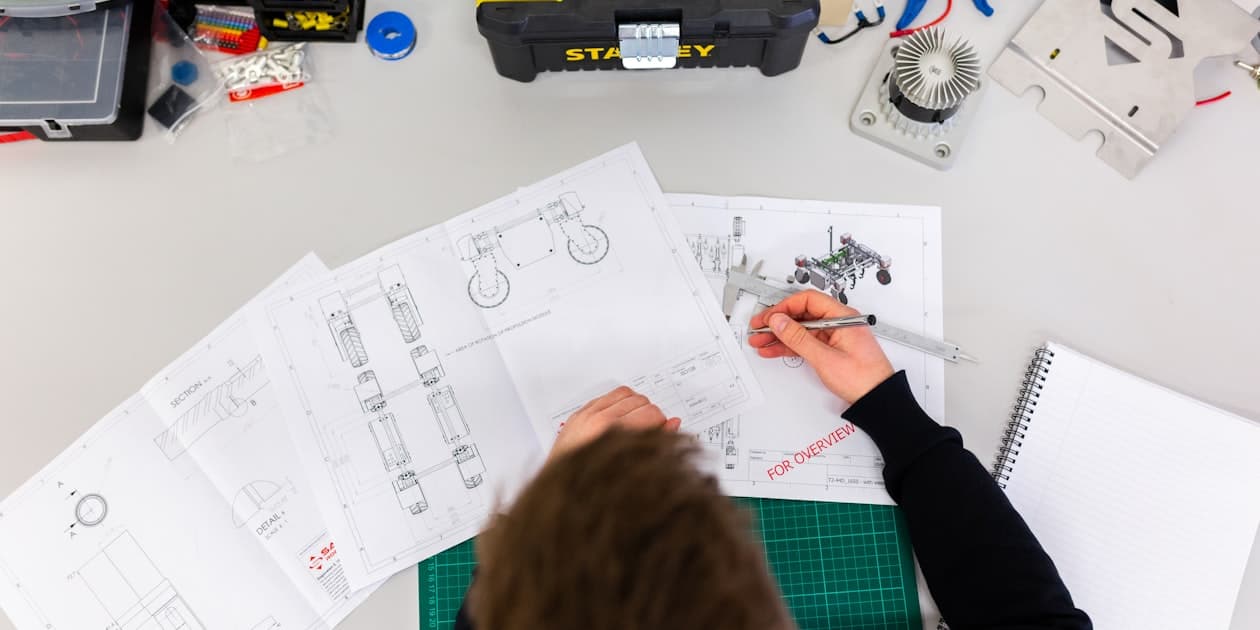
Discrete manufacturing produces distinct, countable items. An automotive plant assembles engines from pistons, crankshafts, and gaskets. An electronics manufacturer builds circuit boards from resistors, capacitors, and ICs. The finished product can be disassembled back into its components. Production is tracked by work orders with fixed bills of materials.
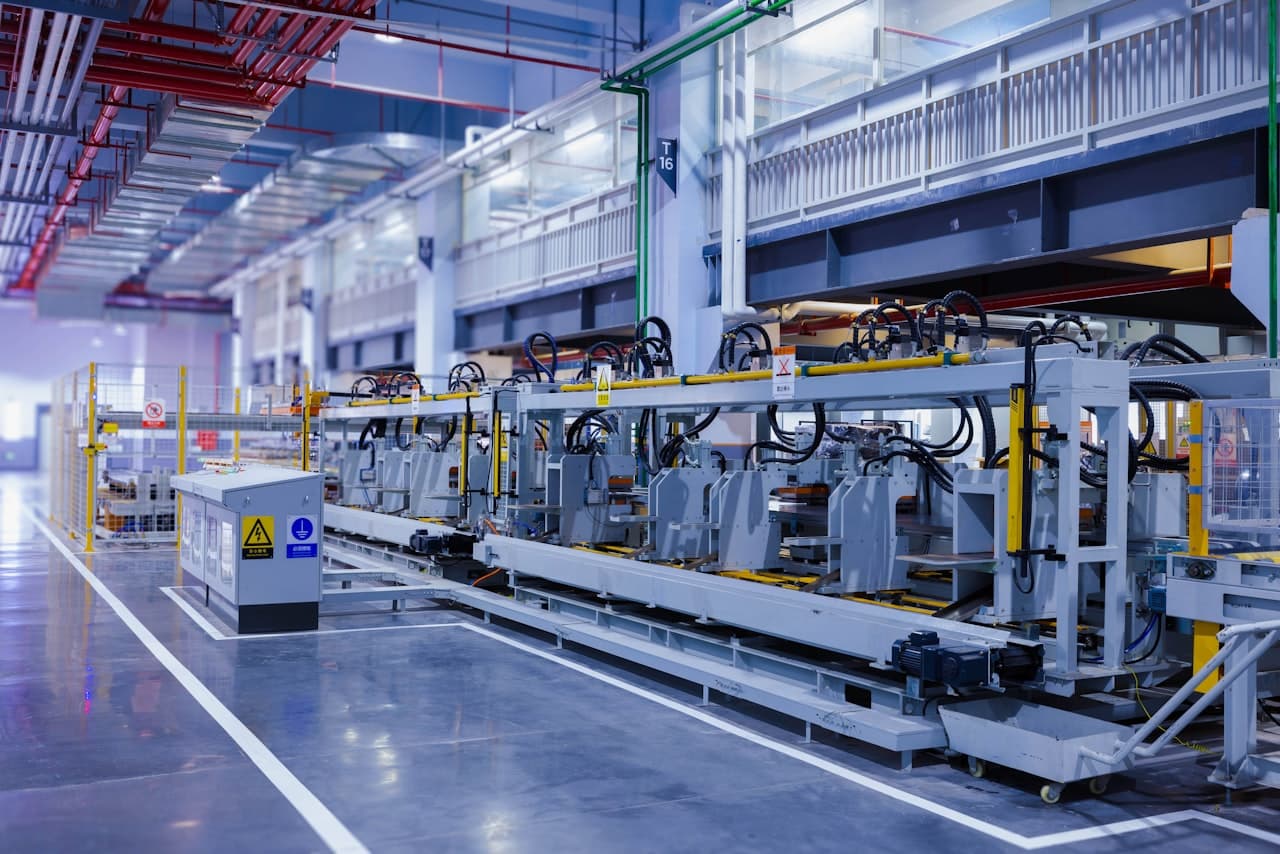
Process manufacturing transforms raw materials through chemical, thermal, or biological reactions into outputs that cannot be returned to their original state. A paint manufacturer blends pigments, resins, and solvents into coatings. A petrochemical refinery cracks crude oil into fuels and feedstocks. A pharmaceutical company synthesizes active ingredients through multi-step reactions. Production follows scalable formulas, not fixed BOMs.
Deloitte's 2024 Manufacturing Outlook found that manufacturers using industry-specific ERP reported 34% faster time-to-value compared to those adapting generic systems. The distinction matters operationally and financially.
12 Critical Differences in ERP Requirements
The following process manufacturing ERP comparison table summarizes where process and discrete systems diverge at the functional level.
| # | Capability | Discrete Manufacturing ERP | Process Manufacturing ERP |
|---|---|---|---|
| 1 | Production Definition | Bill of Materials (BOM) | Formula / Recipe with scalable ratios |
| 2 | Unit of Measure | Each, pieces, assemblies | Liters, kg, %, ppm, concentration |
| 3 | Yield Tracking | Scrap rate per operation | Variable yield with theoretical vs actual |
| 4 | Output Model | Single product per work order | Co-products, by-products, intermediates |
| 5 | Lot Tracking | Serial numbers, component traceability | Lot genealogy, potency, shelf life, grade |
| 6 | Quality Control | Inspection checkpoints, pass/fail | Certificate of Analysis, spec ranges, stability |
| 7 | Inventory Valuation | Standard cost per unit | Yield-adjusted cost with allocation splits |
| 8 | Shelf Life | Warranty tracking (optional) | Mandatory expiry, retest dates, stability zones |
| 9 | Regulatory Focus | ISO 9001, CE, UL, RoHS | FDA 21 CFR, EPA, REACH, GHS, TSCA |
| 10 | Production Scheduling | Routing with work centers | Campaign scheduling with changeover/CIP time |
| 11 | Material Substitution | Alternate BOM components | Potency-based formula adjustments |
| 12 | Packaging | Ship as assembled | Fill, label, and pack from bulk (multiple SKUs) |
Each of these 12 differences creates a decision point in the discrete vs process ERP evaluation. If your operations align predominantly with one column, that is your ERP architecture. If you see a 60/40 split, you need a hybrid approach — discussed below.
Production Planning: BOM vs Formula
The most fundamental difference between process vs discrete manufacturing ERP lies in how production is defined.
Discrete BOM Structure
A discrete BOM is hierarchical and exact. To build one unit of Product A, you need 2 units of Component B, 4 units of Component C, and 1 unit of Subassembly D (which itself requires 3 units of Part E). The quantities are fixed. Scaling production means multiplying the BOM by the order quantity. ERP systems like SAP PP or Oracle Discrete Manufacturing handle this natively.
Process Formula Structure
A process formula defines proportional relationships, not fixed quantities — a concept explored in depth in our guide to recipe management in chemical manufacturing ERP. An adhesive formulation might specify:
- Epoxy resin: 42.5% by weight
- Curing agent: 14.8% by weight
- Filler compound: 38.2% by weight
- Catalyst: 0.5% by weight
- Additives: 4.0% by weight
The ERP must scale these proportions to any batch size — 200 kg or 20,000 kg — while adjusting for equipment constraints, minimum charge sizes, and raw material potency variations. If the filler arrives at 97% purity instead of 99%, the formula must compensate automatically.
Decision point: If your production planning requires potency adjustments, scalable formulas, or yield-dependent output quantities, discrete ERP will fail you. Contact APPIT Software to evaluate process manufacturing ERP.
Inventory Management: Process vs Discrete Manufacturing ERP Divergence
Inventory is where ERP misalignment causes daily operational pain.
Discrete Inventory Characteristics: - Tracked by serial number or batch with a simple FIFO/LIFO approach - Units are interchangeable within the same part number - Storage is location-based (bin, rack, warehouse) - Cycle counting is straightforward — count units, reconcile
Process Inventory Characteristics: - Tracked by lot with potency, grade, moisture content, and concentration - Lots of the same material may not be interchangeable if specifications differ - Storage requires compatibility segregation (oxidizers cannot share space with flammables) - Shelf life and retest dates drive consumption priority - Multi-unit-of-measure conversion is mandatory (received in drums, stored in tanks, consumed by weight, sold by volume)
A McKinsey & Company analysis found that process manufacturers using discrete inventory modules waste an average of 12-18 hours per week on manual lot-tracking workarounds. Over a year, that represents 624-936 hours of lost productivity per plant — roughly $45,000-$70,000 in direct labor cost.
Shelf Life Management
Discrete ERP treats shelf life as optional metadata. Process ERP treats it as a hard constraint that drives:
- 1Consumption sequencing — FEFO (First Expired, First Out) rather than FIFO
- 2Quarantine automation — lots past retest date are blocked from production
- 3Stability zone tracking — the same product stored at different temperatures may have different expiry dates
- 4Customer-specific requirements — some buyers require minimum remaining shelf life at delivery
Quality Management in Process vs Discrete Manufacturing ERP
Discrete quality centers on inspection: dimensional checks, functional tests, visual inspection. Results are typically pass/fail or within/outside tolerance. Non-conforming parts are reworked, scrapped, or returned.
Process quality centers on analytical testing: viscosity, pH, particle size distribution, purity assay, moisture content, color indices. Results are continuous values that must fall within specification ranges. The ERP generates a Certificate of Analysis (CoA) for every lot shipped.
Stability testing adds another layer unique to process manufacturing. Products must be tested at defined intervals (3 months, 6 months, 12 months) under controlled conditions to confirm they maintain specifications through their stated shelf life. The ERP must schedule these tests, capture results, and trigger alerts if trending data suggests premature degradation.
Cost Accounting Models
Cost accounting is where the process ERP vs discrete ERP differences become most financially impactful.
Discrete Costing: - Standard cost per unit based on BOM component costs + labor + overhead - Variance analysis: purchase price variance, labor efficiency variance - Straightforward cost rollup from components to finished goods
Process Costing: - Yield-adjusted cost: if a batch yields 92% instead of 95%, the cost per unit of output increases - Co-product allocation: a single reaction produces multiple saleable products; costs must be allocated by relative sales value, weight, or market price - By-product credit: residual outputs with minor value offset production costs - Joint cost allocation across production stages where intermediates flow continuously
Process manufacturers who force standard costing models into their operations consistently understate true production costs by 8-15%, distorting margin analysis and pricing decisions.
Regulatory Compliance Requirements
Discrete manufacturers typically manage ISO 9001, CE marking, UL certification, and RoHS/WEEE compliance. These are well-supported by generic ERP quality modules.
Process manufacturers face a different regulatory landscape entirely — for a comprehensive overview, see our guide to process manufacturing ERP for the chemical industry:
- FDA 21 CFR Part 11 — electronic records and signatures for pharma and food
- EPA reporting — emissions tracking, waste manifesting, Tier II inventory
- REACH — EU chemical substance registration and authorization
- TSCA — U.S. Toxic Substances Control Act inventory compliance
- GHS — Globally Harmonized System for hazard classification and SDS authoring
- OSHA PSM — Process Safety Management for highly hazardous chemicals
Process manufacturing ERP must embed these regulatory frameworks into daily workflows — not as bolt-on modules, but as integrated constraints that guide production, storage, shipping, and documentation automatically. This regulatory depth is one of the starkest process vs discrete manufacturing ERP differences and a non-negotiable requirement for any regulated industry.
When You Need a Hybrid ERP
Some manufacturers genuinely operate in both modes. A specialty chemicals company might:
- Process side: Synthesize bulk chemical intermediates through batch reactions
- Discrete side: Package finished products into kits with specific component configurations
A building materials manufacturer might:
- Process side: Mix concrete, blend coatings, or formulate sealants
- Discrete side: Assemble prefabricated panels or modular units
Hybrid manufacturing ERP must support both BOMs and formulas within the same system, allow items to flow from process production into discrete assembly, and maintain traceability across both paradigms. FlowSense handles this dual-mode requirement natively, allowing a single item to transition from formula-based production to BOM-based assembly without losing lot genealogy.
ERP Vendor Evaluation Checklist
Use this manufacturing ERP selection guide framework when evaluating process vs discrete manufacturing ERP vendors:
- 1Production model fit — Does the system support your primary production paradigm natively (not through customization)?
- 2Formula/BOM flexibility — Can you define both scalable formulas and fixed BOMs if needed?
- 3Yield management — Does the system calculate actual yield, track variance, and feed back into planning?
- 4Lot genealogy — Can you trace any finished product back to raw material lots, supplier certificates, and process parameters?
- 5Regulatory pre-configuration — Are FDA, EPA, REACH, or ISO frameworks built in, or must they be custom-built?
- 6Cost allocation — Does the system handle co-product allocation, by-product credits, and yield-adjusted costing?
- 7Industry references — Does the vendor have live customers in your specific sub-industry?
Making the Right Choice
The process vs discrete manufacturing ERP decision is not about features — it is about architectural fit. A discrete ERP with a "process add-on" will never match the depth of a purpose-built process manufacturing system. The reverse is equally true.
Choose discrete ERP if your production follows fixed BOMs, outputs are countable units, quality is inspection-based, and regulatory requirements center on ISO/CE/UL compliance.
Choose process ERP if your production uses scalable formulas, outputs include co-products and by-products, quality requires analytical testing with CoA generation, and regulatory requirements include FDA, EPA, REACH, or GHS compliance.
Choose hybrid ERP if you operate in both modes and need items to flow between formula-based and BOM-based production within a single system.
Ultimately, the process vs discrete manufacturing ERP decision shapes every downstream workflow — from how you plan production to how you report costs. Getting this choice right from the start eliminates years of workarounds and customization debt.
Still unsure which ERP architecture fits your manufacturing model? Request a demo from APPIT Software and our manufacturing consultants will map your operations to the right solution.
FAQ
Q: Can discrete ERP be customized for process manufacturing?
Technically yes, but the cost is prohibitive. Customizing discrete ERP to handle formulas, variable yields, co-products, and regulatory compliance typically costs 3-5x more than deploying purpose-built process ERP — and the result is still inferior because the underlying data model was not designed for process workflows.
Q: What if we manufacture both process and discrete products?
You need a hybrid ERP that supports both paradigms natively. Solutions like FlowSense allow formula-based and BOM-based production within the same system, with full traceability as items transition between modes.
Q: How long does process manufacturing ERP implementation take?
Q: What industries are classified as process manufacturing?
Chemical, pharmaceutical, food and beverage, paint and coatings, cosmetics, petrochemical, rubber and plastics, pulp and paper, and specialty materials. Any industry where raw materials are transformed through reactions, blending, or thermal processing into outputs that cannot be disassembled.
Q: What are the main cost differences between process and discrete ERP implementation?
Ready to choose the right ERP architecture for your manufacturing model? Request a demo to see how FlowSense handles both process and discrete production workflows.