APPIT Software - Solutions Delivered
Demos
LoginGet Started
Aegis BrowserFlowSenseVidhaanaTrackNexusWorkisySlabIQLearnPathAI InterviewAll ProductsDigital TransformationAI/ML IntegrationLegacy ModernizationCloud MigrationCustom DevelopmentData AnalyticsStaffing & RecruitmentAll ServicesHealthcareFinanceManufacturingRetailLogisticsProfessional ServicesEducationHospitalityReal EstateAgricultureConstructionInsuranceHRTelecomEnergyAll IndustriesCase StudiesBlogResource LibraryProduct ComparisonsAbout UsCareersContact
APPIT Software - Solutions Delivered

Transform your business from legacy systems to AI-powered solutions. Enterprise capabilities at SMB-friendly pricing.

Company

  • About Us
  • Leadership
  • Careers
  • Contact

Services

  • Digital Transformation
  • AI/ML Integration
  • Legacy Modernization
  • Cloud Migration
  • Custom Development
  • Data Analytics
  • Staffing & Recruitment

Products

  • Aegis Browser
  • FlowSense
  • Vidhaana
  • TrackNexus
  • Workisy
  • SlabIQ
  • LearnPath
  • AI Interview

Industries

  • Healthcare
  • Finance
  • Manufacturing
  • Retail
  • Logistics
  • Professional Services
  • Hospitality
  • Education

Resources

  • Case Studies
  • Blog
  • Live Demos
  • Resource Library
  • Product Comparisons

Contact

  • info@appitsoftware.com

Global Offices

🇮🇳

India(HQ)

PSR Prime Towers, 704 C, 7th Floor, Gachibowli, Hyderabad, Telangana 500032

🇺🇸

USA

16192 Coastal Highway, Lewes, DE 19958

🇦🇪

UAE

IFZA Business Park, Dubai Silicon Oasis, DDP Building A1, Dubai

🇸🇦

Saudi Arabia

Futuro Tower, King Saud Road, Riyadh

© 2026 APPIT Software Solutions. All rights reserved.

Privacy PolicyTerms of ServiceCookie PolicyRefund PolicyDisclaimer

Need help implementing this?

Get Free Consultation
  1. Home
  2. Blog
  3. HR & Workforce
HR & Workforce

Pre-Boarding to Day 30: The Onboarding Journey That Reduces Early Attrition by 40%

Most onboarding programmes start on Day 1 and end at Day 5. The companies that actually keep new hires structure a 6-week journey starting from offer acceptance. Here is the playbook.

AG
Aravind Gajjela
|May 11, 20266 min readUpdated May 2026
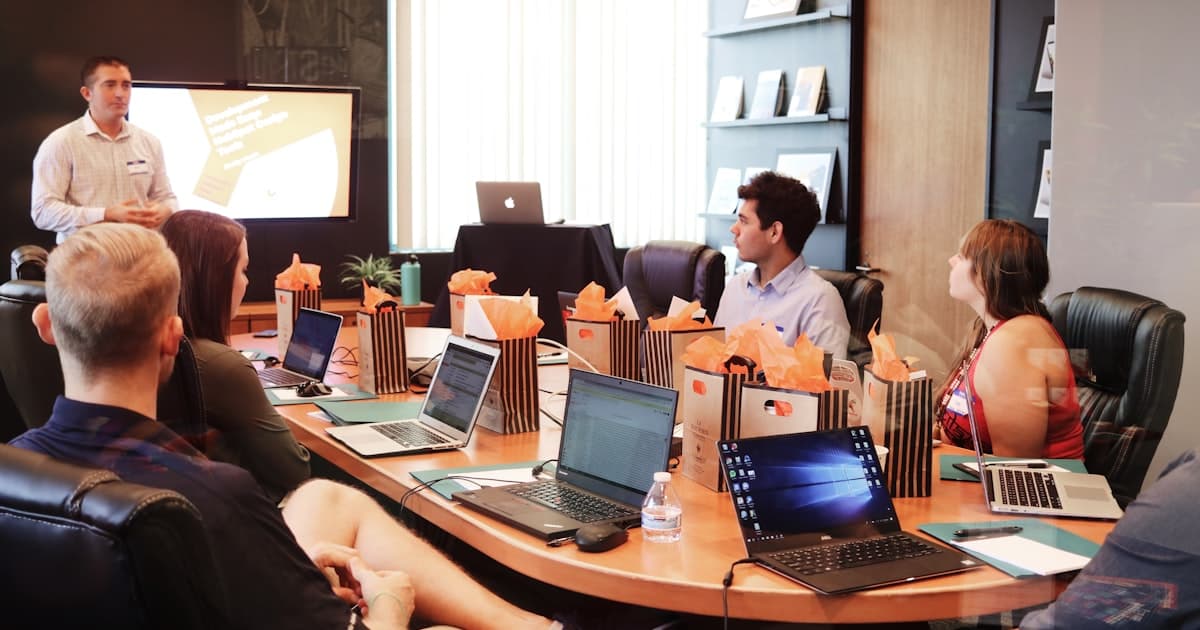
Pre-boarding to Day 30 employee onboarding journey

Get Free Consultation

Talk to our experts today

By submitting, you agree to our Privacy Policy. We never share your information.

Need help implementing this?

Get a free consultation from our expert team. Response within 24 hours.

Get Free Consultation

Key Takeaways

  • 1Why the first 30 days determine the next 3 years
  • 2The four phases
  • 3What separates good onboarding from great
  • 4The technology that supports this
  • 5The bottom line

Why the first 30 days determine the next 3 years

Three data points from the Society for Human Resource Management (SHRM) and our own Indian deployments:

  1. 120-30% of new hires leave within the first 90 days. This is the dropout rate at most Indian companies running standard onboarding.
  2. 2Employees who experience structured onboarding are 58% more likely to stay 3+ years. They are also 70% more productive in their first year.
  3. 3The decision to stay or leave is mostly made in the first 30 days. New hires gather signals constantly — about culture, about leadership, about their team, about whether their decision to join was right. By Day 30, the verdict is in, even if the resignation comes 6 months later.

Most Indian companies run 1-3 day orientation programmes and call this "onboarding". This is woefully insufficient. The companies that retain new hires structure a 6-week journey starting from offer acceptance and continuing through Day 30 and beyond.

Below is the playbook.

The four phases

Phase 1: Pre-boarding (offer acceptance to Day 0)

The candidate has accepted the offer. They will not be productive yet, but they are forming impressions. This window is criminally underused at most companies.

Activities in this phase:

  • Day +1 after acceptance: Welcome email from CEO or relevant senior leader. Personal, not generic.
  • Day +3: Manager reaches out by phone or video to introduce themselves, share excitement about the joiner, and offer to answer questions.
  • Day +7: Onboarding pack arrives — pre-printed welcome materials, company swag (mug, t-shirt, notebook), and a personal note. Yes, this is small. It is also remembered.
  • Day +14: Team lead reaches out introducing the team, sharing what the joiner will work on initially, and inviting them to a casual team coffee (virtual or in-person) before Day 1.
  • Day +21 (or 7 days before joining): Document upload reminder; pre-boarding portal access; first reading list (company history, product, key documents).
  • Day -3: Day 1 logistics shared — office location, parking, what to wear, who to ask for, what time to arrive, lunch plan.

This phase costs the company very little but reduces post-offer-pre-joining attrition by 60-80%. Candidates who feel valued before they join show up with energy on Day 1.

Phase 2: Day 1-5 (the first week)

The first week is mostly about logistics, basic orientation, and human connection.

Day 1: - Welcome at reception with manager and HR present - ID card and access provisioning done before lunch (not Day 5) - IT provisioning complete — laptop, accounts, software access ready - Office tour with introduction to key common spaces (cafeteria, restrooms, meeting rooms, recreation areas) - 1:1 with manager — manager shares first 30/60/90 day priorities - Welcome lunch with the team - Documents signed (employment contract, NDA, policy acknowledgements via e-Sign) - End-of-day check-in with HR

Day 2-3: - HR orientation — policies, benefits, leave, payroll, compliance, POSH training (mandatory) - IT orientation — systems used, security practices, who to contact for issues - Department-specific orientation — products, customers, key processes - Buddy assigned (a peer who has been with the company 1-3 years)

Day 4-5: - Functional onboarding begins — the joiner starts on their first small piece of real work - Introduction to extended team and stakeholders - First skip-level meeting with manager's manager - Week 1 check-in with HR (anonymous feedback channel available)

The week ends with the joiner having: working systems, a defined role, met their immediate team, and clear next steps.

Phase 3: Week 2-4 (functional integration)

Weeks 2-4 are about getting productive in the role and building relationships.

  • Daily stand-ups (or equivalent) include the new hire from Week 2
  • Manager 1:1s every week, with structured agenda (how is it going, what is blocking you, what do you need)
  • Functional training — role-specific systems, processes, deliverables
  • Stretch project — typically a small piece of work the joiner can deliver in 4-6 weeks that contributes real value
  • Buddy lunch / coffee every Friday
  • Cross-team meetings to understand dependencies
  • Customer / product / market exposure as relevant

By end of Week 4, the joiner should be 50-70% productive on the standard scope of their role.

Phase 4: Day 30-90 (full integration)

The remainder of the first 90 days is about reaching full productivity and consolidating the relationship.

  • Day 30 review — formal manager-led conversation: what is working, what is not, are objectives clear, is the joiner happy, what does the next 60 days look like
  • Day 30 HR survey — anonymous feedback on the onboarding experience, used to improve the programme
  • Skill-building — formal training programmes relevant to the role
  • Network building — introductions to senior leaders across functions
  • First deliverables — the stretch project completes, with public recognition for the contribution
  • Day 60 review — manager 1:1 on progress, blockers, career conversations
  • Day 90 review — formal evaluation against the 90-day plan, with a frank conversation about fit, performance, and trajectory

By Day 90, the joiner is either confirmed (the relationship works), in performance discussion (rare, but it happens), or quietly looking elsewhere if the relationship is not working. The 90-day review forces explicit clarity on what was implicit.

What separates good onboarding from great

Five things that I have seen distinguish great onboarding programmes from merely good ones:

1. Manager engagement is non-negotiable

Onboarding programmes fail when managers treat the new joiner as HR's problem. Onboarding programmes succeed when the manager owns the joiner's first 90 days, with HR as the supporting function. Companies that train managers on their onboarding role see materially better retention.

2. The buddy is well-chosen

Random buddy assignments produce indifferent buddies. The best programmes choose buddies carefully — someone respected, with time, who is a cultural fit. Some companies offer the buddy a small incentive (₹10,000 quarterly) to recognise the time investment.

3. The role is clear from Day 1

Joiners told "we will figure out your role over the first few weeks" lose confidence quickly. Joiners told on Day 1 "here is your 90-day plan with three specific objectives" know what success looks like and engage with it.

4. Feedback flows both ways

Onboarding feedback to the joiner (how am I doing) and from the joiner (how is the onboarding experience) must happen frequently. Companies that gather and act on onboarding feedback improve their programmes year over year; companies that do not stagnate.

5. The programme is consistent across managers

Some managers are great at onboarding; others are not. Without a structured programme, the joiner's experience depends heavily on the manager lottery. A structured programme guarantees a baseline experience regardless of manager.

The technology that supports this

A modern onboarding platform supports the 6-week journey with:

  • Pre-boarding portal with personalised content
  • Mobile app for document upload, pre-reading, and pre-Day-1 communication
  • Workflow engine that triggers each phase's activities (welcome email on Day +1, manager intro on Day +3, etc.)
  • Manager dashboard showing each direct report's onboarding progress
  • HR dashboard showing programme-wide metrics
  • Survey and feedback engine for Day 1, Day 7, Day 30, Day 60, Day 90 pulse checks
  • Integration with learning management for role-specific training
  • Buddy management workflow

A platform that handles all of this elevates onboarding from an HR programme to a strategic capability.

The bottom line

The first 30 days of an employee's tenure determine far more about their long-term contribution and retention than most HR leaders recognise. Companies that invest in structured 6-week onboarding journeys see 40%+ reduction in early attrition, materially higher productivity in Year 1, and stronger engagement throughout the employee lifecycle.

The technology and process are well-understood. The discipline is what separates companies that do it from companies that just talk about doing it.


Free Consultation

Want to Transform Your HR Operations?

Discover how Workisy and TrackNexus modernize recruitment, engagement, and workforce management.

  • Expert guidance tailored to your needs
  • No-obligation discussion
  • Response within 24 hours

By submitting, you agree to our Privacy Policy. We never share your information.

Frequently Asked Questions

Why does the first 30 days matter so much for retention?

20-30% of new hires leave within the first 90 days at most Indian companies, and the decision to stay or leave is mostly made in the first 30 days based on signals about culture, leadership, team, and whether the joining decision was right. Employees who experience structured onboarding are 58% more likely to stay 3+ years and are 70% more productive in their first year. Most companies run 1-3 day orientation and call it onboarding — woefully insufficient.

What is pre-boarding and why does it matter?

Pre-boarding is the period between offer acceptance and Day 1 (typically 30-60 days). Most companies underuse this window completely. Companies that structure it — welcome email from CEO, manager call within a week, onboarding pack, team intro before Day 1 — reduce post-offer-pre-joining attrition by 60-80%. The candidate forms first impressions during this period; signals of being valued lead to energetic Day 1 arrivals.

What does Day 1 look like in a well-run onboarding programme?

Welcome at reception with manager and HR present, ID card and access provisioning done before lunch (not Day 5), IT provisioning complete (laptop, accounts, software access ready), office tour, 1:1 with manager covering 30/60/90 day priorities, welcome lunch with the team, documents signed via e-Sign, and end-of-day check-in with HR. By end of Day 1, the joiner has working systems, a defined role, met their immediate team, and clear next steps.

What separates great onboarding from merely good onboarding?

Five differentiators: (1) manager engagement is non-negotiable — onboarding fails when managers treat joiners as HR's problem, (2) the buddy is well-chosen (respected, time-available, cultural fit, possibly incentivised), (3) the role is clear from Day 1 with explicit 90-day objectives, (4) feedback flows both ways with regular pulse surveys to and from the joiner, (5) the programme is consistent across managers rather than depending on the manager lottery.

How long should a structured onboarding programme run?

The full onboarding journey runs from offer acceptance (Day -30 to -60) through Day 90, organised in four phases: Pre-boarding (acceptance to Day 0), Week 1 (logistics and orientation), Week 2-4 (functional integration), and Day 30-90 (full productivity). Companies that compress this to 1-2 weeks miss the retention benefits. Companies that stretch beyond 90 days dilute the focus. The 90-day frame is well-validated.

About the Author

AG

Aravind Gajjela

Founder & CEO, APPIT Software, APPIT Software Solutions

Aravind Gajjela is the Founder & CEO, APPIT Software at APPIT Software Solutions, bringing extensive experience in enterprise technology solutions and digital transformation strategies across healthcare, finance, and professional services industries.

Sources & Further Reading

SHRM - Society for Human Resource ManagementMcKinsey People & OrganizationWorld Economic Forum - Future of Work

Related Resources

HR & Workforce Industry SolutionsExplore our industry expertise
Interactive DemoSee it in action
Staffing & RecruitmentLearn about our services
AI & ML IntegrationLearn about our services

Topics

OnboardingEmployee ExperienceHRRetentionIndia

Share this article

Table of Contents

  1. Why the first 30 days determine the next 3 years
  2. The four phases
  3. What separates good onboarding from great
  4. The technology that supports this
  5. The bottom line
  6. FAQs

Who This Is For

HR business partners
Talent acquisition heads
CHROs
Free Resource

AI Recruitment Playbook

Learn how leading companies use AI to reduce time-to-hire and improve candidate quality.

No spam. Unsubscribe anytime.

Ready to Transform Your HR & Workforce Operations?

Let our experts help you implement the strategies discussed in this article.

See Interactive DemoExplore Solutions

Related Articles in HR & Workforce

View All
Centralised multi-entity HR onboarding dashboard
HR & Workforce

Centralised Multi-Entity HR Onboarding: How Conglomerates Manage 2,000 Joiners Across 20 Group Companies

Indian conglomerates with multiple legal entities run 20 different onboarding processes — one per company. The result is inconsistent experience, duplicated work, and regulatory exposure. Centralisation is the answer; here is the architecture.

11 min readRead More
Document verification automation for HR onboarding
HR & Workforce

Document Verification Automation in HR Onboarding: From 3 Days to 3 Minutes

A typical Indian onboarding requires verification of 8-12 documents per joiner. Manual verification takes 2-3 days per candidate. AI-powered verification compresses this to 3-8 minutes while improving accuracy.

11 min readRead More
Onboarding KPIs and ROI measurement dashboard
HR & Workforce

Onboarding KPIs and ROI: The Eight Metrics CHROs Should Measure (And Most Do Not)

Most HR teams measure onboarding by "completion rate" — meaningless. Here are the eight metrics that actually tell you whether your onboarding programme is working, with target ranges from real deployments.

11 min readRead More
FAQ

Frequently Asked Questions

Common questions about this article and how we can help.

You can explore our related articles section below, subscribe to our newsletter for similar content, or contact our experts directly for a deeper discussion on the topic.