APPIT Software - Solutions Delivered
Demos
LoginGet Started
Aegis BrowserFlowSenseVidhaanaTrackNexusWorkisySlabIQLearnPathAI InterviewAll ProductsDigital TransformationAI/ML IntegrationLegacy ModernizationCloud MigrationCustom DevelopmentData AnalyticsStaffing & RecruitmentAll ServicesHealthcareFinanceManufacturingRetailLogisticsProfessional ServicesEducationHospitalityReal EstateAgricultureConstructionInsuranceHRTelecomEnergyAll IndustriesCase StudiesBlogResource LibraryProduct ComparisonsAbout UsCareersContact
APPIT Software - Solutions Delivered

Transform your business from legacy systems to AI-powered solutions. Enterprise capabilities at SMB-friendly pricing.

Company

  • About Us
  • Leadership
  • Careers
  • Contact

Services

  • Digital Transformation
  • AI/ML Integration
  • Legacy Modernization
  • Cloud Migration
  • Custom Development
  • Data Analytics
  • Staffing & Recruitment

Products

  • Aegis Browser
  • FlowSense
  • Vidhaana
  • TrackNexus
  • Workisy
  • SlabIQ
  • LearnPath
  • AI Interview

Industries

  • Healthcare
  • Finance
  • Manufacturing
  • Retail
  • Logistics
  • Professional Services
  • Hospitality
  • Education

Resources

  • Case Studies
  • Blog
  • Live Demos
  • Resource Library
  • Product Comparisons

Contact

  • info@appitsoftware.com

Global Offices

🇮🇳

India(HQ)

PSR Prime Towers, 704 C, 7th Floor, Gachibowli, Hyderabad, Telangana 500032

🇺🇸

USA

16192 Coastal Highway, Lewes, DE 19958

🇦🇪

UAE

IFZA Business Park, Dubai Silicon Oasis, DDP Building A1, Dubai

🇸🇦

Saudi Arabia

Futuro Tower, King Saud Road, Riyadh

© 2026 APPIT Software Solutions. All rights reserved.

Privacy PolicyTerms of ServiceCookie PolicyRefund PolicyDisclaimer

Need help implementing this?

Get Free Consultation
  1. Home
  2. Blog
  3. Textiles & Apparel
Textiles & Apparel

Fashion Supply Chain Visibility: How Textile ERP Connects Mills to Global Brand Requirements

Fashion brands demand real-time supply chain visibility from fiber to store shelf. Learn how FlowSense ERP enables textile manufacturers to meet brand transparency requirements while improving their own operational efficiency.

PS
Priya Sharma
|December 8, 20254 min readUpdated Dec 2025
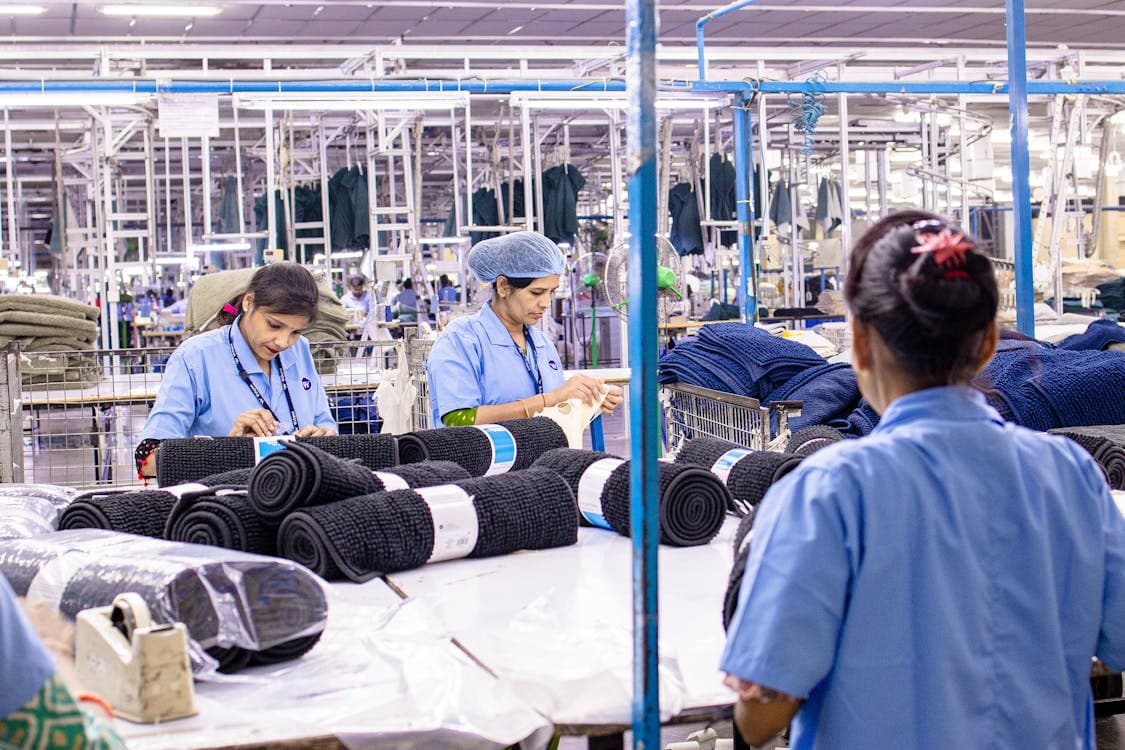
Supply chain visibility dashboard showing tier-1 through tier-4 supplier mapping with real-time order status indicators

Get Free Consultation

Talk to our experts today

By submitting, you agree to our Privacy Policy. We never share your information.

Need help implementing this?

Get a free consultation from our expert team. Response within 24 hours.

Get Free Consultation

Key Takeaways

  • 1The Transparency Revolution in Fashion Supply Chains
  • 2What Supply Chain Visibility Means for a Textile Manufacturer
  • 3The Technology Architecture
  • 4Implementation Approach
  • 5Business Impact

The Transparency Revolution in Fashion Supply Chains

The fashion industry has undergone a fundamental shift in how supply chains are managed. Where once a purchase order and a shipping date were sufficient, major brands now require:

  • Tier-1 to Tier-4 supplier mapping identifying every entity in the production chain
  • Real-time order status visibility accessible through supplier portals
  • Environmental and social compliance documentation at every production stage
  • Digital chain of custody for certified raw materials
  • Predictive delivery updates based on actual production progress

This is not a trend --- it is a structural change driven by regulation (EU CSRD, German Supply Chain Act ), consumer expectations (post-Rana Plaza awareness), and brand risk management (supply chain disruptions exposing fragile single-source dependencies).

For textile manufacturers, this creates both a challenge and an opportunity. The challenge: meeting these visibility requirements with traditional systems is impossible. The opportunity: manufacturers who can provide this visibility become preferred suppliers, commanding better prices and more consistent order flow.

What Supply Chain Visibility Means for a Textile Manufacturer

Upstream Visibility (Your Suppliers)

A textile manufacturer needs visibility into its own supply chain:

  • Yarn suppliers: Delivery status, quality test results, lot traceability to spinning mill and fiber source
  • Chemical suppliers: ZDHC compliance status, MSDS documentation, delivery tracking
  • Processing partners: Job work status for outsourced operations (dyeing, printing, finishing)
  • Logistics providers: In-transit visibility for incoming materials

Internal Visibility (Your Operations)

This is where FlowSense provides the most direct impact:

  • Order-level tracking from confirmation through production stages to dispatch
  • Machine-level production monitoring showing which orders are on which machines
  • Quality status at each checkpoint with real-time pass/fail data
  • Inventory visibility for raw materials, work-in-process, and finished goods
  • Capacity utilization showing available vs. committed production time

Downstream Visibility (Your Customers)

What your brand customers want to see:

InformationUpdate FrequencyAccess Method
Order confirmation statusAt eventPortal/API
Production stage progressDailyPortal/API
Quality inspection resultsAt eventPortal/API
Lab test resultsAt eventPortal with document
Shipping documentationAt eventPortal with documents
Delivery trackingReal timeCarrier integration
Sustainability metricsPer orderPortal/API

Brand Portal Integration

Major fashion brands operate their own supply chain platforms:

  • SAP Ariba used by brands like Adidas, Puma
  • Coupa used by various luxury and sportswear brands
  • Bamboo Rose specialized for fashion and retail
  • Custom portals operated by individual brands

FlowSense integrates with these platforms through: - API-based data push sending order status, quality data, and shipping information automatically - EDI integration for brands using traditional electronic data interchange - File-based export for brands requiring CSV/Excel uploads to their portals - Direct portal access providing a FlowSense-hosted portal for brands without their own platform

The Technology Architecture

Supply chain visibility requires more than a reporting layer. It requires an event-driven architecture that captures state changes as they happen:

Event Capture: Every significant state change (order confirmed, yarn received, production started, quality approved, goods dispatched) generates a timestamped event.

Event Processing: Events are processed to update order status, calculate ETAs, and trigger notifications.

Data Distribution: Processed data is made available through multiple channels --- dashboards, APIs, email notifications, and portal displays.

Exception Management: When events deviate from plan (delay, quality failure, material shortage), the system generates proactive alerts to internal teams and, where configured, to customers.

Implementation Approach

Phase 1 (Months 1-2): Internal visibility --- deploying FlowSense production tracking and order status modules to create the foundational data layer.

Phase 2 (Months 3-4): Customer portal --- activating the brand-facing portal with order status, quality data, and document sharing.

Phase 3 (Months 5-6): Supply chain integration --- connecting upstream suppliers for yarn delivery tracking and job work monitoring.

Phase 4 (Ongoing): Advanced analytics --- predictive delivery date modeling, supplier performance benchmarking, and sustainability data integration.

Business Impact

Manufacturers who have implemented FlowSense supply chain visibility report:

  • Customer retention improvement: 90%+ repeat order rate vs. industry average of 70-75%
  • Price realization: 3-5% better pricing from transparency-valuing brands
  • Query handling reduction: 60-70% fewer "where is my order" emails and calls
  • Lead time accuracy: Delivery predictions within +/- 2 days vs. +/- 7-10 days previously
  • New customer acquisition: Visibility capability as a differentiator in buyer meetings
Position your mill as a transparency-ready supplier. Talk to FlowSense about supply chain visibility.

The Competitive Moat

In a commodity business where prices are transparent and capacity is available, the manufacturers who win are those who make their customers' lives easier. Supply chain visibility is no longer a nice-to-have --- it is the table stakes for working with brands that plan to be around in ten years. The investment in visibility infrastructure pays for itself through customer retention, better pricing, and operational efficiency gains that benefit the manufacturer regardless of customer requirements.


Free Consultation

Want to Modernize Your Textile Operations?

Explore ERP solutions designed for fabric manufacturing and supply chain management.

  • Expert guidance tailored to your needs
  • No-obligation discussion
  • Response within 24 hours

By submitting, you agree to our Privacy Policy. We never share your information.

Frequently Asked Questions

How does FlowSense integrate with brand supply chain platforms like SAP Ariba?

FlowSense provides pre-built connectors for SAP Ariba, Coupa, and Bamboo Rose that push order status updates, quality data, and shipping information automatically. For brands with custom portals, FlowSense supports API-based integration, EDI (EDIFACT/ANSI X12), and file-based exports. The integration is configured per brand based on their specific data requirements and preferred formats.

Can FlowSense provide real-time production status to brand customers?

Yes. FlowSense captures production events (order started, stage completed, quality approved) as they occur and makes them available through the customer portal, API, or push notifications within minutes. Brand customers can see which production stage their order is in, the current quality status, and the predicted delivery date, all updated in real time.

How does FlowSense handle supply chain mapping for multi-tier suppliers?

FlowSense supports multi-tier supplier mapping where manufacturers can document their Tier-2 (yarn suppliers), Tier-3 (spinning mills), and Tier-4 (fiber sources) suppliers. This information can be shared with brand customers through the portal or exported in formats compatible with brand supply chain mapping requirements like the Open Apparel Registry.

Does FlowSense support the German Supply Chain Due Diligence Act requirements?

Yes. FlowSense helps manufacturers comply with the LkSG (German Supply Chain Act) by providing documented risk analysis processes, supplier assessment workflows, grievance mechanism integration, and annual reporting data. The system maintains audit trails for all due diligence activities as required by the legislation.

About the Author

PS

Priya Sharma

CTO, APPIT Software Solutions

Priya Sharma is the CTO at APPIT Software Solutions, bringing extensive experience in enterprise technology solutions and digital transformation strategies across healthcare, finance, and professional services industries.

Sources & Further Reading

ITMF - International Textile Manufacturers FederationMcKinsey Fashion & LuxuryWorld Trade Organization - Textiles

Related Resources

Textiles & Apparel Industry SolutionsExplore our industry expertise
Interactive DemoSee it in action
Legacy ModernizationLearn about our services
Digital TransformationLearn about our services

Topics

supply chain visibilityfashion industryFlowSensetextile ERPbrand transparencysupplier portaltraceability

Share this article

Table of Contents

  1. The Transparency Revolution in Fashion Supply Chains
  2. What Supply Chain Visibility Means for a Textile Manufacturer
  3. The Technology Architecture
  4. Implementation Approach
  5. Business Impact
  6. The Competitive Moat
  7. FAQs

Who This Is For

Textile Mill Owners
Supply Chain Managers
Merchandising Directors
IT Managers
Free Resource

Textile Manufacturing Optimization Guide

Best practices for modernizing fabric production, inventory, and supply chain operations.

No spam. Unsubscribe anytime.

Ready to Transform Your Textiles & Apparel Operations?

Let our experts help you implement the strategies discussed in this article.

See Interactive DemoExplore Solutions

Related Articles in Textiles & Apparel

View All
Digital dashboard showing real-time dyeing machine parameters and shade matching data in a textile mill
Textiles & Apparel

How Digital Process Tracking Transforms Dyeing and Finishing Operations in Textile Mills

Dyeing and finishing account for up to 40% of textile production costs and 70% of quality defects. Learn how FlowSense ERP digitizes every stage from recipe management to shade matching for consistent, cost-effective output.

11 min readRead More
Fabric costing dashboard showing real-time cost breakdown per meter with yarn, processing, and energy components
Textiles & Apparel

Fabric Costing and Optimization: A Data-Driven Approach for Textile Manufacturers

Inaccurate fabric costing erodes margins by 5-12% across textile manufacturers. Discover how ERP-driven costing models account for yarn price volatility, process waste, and energy costs to deliver accurate per-meter profitability.

12 min readRead More
Textile order management dashboard showing order pipeline from inquiry through dispatch with status indicators
Textiles & Apparel

Complete Guide to Textile Order Management: From Inquiry to Dispatch

Managing textile orders across multiple customers, styles, and delivery schedules is a coordination nightmare without the right systems. Here is how FlowSense ERP streamlines the entire order lifecycle from initial inquiry through final dispatch.

13 min readRead More
FAQ

Frequently Asked Questions

Common questions about this article and how we can help.

You can explore our related articles section below, subscribe to our newsletter for similar content, or contact our experts directly for a deeper discussion on the topic.