# Digital Transformation Strategies for Indian Manufacturers: A Practical Roadmap
Digital transformation strategies for Indian manufacturing are no longer aspirational -- they are survival requirements. India's manufacturing sector contributes approximately 17% of GDP and employs over 27 million people in the formal sector alone. The government's ambition to grow manufacturing to 25% of GDP by 2030 under Make in India 2.0 depends entirely on whether manufacturers can adopt modern technology fast enough to compete globally.
Yet the reality on the ground is sobering. According to NASSCOM's Industry 4.0 adoption survey , only 22% of Indian manufacturers have implemented any form of digital transformation beyond basic computerization. Among SMEs -- which represent over 90% of Indian manufacturing establishments -- the figure drops to single digits. This is not for lack of ambition. It is because most digital transformation frameworks are designed for Western enterprises with different starting points, different constraints, and different market dynamics.
This roadmap is different. It is built specifically for Indian manufacturers -- from SMEs with 50 employees in Pune to large enterprises with 5,000 workers across multiple plants. It accounts for the unique realities of Indian manufacturing: legacy infrastructure that cannot be ripped and replaced overnight, skill gaps that global training programs do not address, cost sensitivity that makes million-dollar ERP deployments impractical, power and connectivity challenges that cloud-only architectures cannot handle, and a vendor ecosystem where the right partner choice can mean the difference between transformation and expensive failure.
Table of Contents
- The Current State of Indian Manufacturing Digitization
- Unique Challenges for Indian Manufacturers
- Digital Transformation Strategies: A Three-Phase Roadmap
- Technology Selection for the Indian Context
- Case Study Frameworks by Company Size
- Funding and ROI Models for Indian Manufacturers
- The Role of FlowSense as India-Built Manufacturing ERP
- Getting Started
The Current State of Indian Manufacturing Digitization
Understanding where Indian manufacturing stands today requires looking beyond headline numbers to the actual technology adoption patterns across different segments.
Government Initiatives Accelerating Transformation
The Indian government has created a uniquely favorable environment for manufacturing digitization. The Make in India initiative, launched in 2014 and refreshed as Make in India 2.0, targets 25% manufacturing GDP contribution by 2030. The Production-Linked Incentive (PLI) scheme covers 14 sectors with INR 1.97 lakh crore (approximately $24 billion) in incentives, explicitly rewarding production efficiency and quality metrics that require digital capabilities.
The Smart Advanced Manufacturing and Rapid Transformation Hub (SAMARTH) initiative specifically targets Industry 4.0 adoption in Indian manufacturing. The Scheme for Promotion of Manufacturing of Electronic Components and Semiconductors (SPECS) drives technology adoption in high-tech manufacturing. The National Manufacturing Competitiveness Programme (NMCP) provides subsidies for technology upgradation that can be applied to ERP, IoT, and AI deployments.
These programs collectively represent the most aggressive government push for manufacturing digitization anywhere in the world. The challenge is not lack of incentive -- it is lack of practical roadmaps that Indian manufacturers can actually follow.
Current Adoption Rates
The following data, compiled from NASSCOM, CII (Confederation of Indian Industry), and our own survey of 200+ Indian manufacturers, reveals the current state.
| Technology | Large Enterprise (1000+ employees) | Mid-Market (200-1000) | SME (50-200) |
|---|---|---|---|
| Basic ERP | 72% | 38% | 11% |
| Cloud-based systems | 45% | 19% | 6% |
| IoT/sensor deployment | 28% | 8% | 2% |
| AI/ML in operations | 15% | 4% | <1% |
| Automated quality inspection | 18% | 6% | 1% |
| Predictive maintenance | 12% | 3% | <1% |
| Digital twin | 5% | <1% | 0% |
The pattern is clear: even among large Indian manufacturers, advanced digital capabilities are adopted by only a minority. The mid-market and SME segments -- where the majority of India's manufacturing output actually occurs -- are overwhelmingly pre-digital.
The Competitiveness Gap
This low adoption rate has direct consequences. World Economic Forum analysis ranks Indian manufacturing 48th globally in production sophistication. Labor productivity in Indian manufacturing is approximately one-fifth of China's and one-twelfth of Germany's. While lower labor costs partially offset this gap, the productivity differential means Indian manufacturers are increasingly uncompetitive for anything beyond the lowest-value production.
Digital transformation is the only viable path to closing this gap. Countries like Vietnam, Indonesia, and Bangladesh are rapidly building manufacturing capacity with lower labor costs than India. Without technology-driven productivity gains, India risks losing its manufacturing competitiveness to these emerging competitors.
Unique Challenges for Indian Manufacturers
Generic digital transformation playbooks fail in India because they do not account for five structural challenges that define the Indian manufacturing context.
Challenge 1: Legacy Infrastructure That Cannot Be Replaced Overnight
Most Indian manufacturing facilities were built in the 1980s-2000s with equipment designed for manual operation. Production machines lack digital interfaces, sensor connectivity, or remote monitoring capabilities. Replacing this equipment is prohibitively expensive -- a single CNC machine costs INR 30-80 lakhs, and a mid-sized factory may have 50-200 machines.
Practical solution: Retrofit, do not replace. Affordable IoT retrofit kits (INR 15,000-50,000 per machine) can add basic connectivity to legacy equipment. Vibration sensors, temperature monitors, and power consumption meters provide 80% of the data needed for predictive maintenance without replacing the underlying machinery. Start with the 20% of machines that cause 80% of downtime.
Challenge 2: Skill Gaps That Global Training Programs Do Not Address
The digital transformation skill gap in Indian manufacturing is not primarily about AI or data science -- it is about basic digital literacy at the shop floor level. According to CII's manufacturing skills survey , 65% of Indian manufacturing workers have not used a computer in any work context. Supervisors who have managed production using paper-based systems for 20+ years are understandably resistant to tablet-based shop floor terminals.
Practical solution: Design for the actual user, not the ideal user. Select systems with regional language interfaces (Hindi, Tamil, Telugu, Marathi, Kannada, Gujarati -- the six languages that cover 80% of India's manufacturing workforce). Use visual and voice-based interfaces that minimize keyboard input. Implement buddy systems where digitally literate younger workers are paired with experienced supervisors. Plan for 3-6 months of parallel operation (paper + digital) during transition.
Challenge 3: Extreme Cost Sensitivity
Indian SME manufacturers operate on thin margins -- typically 5-12% EBITDA. A digital transformation budget of 2-4% of revenue (the global benchmark) may represent their entire annual profit margin. Global ERP vendors charging INR 15-50 lakhs for implementation, plus annual license fees of INR 5-15 lakhs, are simply unaffordable for most Indian SMEs.
Practical solution: Adopt a pay-as-you-grow model. Indian SaaS vendors like FlowSense offer subscription-based pricing starting at INR 25,000-50,000 per month for basic ERP functionality, with module-based expansion as the business grows and ROI is demonstrated. Government subsidies under SAMARTH and NMCP can cover 30-50% of technology investment costs. Focus initial investment on the single highest-ROI use case (typically inventory management or production planning) and use demonstrated savings to fund subsequent phases.
Challenge 4: Power and Connectivity Reliability
India's power grid has improved dramatically but still averages 10-15 hours of outages per month in industrial areas outside Tier 1 cities, according to Central Electricity Authority data . Internet connectivity in industrial estates is often limited to 10-50 Mbps shared connections. Cloud-only architectures that require constant connectivity are impractical in many manufacturing locations.
Practical solution: Deploy hybrid cloud architectures that operate in offline mode during connectivity or power interruptions. Local edge servers process critical production data in real time and sync with cloud platforms when connectivity is restored. Industrial UPS systems (INR 2-5 lakhs) protect critical computing infrastructure during power outages. 4G/5G backup connectivity provides redundancy for primary internet connections.
Challenge 5: Vendor Ecosystem Complexity
The Indian manufacturing technology vendor landscape includes global giants (SAP, Oracle, Siemens), Indian mid-market players (Ramco, TallyPrime, Zoho), and hundreds of niche vendors for specific functions. Choosing the wrong vendor stack can lock manufacturers into expensive customizations, integration nightmares, or platforms that the vendor abandons within 2-3 years.
Practical solution: Prioritize vendors with a proven track record in Indian manufacturing (not just Indian presence, but actual Indian manufacturing clients). Insist on GST, TDS, and Indian accounting compliance out of the box -- customizing a global ERP for Indian compliance adds 30-50% to implementation cost. Select platforms with open APIs that allow integration with other systems, avoiding vendor lock-in. Verify that the vendor provides local-language support staff, not just English-speaking support based in a different time zone.
Digital Transformation Strategies: A Three-Phase Roadmap
This roadmap is designed for Indian manufacturers at any starting point. Each phase has clear objectives, specific technology deployments, measurable outcomes, and defined criteria for advancing to the next phase.
Phase 1: Foundation (Months 1-12) -- ERP + MES
Objective: Establish a digital backbone that replaces spreadsheets, paper-based processes, and disconnected systems with a unified enterprise resource planning (ERP) platform integrated with manufacturing execution systems (MES).
Key deployments:
- 1ERP implementation. Deploy a manufacturing ERP covering financial accounting (with Indian GST, TDS, and statutory compliance), inventory management (raw materials, WIP, finished goods), purchase management (supplier onboarding, PO generation, GRN), sales management (quotation, order, dispatch, invoicing), and basic production planning (work orders, BOM management).
- 1Shop floor digitization. Deploy tablet-based terminals on the shop floor for production data capture (job start/stop, quantity produced, rejection reasons). Replace manual production logbooks with digital data entry. Implement barcode or QR-code-based tracking for material movement.
- 1Quality management. Digitize incoming quality inspection, in-process quality checks, and final inspection reports. Establish digital traceability from raw material batch to finished product.
Measurable outcomes for Phase 1: - Inventory accuracy improves from typical 60-70% to 90%+ - Order-to-dispatch cycle time reduces by 20-30% - Financial closing time reduces from 15-20 days to 5-7 days - Production data capture becomes real-time instead of next-day reporting - GST filing time reduces by 50-70% through automated data consolidation
Advancement criteria: To move to Phase 2, the manufacturer must have 90%+ ERP adoption across all departments, real-time production data for at least 80% of work centers, and demonstrated ROI from Phase 1 investments.
Phase 2: Growth (Months 12-30) -- IoT + Analytics
Objective: Connect the physical manufacturing environment to the digital backbone through IoT sensors and deploy analytics capabilities that transform data into actionable insights.
Key deployments:
- 1IoT sensor deployment. Install vibration, temperature, power consumption, and cycle time sensors on critical production equipment. Deploy environmental sensors for temperature, humidity, and air quality in production areas where these affect product quality. Implement automated data collection from PLCs (Programmable Logic Controllers) on newer machines.
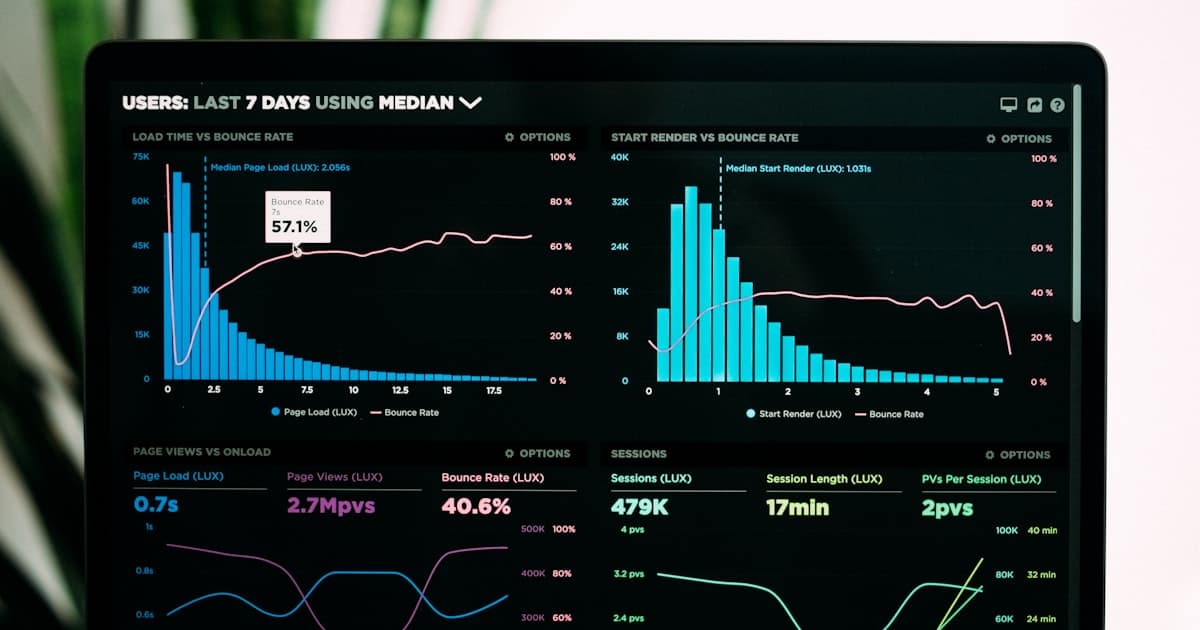
- 1Production analytics. Build dashboards showing real-time OEE (Overall Equipment Effectiveness) for every machine and production line. Implement Pareto analysis for rejection reasons, downtime causes, and productivity bottlenecks. Deploy shift-wise and operator-wise performance analytics.
- 1Supply chain visibility. Connect with key suppliers and customers through electronic data interchange or API integration. Implement demand forecasting based on historical sales data, seasonality patterns, and market signals. Deploy inventory optimization algorithms that balance carrying costs against stockout risks.
- 1Energy management. Monitor energy consumption by machine, production line, and product type. Identify energy waste patterns and optimization opportunities. Benchmark energy costs per unit of production against industry standards.
Measurable outcomes for Phase 2: - OEE improves from typical 45-55% to 65-75% - Unplanned downtime reduces by 25-40% through condition-based monitoring - Energy costs per unit reduce by 10-20% - Demand forecast accuracy improves to 80-85% - Inventory carrying costs reduce by 15-25% through better planning
Advancement criteria: To move to Phase 3, the manufacturer must have IoT coverage of 80%+ of critical equipment, data-driven decision-making adopted by production management, and a data infrastructure capable of supporting AI/ML workloads.
Phase 3: Transformation (Months 30-48) -- AI + Autonomous Operations
Objective: Deploy AI capabilities that move the organization from data-driven to AI-driven operations, enabling predictive decision-making and autonomous process optimization.
Key deployments:
- 1Predictive maintenance. Deploy machine learning models that predict equipment failures 2-7 days before they occur, based on vibration patterns, temperature trends, power consumption anomalies, and historical failure data. Integrate predictions with maintenance scheduling and spare parts procurement.
- 1AI-powered quality. Implement computer vision systems for automated quality inspection on high-volume production lines. Deploy statistical process control (SPC) with AI-powered anomaly detection that identifies quality deviations before they produce defective output. Build predictive quality models that adjust process parameters proactively.
- 1Intelligent production planning. Deploy AI-based production scheduling that optimizes for multiple objectives simultaneously -- delivery dates, machine utilization, energy costs, changeover time, and material availability. Implement dynamic rescheduling that adapts plans in real time based on actual production progress, machine breakdowns, and rush orders.
- 1Autonomous process optimization. Implement closed-loop control systems where AI adjusts process parameters (temperature, pressure, speed, feed rate) in real time to optimize quality and throughput. Deploy digital twin simulations that test process changes virtually before implementing them physically.
Measurable outcomes for Phase 3: - OEE improves to 80-85%+ (world-class levels) - Unplanned downtime reduces by 60-80% through predictive maintenance - Quality defect rates reduce by 40-60% through AI-powered inspection - Production planning cycle time reduces from days to hours - Overall manufacturing costs reduce by 15-25% cumulatively across all phases
For a comprehensive view of how AI transforms the entire enterprise beyond manufacturing, see our AI-driven digital transformation playbook.
Technology Selection for the Indian Context
Choosing the right technology stack is one of the most consequential decisions in any digital transformation journey. For Indian manufacturers, this decision is complicated by the vast range of options and the significant consequences of getting it wrong.
Local vs. Global Vendors
The choice between global ERP vendors (SAP, Oracle, Microsoft Dynamics) and India-built alternatives involves tradeoffs that are often poorly understood.
Global vendors -- advantages: Proven at scale, extensive partner ecosystems, global best practices, strong brand credibility with multinational clients and auditors.
Global vendors -- disadvantages for Indian manufacturers: Implementation costs of INR 50 lakhs to INR 5+ crore for mid-market manufacturers. Customization required for Indian statutory compliance (GST with its complex return structure, TDS, PF, ESI, state-specific regulations). Implementation timelines of 12-24 months that mid-market manufacturers cannot afford. Support teams often offshore, with limited understanding of Indian manufacturing practices. Licensing models designed for enterprises with 500+ users, creating poor economics for SMEs.
India-built vendors -- advantages: Built-in Indian statutory compliance (GST, TDS, Indian accounting standards). Lower total cost of ownership -- typically 40-60% less than global alternatives for equivalent functionality. Faster implementation -- 4-12 weeks vs. 6-24 months. Local support teams that understand Indian manufacturing terminology, practices, and challenges. Pricing models designed for Indian market economics, including SME-friendly subscription options.
India-built vendors -- disadvantages: Some have limited functionality compared to global platforms. Not all India-built vendors invest adequately in R&D for advanced capabilities like AI and IoT integration. Brand credibility may be lower with multinational parent companies.
Total Cost of Ownership Framework
When evaluating technology options, Indian manufacturers must consider the complete TCO over a 5-year period, not just the initial license or subscription cost.
| Cost Category | Global ERP (Mid-Market) | India-Built ERP |
|---|---|---|
| License/subscription (5 years) | INR 40-80 lakhs | INR 12-30 lakhs |
| Implementation | INR 30-60 lakhs | INR 8-20 lakhs |
| Indian compliance customization | INR 10-25 lakhs | Included |
| Annual maintenance and support | INR 8-15 lakhs/year | INR 3-8 lakhs/year |
| Training | INR 5-10 lakhs | INR 2-5 lakhs |
| Infrastructure (on-premise or cloud) | INR 5-15 lakhs/year | INR 2-8 lakhs/year |
| **5-Year TCO** | **INR 1.3-3.0 crore** | **INR 0.4-1.0 crore** |
For an SME manufacturer with INR 50 crore annual revenue and 8% margins, a INR 3 crore TCO represents 75% of one year's profit. A INR 0.6 crore TCO represents 15% of one year's profit. This difference often determines whether digital transformation is financially viable.
Language and Compliance Considerations
India's linguistic diversity creates a practical requirement that most global vendors do not adequately address. Shop floor workers in Tamil Nadu need Tamil interfaces. Supervisors in Maharashtra need Marathi options. Accountants need to generate e-invoices and e-way bills that comply with GSTN formats. Statutory reports must conform to MCA (Ministry of Corporate Affairs) requirements.
Compliance is not just about tax calculations. Indian manufacturing involves sector-specific regulations: Factories Act compliance for safety reporting, Pollution Control Board requirements for environmental monitoring, BIS (Bureau of Indian Standards) certification for product quality, and FSSAI requirements for food manufacturers. The technology stack must support these compliance workflows natively, not through expensive customizations.
Case Study Frameworks by Company Size
The following frameworks illustrate how manufacturers of different sizes can approach digital transformation, based on composite examples drawn from real implementations across the Indian manufacturing sector.
SME Manufacturer (50-200 Employees)
Profile: Auto components manufacturer in Pune, 120 employees, INR 30 crore annual revenue, 8% EBITDA margins. Currently using Tally for accounting and Excel for everything else. Production planning is done manually by the plant manager using experience and intuition.
Starting condition: No ERP. No digital production data. Quality records maintained in paper logbooks. Inventory counts done monthly by physical stock-taking. GST filing is a 5-day manual effort each month.
Phase 1 approach (Months 1-8): Deploy cloud-based manufacturing ERP with modules for financial accounting, inventory, purchase, sales, and basic production planning. Budget: INR 15-25 lakhs including implementation. Install tablet-based shop floor terminals at 10 key work centers for production data capture. Digitize quality inspection reports for incoming material and final products.
Phase 1 outcomes: Inventory accuracy reaches 92% (from 65%). Monthly GST filing time reduces from 5 days to 1 day. Order-to-dispatch visibility improves from "we check with the shop floor" to real-time tracking. Plant manager makes production decisions based on data rather than memory.
Phase 2 approach (Months 9-20): Add IoT sensors to 5 critical machines (CNC, press, heat treatment furnace) for condition monitoring. Deploy production analytics dashboards. Implement basic demand forecasting based on 2 years of sales data. Budget: INR 8-15 lakhs.
Phase 2 outcomes: OEE on critical machines improves from 50% to 68%. One major machine breakdown prevented through early vibration anomaly detection (savings: INR 12 lakhs in downtime and repair costs). Energy cost per unit reduces by 12% through optimized machine scheduling.
Phase 3 approach (Months 21-36): Deploy predictive maintenance models for critical equipment. Implement AI-based production scheduling. Add computer vision quality inspection for high-volume parts. Budget: INR 10-20 lakhs.
Total investment: INR 33-60 lakhs over 3 years. Expected cumulative savings and revenue improvement: INR 80-120 lakhs over the same period -- a 2-3x return.
Mid-Market Manufacturer (200-2000 Employees)
Profile: Pharmaceutical packaging manufacturer in Hyderabad, 800 employees across 2 plants, INR 200 crore annual revenue, 12% EBITDA margins. Using a basic ERP for accounting and inventory, but production planning and quality management are largely manual. Has 3 IT staff managing the existing ERP and infrastructure.
Starting condition: Basic ERP covers finance and inventory but not production. No shop floor digitization. Quality managed through paper batch records. Limited supplier integration. IT team is reactive (maintaining existing systems) rather than strategic.
Phase 1 approach (Months 1-10): Upgrade to a comprehensive manufacturing ERP with production planning, shop floor execution, quality management, and supply chain modules. Integrate both plants on a single system. Digitize batch records for regulatory compliance. Budget: INR 40-70 lakhs including implementation and training.
Phase 1 outcomes: Batch record retrieval time reduces from 2 hours (searching paper files) to 30 seconds. Inter-plant inventory visibility enables 15% reduction in safety stock. Production planning cycle reduces from weekly to daily.
Phase 2 approach (Months 11-24): Deploy IoT sensors across both plants covering 60% of production equipment. Build a centralized analytics platform with plant-level and enterprise-level dashboards. Implement predictive demand forecasting integrating sales pipeline, seasonal patterns, and customer forecast data. Deploy energy management across both plants. Budget: INR 30-50 lakhs.
Phase 2 outcomes: OEE improves from 58% to 72% across both plants. Energy costs reduce by 15%. Demand forecast accuracy reaches 83%, enabling 20% reduction in finished goods inventory.
Phase 3 approach (Months 25-42): Deploy AI-powered predictive maintenance across critical equipment. Implement computer vision quality inspection for high-speed packaging lines. Build AI-based dynamic scheduling that optimizes across both plants. Implement predictive quality models for pharmaceutical compliance. Budget: INR 50-80 lakhs.
Total investment: INR 1.2-2.0 crore over 3.5 years. Expected cumulative impact: INR 4-6 crore in cost savings and efficiency gains, plus improved customer retention through better quality and delivery performance.
Large Enterprise (2000+ Employees)
Profile: Automotive components conglomerate in Chennai, 5,000 employees across 4 plants, INR 1,200 crore annual revenue, 10% EBITDA margins. Uses SAP for finance and procurement. Production systems are a mix of vendor-specific MES, custom-built applications, and manual processes. Has a 25-person IT team but limited data science capability.
Starting condition: SAP covers financial and procurement processes. Production data is fragmented across plant-specific systems with no unified view. Quality systems vary by plant. Some IoT sensors installed but data is not integrated or analyzed systematically. Significant technical debt from 15+ years of custom SAP modifications.
Phase 1 approach (Months 1-12): Deploy a unified manufacturing execution system (MES) layer across all 4 plants that integrates with existing SAP for financial transactions. Standardize quality management processes and systems across all plants. Build a data integration platform that consolidates production, quality, and supply chain data from all sources. Budget: INR 2-4 crore.
Phase 1 outcomes: First-ever unified production visibility across all 4 plants. Quality data standardization enables cross-plant benchmarking (revealing that Plant 3 has 2x the rejection rate of Plant 1 for the same product). Data integration platform provides the foundation for all subsequent analytics and AI investments.
Phase 2 approach (Months 13-28): Expand IoT coverage to 80%+ of production equipment across all plants. Build enterprise analytics platform with AI-powered anomaly detection. Implement supply chain control tower with real-time visibility across 200+ suppliers. Deploy energy optimization across all facilities. Establish a data science team (4-6 people) as an internal CoE. Budget: INR 3-6 crore.
Phase 2 outcomes: Enterprise OEE visibility drives improvement from 52% average to 70%. Supply chain disruptions reduced by 35% through early warning systems. Energy costs reduce by 18% through AI-optimized scheduling and equipment operation.
Phase 3 approach (Months 29-48): Deploy predictive maintenance at scale across all plants. Implement AI-powered dynamic scheduling that optimizes production allocation across plants. Build computer vision quality inspection for high-volume lines. Develop digital twins for critical production processes. Launch outcome-based service offerings for key customers. Budget: INR 5-10 crore.
Total investment: INR 10-20 crore over 4 years. Expected cumulative impact: INR 40-80 crore in cost savings, efficiency gains, and new revenue -- representing a 4-5x return on the total digital transformation investment.
Funding and ROI Models for Indian Manufacturers
Cost is the most frequently cited barrier to digital transformation among Indian manufacturers. Understanding the available funding mechanisms and building realistic ROI models is essential.
Government Funding Sources
Indian manufacturers can access several government programs to subsidize digital transformation investments.
SAMARTH (Smart Advanced Manufacturing and Rapid Transformation Hub). Provides up to 30% subsidy for Industry 4.0 technology adoption in manufacturing. Covers IoT, AI, robotics, and advanced manufacturing technologies.
CLCSS (Credit Linked Capital Subsidy Scheme). Provides 15% capital subsidy for technology upgradation in MSMEs. Maximum subsidy of INR 15 lakhs. Applies to new technology investments including manufacturing ERP and automation.
TReDS (Trade Receivables Discounting System). While not a direct subsidy, TReDS enables manufacturers to discount receivables from large buyers at competitive rates, improving cash flow available for technology investment.
State-specific incentives. Many Indian states offer additional incentives for manufacturing digitization. Maharashtra's MIDC, Karnataka's KIADB, and Tamil Nadu's SIPCOT all have technology investment support programs. Gujarat, Telangana, and Andhra Pradesh offer specific IT/technology adoption subsidies for manufacturers.
ROI Model for Digital Transformation
The following model demonstrates typical ROI for an Indian manufacturer with INR 100 crore annual revenue.
| Impact Area | Annual Savings/Revenue (INR) | Phase |
|---|---|---|
| Inventory optimization (20% carrying cost reduction) | 80-120 lakhs | Phase 1 |
| GST/compliance automation (time savings) | 8-15 lakhs | Phase 1 |
| OEE improvement (10-15 percentage points) | 1.5-3 crore | Phase 2 |
| Energy optimization (10-15%) | 20-40 lakhs | Phase 2 |
| Predictive maintenance (downtime reduction) | 40-80 lakhs | Phase 3 |
| Quality improvement (rejection reduction) | 30-60 lakhs | Phase 3 |
| **Total annual impact at full deployment** | **3.3-6.2 crore** | - |
Against a total investment of INR 0.8-2.0 crore over 3-4 years, this represents a 2-4x return. When government subsidies covering 15-30% of the investment are factored in, the ROI improves further.
The key insight is that ROI begins accruing in Phase 1. Manufacturers do not need to wait for full transformation to see financial returns. Inventory optimization alone typically pays for the Phase 1 ERP investment within 12-18 months.
The Role of FlowSense as India-Built Manufacturing ERP
FlowSense is APPIT Software's manufacturing ERP platform, built in India for Indian manufacturers. It addresses the specific challenges outlined in this roadmap through several design decisions.
Indian compliance built in. FlowSense includes native support for GST (with all return formats -- GSTR-1, GSTR-3B, GSTR-9), TDS, PF, ESI, and Indian accounting standards. E-invoicing and e-way bill generation are built into the invoicing workflow -- not bolt-on modules. MCA-compliant financial reporting is standard. This eliminates the 30-50% customization cost that global ERPs require for Indian compliance.
Regional language support. FlowSense provides interfaces in Hindi, Tamil, Telugu, Marathi, Kannada, and Gujarati -- the six languages that cover 80% of India's manufacturing workforce. Shop floor terminals display machine instructions, quality parameters, and production targets in the worker's preferred language.
Modular architecture for phased adoption. Manufacturers can start with core modules (finance, inventory, purchase, sales) and add production planning, quality management, shop floor execution, IoT integration, and AI capabilities as they progress through the transformation phases. This pay-as-you-grow approach matches the financial realities of Indian manufacturing.
Hybrid cloud deployment. FlowSense operates in a hybrid architecture that processes critical production data locally (on edge servers or on-premise infrastructure) and syncs with cloud platforms when connectivity is available. This design handles the power and connectivity challenges common in Indian industrial areas.
AI capabilities for Phase 3. FlowSense includes built-in AI for demand forecasting, production scheduling optimization, inventory optimization, and quality prediction. These capabilities are pre-trained on Indian manufacturing data patterns, meaning they deliver accurate results faster than general-purpose AI tools that need extensive customization for Indian manufacturing contexts.
For manufacturers in specific sectors, APPIT offers specialized variants: FlowSense Semiconductor for semiconductor and electronics manufacturing, with capabilities for wafer-level tracking, yield analytics, and cleanroom management.
Manufacturers in cities across India can access local APPIT implementation teams. Talk to our team about implementation support in Hyderabad, Bangalore, Pune, Chennai and Mumbai.
Getting Started
Digital transformation strategies for Indian manufacturers do not require massive upfront investment, 18-month implementation timelines, or wholesale replacement of existing systems. They require a practical, phased approach that delivers measurable value at each stage.
Start with three steps. First, assess your current state honestly using the technology adoption benchmarks in this guide. Where does your organization stand compared to the industry averages? What are the 2-3 highest-impact areas where digital capabilities would deliver immediate value?
Second, build a business case for Phase 1. Using the ROI model above, estimate the financial impact of inventory optimization, compliance automation, and production visibility for your specific operation. Compare this against the Phase 1 investment required.
Third, select the right technology partner. Apply the vendor evaluation criteria outlined in this guide -- Indian compliance, language support, modular architecture, total cost of ownership, and local support capability. The right partner accelerates transformation; the wrong partner becomes a multi-year drain on resources and management attention.
For the comprehensive enterprise perspective on AI-driven digital transformation -- covering strategy, governance, talent, and measurement frameworks beyond manufacturing -- see our AI-driven digital transformation playbook.
Contact APPIT Software to schedule a manufacturing digital transformation assessment. Our team will evaluate your current systems, identify the highest-ROI transformation opportunities, and provide a customized Phase 1 roadmap with clear timelines, investment requirements, and expected outcomes.