
APPIT Software - Solutions Delivered
Demos
LoginGet Started
Aegis BrowserFlowSenseVidhaanaTrackNexusWorkisySlabIQLearnPathAI InterviewAll ProductsDigital TransformationAI/ML IntegrationLegacy ModernizationCloud MigrationCustom DevelopmentData AnalyticsStaffing & RecruitmentAll ServicesHealthcareFinanceManufacturingRetailLogisticsProfessional ServicesEducationHospitalityReal EstateAgricultureConstructionInsuranceHRTelecomEnergyAll IndustriesCase StudiesBlogResource LibraryProduct ComparisonsAbout UsCareersContact
APPIT Software - Solutions Delivered

Transform your business from legacy systems to AI-powered solutions. Enterprise capabilities at SMB-friendly pricing.

Company

  • About Us
  • Leadership
  • Careers
  • Contact

Services

  • Digital Transformation
  • AI/ML Integration
  • Legacy Modernization
  • Cloud Migration
  • Custom Development
  • Data Analytics
  • Staffing & Recruitment

Products

  • Aegis Browser
  • FlowSense
  • Vidhaana
  • TrackNexus
  • Workisy
  • SlabIQ
  • LearnPath
  • AI Interview

Industries

  • Healthcare
  • Finance
  • Manufacturing
  • Retail
  • Logistics
  • Professional Services
  • Hospitality
  • Education

Resources

  • Case Studies
  • Blog
  • Live Demos
  • Resource Library
  • Product Comparisons

Contact

  • info@appitsoftware.com

Global Offices

🇮🇳

India(HQ)

PSR Prime Towers, 704 C, 7th Floor, Gachibowli, Hyderabad, Telangana 500032

🇺🇸

USA

16192 Coastal Highway, Lewes, DE 19958

🇦🇪

UAE

IFZA Business Park, Dubai Silicon Oasis, DDP Building A1, Dubai

🇸🇦

Saudi Arabia

Futuro Tower, King Saud Road, Riyadh

© 2026 APPIT Software Solutions. All rights reserved.

Privacy PolicyTerms of ServiceCookie PolicyRefund PolicyDisclaimer

Need help implementing this?

Get Free Consultation
  1. Home
  2. Blog
  3. Real Estate
Real Estate

Coworking and Flexible Workspace Software: How Operators Manage 50,000 Daily Bookings Without Chaos

Coworking is operationally different from traditional office leasing. The unit of consumption is a desk-day or a meeting room-hour, not a sq-ft-year. Here is what flexible workspace software actually has to handle.

AG
Aravind Gajjela
|May 11, 20265 min readUpdated May 2026
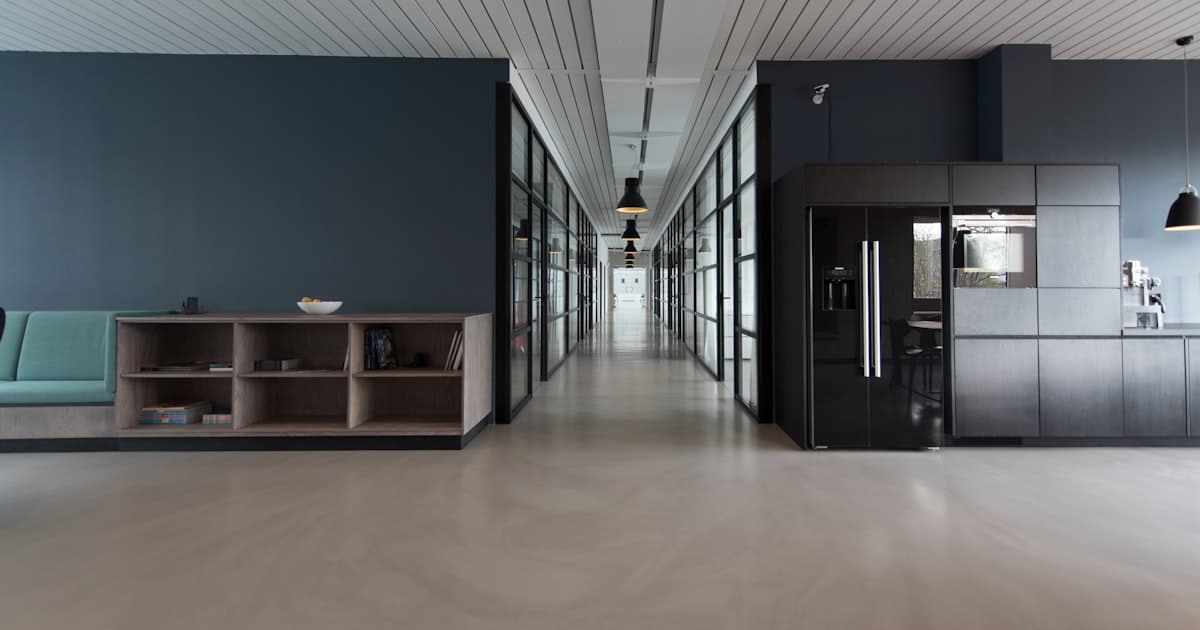
Coworking and flexible workspace management software dashboard

Get Free Consultation

Talk to our experts today

By submitting, you agree to our Privacy Policy. We never share your information.

Need help implementing this?

Get a free consultation from our expert team. Response within 24 hours.

Get Free Consultation

Key Takeaways

  • 1What makes coworking operationally distinct
  • 2The core capabilities flexible workspace software needs
  • 3What general office leasing software cannot do
  • 4The Indian coworking market specifics
  • 5What to evaluate when choosing flexible workspace software

What makes coworking operationally distinct

A traditional commercial office lease has a small number of high-value, long-duration transactions: 50-300 tenants, lease durations of 3-9 years, monthly invoices, annual reviews. Coworking inverts this. A medium-size coworking operator with 4 locations and 8,000 seats deals with:

  • 3,000-5,000 daily check-ins
  • 200-400 meeting-room bookings per day
  • 500-1,500 day-pass purchases per week
  • 600-1,200 monthly members with varying packages
  • 50-150 dedicated office tenants with traditional commercial leases

The unit of consumption is no longer the sq-ft-year. It is the desk-day, the meeting room-hour, the printer page, the locker month, the parking spot day. The billing engine that worked for traditional commercial leasing simply cannot handle this volume and granularity.

The core capabilities flexible workspace software needs

1. Membership and package management

Coworking operators offer multiple membership tiers — typically lounge access, dedicated desk, private office, day pass, virtual office, meeting room only. Each tier has different access rights, different included resources (meeting room hours, printing credits, locker assignment, parking), and different pricing.

A flexible workspace platform stores every membership package as a structured product, tracks who is on which package, manages package upgrades and downgrades mid-month with pro-rated billing, and applies the right access controls in real time.

2. Real-time access control

A member walks up to the building at 9:15am. Their access card (or face recognition) must check: are they an active member, is their package valid, do they have access to this specific location, and is the office area open for them right now (some packages allow only weekday daytime access).

This check happens 3,000-5,000 times per day at a medium-size operator. It must succeed in under 200 milliseconds or members will queue at the gate. Integration with access control hardware (HID, Boon Edam, Suprema, ZKTeco) is non-negotiable.

3. Meeting room booking with conflict resolution

A member opens the app at 10:23am wanting a 12-person meeting room from 2pm to 4pm today. The app shows available rooms, the member books, an invitation goes to their calendar, the credits are deducted from their meeting-room balance, and the room is locked from other bookings.

If the member is over their included credit, the system shows them the per-hour overage rate and requires them to confirm payment. If they no-show, the credit is retained (no-show policy varies by operator).

The system handles cancellations, rescheduling, and waitlists. It also produces reports on room utilisation that help the operator decide on capacity changes.

4. Day pass and walk-in management

A potential member walks in wanting a day pass. The receptionist captures their identity, payment, and assigns them a temporary access card. The day pass entitles them to specific resources for that day only. At 7pm the access is auto-revoked.

This flow must complete in under 90 seconds at the desk because day-pass conversion rates drop quickly when the walk-in waits.

5. Community and ancillary services

Modern coworking is as much about community as about the space. The platform typically includes a directory of members (opt-in), event listings, classes (yoga, technology talks), community announcements, and a way to introduce members to each other. Members who feel part of a community renew at 3-4x the rate of members who do not.

Ancillary services — printing, mail handling, virtual office reception, food and beverage credits — are billed through the same platform.

6. Operator dashboard

The operator views: occupancy by location, by package type, by hour-of-day; meeting room utilisation; ancillary revenue; community engagement metrics; member churn predictors; pipeline of new memberships in negotiation. These dashboards inform pricing, capacity, and marketing decisions.

What general office leasing software cannot do

A traditional commercial leasing platform is built around the lease as the central record. Every cash flow ties to a lease. The volume is low and the price per record is high.

Coworking inverts this: - Membership records vastly outnumber lease records - Billing happens at multiple levels (recurring fee, hourly overages, ancillary) - Access control and physical security are core, not adjacent - Member experience (app, community, services) is the product, not the lease document - Real-time inventory of bookable resources is constant

Operators that try to run coworking on a traditional commercial leasing platform end up with workarounds that break at scale. The right architecture is purpose-built workspace software (e.g. Nexudus, OfficeRnD, Andcards, Cobot) with hooks into accounting for revenue recognition.

The Indian coworking market specifics

Coworking in India has crossed 50 million sq ft of operational stock as of 2025, with the major operators (WeWork India, Awfis, Smartworks, IndiQube, Cowrks, 91springboard) running between 5,000 and 60,000 seats each. Several mid-tier operators run 1,000-5,000 seats.

Three specifics that distinguish the Indian market:

1. Managed-office model dominates

Unlike US coworking which is dominated by hot-desks and dedicated desks, the largest revenue line for Indian operators is the managed office — a private suite leased to a corporate (typically 30-300 seats) with all amenities included. This sits between traditional leasing and coworking and requires both leasing logic (lock-in, escalation, CAM) and coworking logic (resource bookings, community access).

2. GST and TDS treatments

Coworking revenue is generally taxable at 18% GST, but specific components (food, beverages) may have different rates. Some operators with corporate tenants face TDS at 10% on the managed-office portion. The billing engine must handle this correctly.

3. Multi-currency for IFCs

Operators in IFSCs (International Financial Services Centres like GIFT City) deal with multi-currency invoicing for international tenants. The platform must handle USD billing, INR settlement, and proper foreign exchange treatment.

What to evaluate when choosing flexible workspace software

Five test scenarios:

  1. 1Simulate a peak Monday morning — 3,000 check-ins between 9:00 and 10:00am. Does the access control respond in under 200ms? Does the dashboard show real-time occupancy?
  1. 1Book a meeting room with overage — set up a member with limited credits, book a room that exceeds the credit, verify the overage flow.
  1. 1Run a member upgrade mid-month — a member upgrades from dedicated desk to private office on day 15. The system should pro-rate, generate the upgrade invoice, and update access immediately.
  1. 1Test the day-pass walk-in flow — from arrival at the desk to active access card in under 90 seconds.
  1. 1Run a managed-office invoice — for a 50-seat corporate suite with lock-in, escalation, included amenities, and bolt-on hot-desk access. The invoice should produce correctly with GST and TDS.

A platform that handles all five well is enterprise-grade. One that struggles with two or more is not ready for a serious operator.

The bottom line

Coworking operations sit at a unique intersection of real estate, hospitality, and SaaS-style member management. Trying to run them on a traditional commercial leasing platform fails operationally. Trying to run them on Excel fails by the time the operator passes 1,000 members.

For the operator scaling past 2,000 seats, purpose-built workspace software is not a nice-to-have. It is the operating system that determines whether the next 2,000 seats add to margin or destroy it.

Free Consultation

Let's Discuss Your Project

Get a free consultation from our expert team. We'll help you find the right solution.

  • Expert guidance tailored to your needs
  • No-obligation discussion
  • Response within 24 hours

By submitting, you agree to our Privacy Policy. We never share your information.

Frequently Asked Questions

Why is coworking different from traditional commercial leasing?

Traditional commercial leasing has 50-300 tenants on multi-year leases with monthly invoices. Coworking has thousands of members consuming desk-days, meeting room-hours, printer pages, and ancillary services. The volume, granularity, and real-time nature of coworking transactions require purpose-built workspace software, not adapted commercial leasing platforms.

What does coworking access control software need to do?

Real-time member identity verification (card, face recognition, mobile), check on active membership status, package validity, location access rights, and time-of-day permissions — all in under 200ms because thousands of check-ins happen per peak hour. Integration with major access control hardware vendors (HID, Boon Edam, Suprema, ZKTeco) is essential.

How does a managed-office product differ from a hot-desk?

A managed office is a private suite typically leased to a corporate for 30-300 seats with all amenities included. It sits between traditional commercial leasing (lock-in, escalation, CAM) and coworking (resource bookings, ancillary services). Indian coworking operators derive the largest revenue line from managed offices, which makes their billing engine significantly more complex than US-style hot-desk-dominant platforms.

How is GST applied to coworking revenue in India?

Coworking memberships are typically taxable at 18% GST. Specific bundled components (food, beverages) may attract different GST rates and require unbundling on the invoice. Managed-office revenue to corporate tenants attracts both 18% GST and 10% TDS deducted by the tenant. The billing engine must handle multi-component invoicing with the correct tax treatment per component.

What is the typical scale where flexible workspace software becomes essential?

For operators under 500 members, Excel and basic accounting software can work with significant manual effort. Between 500-2,000 members, the operational friction becomes obvious and most operators adopt a purpose-built platform. Above 2,000 members, purpose-built software is essentially required — manual operations cannot keep up with check-ins, bookings, and billing volume at scale.

About the Author

AG

Aravind Gajjela

Founder & CEO, APPIT Software, APPIT Software Solutions

Aravind Gajjela is the Founder & CEO, APPIT Software at APPIT Software Solutions, bringing extensive experience in enterprise technology solutions and digital transformation strategies across healthcare, finance, and professional services industries.

Sources & Further Reading

Harvard Business ReviewMcKinsey Professional ServicesWorld Economic Forum - AI

Topics

CoworkingFlexible WorkspaceManaged OfficeReal EstateIndia

Share this article

Table of Contents

  1. What makes coworking operationally distinct
  2. The core capabilities flexible workspace software needs
  3. What general office leasing software cannot do
  4. The Indian coworking market specifics
  5. What to evaluate when choosing flexible workspace software
  6. The bottom line
  7. FAQs

Who This Is For

Coworking operators
Managed office providers
Real estate firms
Free Resource

AI Transformation Starter Kit

Everything you need to begin your AI transformation journey - templates, checklists, and best practices.

No spam. Unsubscribe anytime.

Ready to Transform Your Business?

Let our experts help you implement the strategies discussed in this article.

Schedule a Free ConsultationView Success Stories

Related Articles in Real Estate

View All
Commercial office leasing automation platform dashboard
Real Estate

Commercial Leasing Automation: Why Office Landlords Are Losing 8-12% of Rent to Manual Workflows

Commercial office leasing in India runs on Excel, email, and Word documents. The result is leases mis-billed by ₹5,000-30,000 per month per tenant. A modern leasing platform fixes the leakage and pays for itself in under a year.

11 min readRead More
Property management workflow automation dashboard
Real Estate

End-to-End Property Management Workflow Automation: From Lead to Lifetime Tenant

A property management company juggling 1,500 units across 40 properties does not have a software problem — it has a workflow problem. Here is the operational map of a modern property management business and where automation pays for itself.

11 min readRead More
Digital tenant onboarding workflow with document management
Real Estate

Tenant Onboarding and Document Management: The First 14 Days Determine the Next 14 Months

Property management firms that get tenant onboarding right see 40% fewer disputes, 30% higher renewal rates, and dramatically lower legal risk. Here is the playbook for a digital-first onboarding workflow.

10 min readRead More
FAQ

Frequently Asked Questions

Common questions about this article and how we can help.

You can explore our related articles section below, subscribe to our newsletter for similar content, or contact our experts directly for a deeper discussion on the topic.