APPIT Software - Solutions Delivered
Demos
LoginGet Started
Aegis BrowserFlowSenseVidhaanaTrackNexusWorkisySlabIQLearnPathAI InterviewAll ProductsDigital TransformationAI/ML IntegrationLegacy ModernizationCloud MigrationCustom DevelopmentData AnalyticsStaffing & RecruitmentAll ServicesHealthcareFinanceManufacturingRetailLogisticsProfessional ServicesEducationHospitalityReal EstateAgricultureConstructionInsuranceHRTelecomEnergyAll IndustriesCase StudiesBlogResource LibraryProduct ComparisonsAbout UsCareersContact
APPIT Software - Solutions Delivered

Transform your business from legacy systems to AI-powered solutions. Enterprise capabilities at SMB-friendly pricing.

Company

  • About Us
  • Leadership
  • Careers
  • Contact

Services

  • Digital Transformation
  • AI/ML Integration
  • Legacy Modernization
  • Cloud Migration
  • Custom Development
  • Data Analytics
  • Staffing & Recruitment

Products

  • Aegis Browser
  • FlowSense
  • Vidhaana
  • TrackNexus
  • Workisy
  • SlabIQ
  • LearnPath
  • AI Interview

Industries

  • Healthcare
  • Finance
  • Manufacturing
  • Retail
  • Logistics
  • Professional Services
  • Hospitality
  • Education

Resources

  • Case Studies
  • Blog
  • Live Demos
  • Resource Library
  • Product Comparisons

Contact

  • info@appitsoftware.com

Global Offices

🇮🇳

India(HQ)

PSR Prime Towers, 704 C, 7th Floor, Gachibowli, Hyderabad, Telangana 500032

🇺🇸

USA

16192 Coastal Highway, Lewes, DE 19958

🇦🇪

UAE

IFZA Business Park, Dubai Silicon Oasis, DDP Building A1, Dubai

🇸🇦

Saudi Arabia

Futuro Tower, King Saud Road, Riyadh

© 2026 APPIT Software Solutions. All rights reserved.

Privacy PolicyTerms of ServiceCookie PolicyRefund PolicyDisclaimer

Need help implementing this?

Get Free Consultation
  1. Home
  2. Blog
  3. Manufacturing & Industry 4.0
Manufacturing & Industry 4.0

AI Quality Control: Cut Assembly Line Defects 60%

Human inspectors catch 80% of defects. AI vision systems catch 99.2%. When combined with real-time machine parameter monitoring, you can prevent defects before they happen — not just detect them after.

AS
APPIT Software
|March 10, 20264 min readUpdated Mar 2026
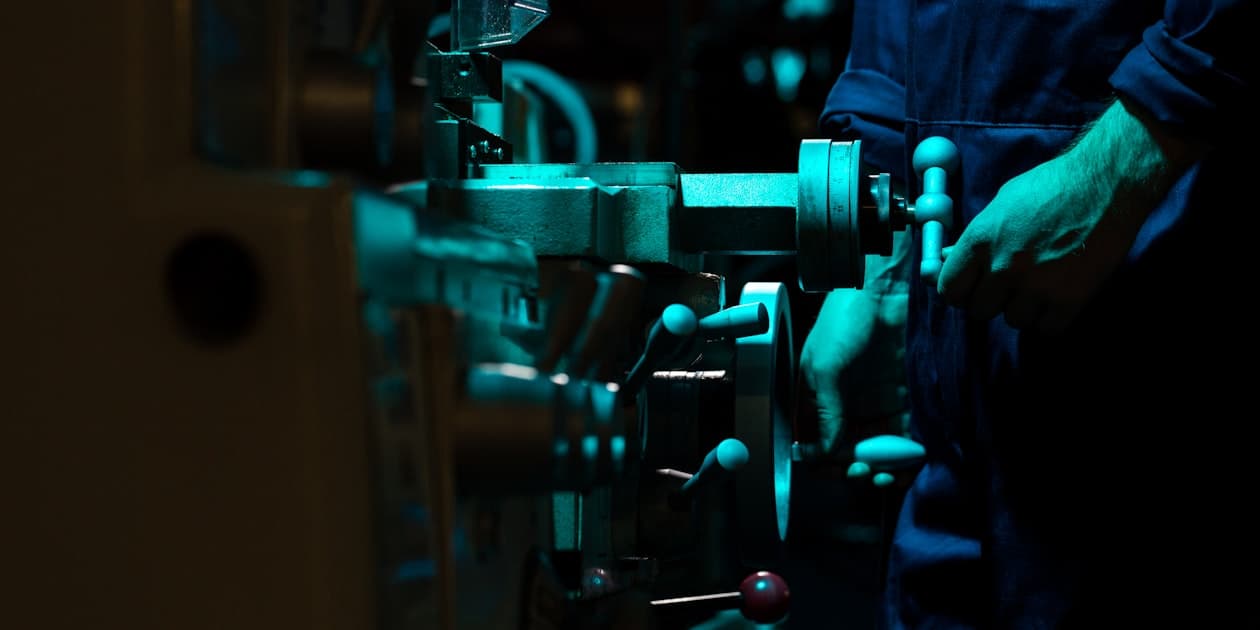
AI-powered quality control system detecting defects on a manufacturing assembly line

Get Free Consultation

Talk to our experts today

By submitting, you agree to our Privacy Policy. We never share your information.

Need help implementing this?

Get a free consultation from our expert team. Response within 24 hours.

Get Free Consultation

Key Takeaways

  • 1The Quality Inspection Problem No One Talks About
  • 2Two Approaches to AI Quality Control
  • 3How AI Process Monitoring Prevents Defects
  • 4Implementing AI Quality Control
  • 5Results: What to Expect

The Quality Inspection Problem No One Talks About

Every manufacturing plant has quality inspectors. They are skilled, experienced, and dedicated. They are also human — which means they get fatigued, distracted, and inconsistent across shifts.

Research by the American Society for Quality (ASQ) shows that human visual inspection catches approximately 80% of defects under ideal conditions. That drops to 60-70% during the second half of a shift. For an automotive plant producing 1,000 units per shift, a 20% escape rate means 200 defective parts reaching the next process — or worse, reaching the customer.

Two Approaches to AI Quality Control

Approach 1: AI Visual Inspection (Detect After Production)

Computer vision systems use cameras and deep learning to inspect parts at production speed:

  • Surface defects — scratches, dents, discoloration, porosity
  • Dimensional accuracy — gap measurements, alignment verification
  • Assembly completeness — missing components, wrong orientation
  • Weld quality — bead consistency, spatter, undercut

Modern AI vision achieves 99.2% defect detection at line speed — far exceeding human capability. But it has a fundamental limitation: it only finds defects after they are made.

Approach 2: AI Process Monitoring (Prevent Before Production)

This is where PlantPulse takes a fundamentally different approach. Instead of inspecting parts after production, it monitors the process parameters that cause defects:

  • Welding robot temperature drifting upward → predicts weld quality degradation
  • Press machine pressure variation → signals die wear before it produces out-of-spec parts
  • Paint booth humidity spike → alerts before orange peel finish defects begin
  • CNC machine vibration increase → detects tool wear before dimensional errors occur

The difference: vision inspection catches 99.2% of defects after they are made. Process monitoring prevents 60-70% of defects from being made in the first place.

The Optimal Strategy: Both

The highest-quality manufacturers use both approaches:

  1. 1PlantPulse AI process monitoring prevents defects by maintaining optimal machine parameters
  2. 2Visual inspection catches the remaining defects that slip through
  3. 3Feedback loop connects inspection results back to process parameters for continuous learning

How AI Process Monitoring Prevents Defects

Correlation Learning

PlantPulse's AI engine learns the correlation between process parameters and quality outcomes:

Process ParameterQuality ImpactAI Detection
Weld current ±5%Weld strength variationDetected in real time
Mold temperature driftSurface finish defectsPredicted 30 min ahead
Press tonnage variationDimensional accuracyDetected in real time
Paint viscosity changeCoating thicknessPredicted 2 hours ahead
CNC spindle vibrationSurface roughnessPredicted 1 hour ahead

Multi-Parameter Context

A single parameter change might be normal. But PlantPulse recognizes when combinations of parameter changes predict quality problems:

  • Temperature up + vibration up + cycle time up = bearing degradation → quality risk
  • Pressure down + ambient temperature up = seal softening → dimensional variation
  • Current draw up + speed normal = friction increase → surface finish degradation

These multi-parameter patterns are invisible to simple threshold monitoring but obvious to trained AI models.

Real-Time Operator Guidance

When PlantPulse detects a parameter combination heading toward a quality boundary, it provides specific guidance:

  • "Welding Robot 02: reduce weld current by 3% to compensate for ambient temperature increase"
  • "Press Machine 01: schedule die inspection — tonnage drift pattern matches wear signature"
  • "Paint Booth 02: humidity rising — activate auxiliary dehumidifier before starting next batch"

Implementing AI Quality Control

Phase 1: Connect and Baseline (Week 1-2) - Connect PlantPulse to PLCs on quality-critical machines - Collect baseline process data during known-good production - Map existing quality records to machine parameters

Phase 2: Correlate and Learn (Week 2-4) - AI models learn parameter-quality correlations - Establish statistical process control baselines - Identify the top 5 parameter combinations that predict defects

Phase 3: Alert and Prevent (Month 2) - Enable real-time alerts for quality-risk parameter combinations - Provide operator guidance for parameter adjustment - Measure first-pass yield improvement

Phase 4: Close the Loop (Month 3+) - Feed inspection results back into AI models - Continuously refine prediction accuracy - Expand to additional machines and defect types

Results: What to Expect

Plants implementing AI process monitoring alongside existing quality systems typically achieve:

  • 60% reduction in defect rate through proactive parameter management
  • 40% reduction in scrap costs from catching drift before it produces defects
  • 75% reduction in customer quality escapes from dual AI + inspection coverage
  • 30% reduction in inspection labor as defect volume drops

Beyond Detection: Quality Intelligence

The ultimate value of AI quality monitoring is not individual defect prevention — it is the intelligence that accumulates:

  • Which machines produce the best quality at which settings
  • How ambient conditions affect quality across seasons
  • Which material lots correlate with quality issues
  • Which operator procedures produce the highest first-pass yield

This intelligence transforms quality from a cost center ("catching defects") into a competitive advantage ("engineering quality in").

Move from detecting defects to preventing them. See PlantPulse AI quality monitoring. Related: OEE optimization with AI and 10 production KPIs to track in real time.
Free Consultation

Ready to Embrace Industry 4.0?

Learn how smart manufacturing solutions can reduce costs and boost productivity.

  • Expert guidance tailored to your needs
  • No-obligation discussion
  • Response within 24 hours

By submitting, you agree to our Privacy Policy. We never share your information.

Frequently Asked Questions

How does AI improve quality control in manufacturing?

AI improves quality in two ways: (1) machine vision inspection catches 99.2% of defects vs 80% for human inspectors, and (2) AI process monitoring prevents defects by detecting parameter drift before it produces out-of-spec parts. The combination reduces defect rates by 60% or more.

What is the difference between AI inspection and AI process monitoring?

AI inspection uses cameras to detect defects after parts are made. AI process monitoring tracks machine parameters (temperature, vibration, pressure) to prevent defects from being made. Inspection is reactive; process monitoring is predictive. The best approach uses both.

Can AI quality control work with existing machines?

Yes. AI process monitoring platforms like PlantPulse connect to existing PLCs via OPC UA or Modbus to read sensor data that machines already collect. No additional sensors or hardware changes are typically required for process monitoring.

About the Author

AS

APPIT Software

Manufacturing Technology Writer, APPIT Software Solutions

APPIT Software is the Manufacturing Technology Writer at APPIT Software Solutions, bringing extensive experience in enterprise technology solutions and digital transformation strategies across healthcare, finance, and professional services industries.

Sources & Further Reading

World Economic Forum - ManufacturingNIST Manufacturing ExtensionMcKinsey Operations

Related Resources

Manufacturing & Industry 4.0 Industry SolutionsExplore our industry expertise
Interactive DemoSee it in action
Legacy ModernizationLearn about our services
AI & ML IntegrationLearn about our services

Topics

AI quality controlmachine vision manufacturingdefect detection AIPlantPulsemanufacturing qualitySPC AIzero defect manufacturing

Share this article

Table of Contents

  1. The Quality Inspection Problem No One Talks About
  2. Two Approaches to AI Quality Control
  3. How AI Process Monitoring Prevents Defects
  4. Implementing AI Quality Control
  5. Results: What to Expect
  6. Beyond Detection: Quality Intelligence
  7. FAQs

Who This Is For

quality managers
plant managers
manufacturing engineers
operations directors
Free Resource

Industry 4.0 Implementation Roadmap

A practical roadmap for smart manufacturing adoption with IoT, AI, and digital twin technologies.

No spam. Unsubscribe anytime.

Ready to Transform Your Manufacturing & Industry 4.0 Operations?

Let our experts help you implement the strategies discussed in this article.

See Interactive DemoExplore Solutions

Related Articles in Manufacturing & Industry 4.0

View All
PlantPulse AI-powered SCADA monitoring dashboard showing real-time machine status in a smart factory
Manufacturing & Industry 4.0

PlantPulse: AI SCADA Monitoring for Smart Factories

PlantPulse by FlowSense adds an AI intelligence layer on top of your existing PLC, SCADA, and MES systems — delivering real-time dashboards, predictive alerts, and actionable insights without replacing your current infrastructure.

10 min readRead More
Automotive assembly line with AI predictive maintenance monitoring on welding robots
Manufacturing & Industry 4.0

Predictive Maintenance Cuts Automotive Downtime 45%

Automotive plants lose $22,000 per minute of unplanned downtime. AI-driven predictive maintenance analyzes vibration, temperature, and cycle data to catch failures 48-72 hours before they stop the line.

13 min readRead More
OEE dashboard showing availability, performance, and quality metrics with AI optimization insights
Manufacturing & Industry 4.0

OEE Optimization: Using AI to Achieve 85%+ OEE

World-class OEE is 85%. Most plants hover at 60%. AI-powered monitoring closes the gap by identifying the hidden availability, performance, and quality losses that manual tracking misses.

12 min readRead More
FAQ

Frequently Asked Questions

Common questions about this article and how we can help.

You can explore our related articles section below, subscribe to our newsletter for similar content, or contact our experts directly for a deeper discussion on the topic.